
Restaurant SEO: rank for “best dish near me” fast
Restaurant SEO that actually works: the 4 to 5 levers that move local rankings, plus what to ignore. Book a free audit.
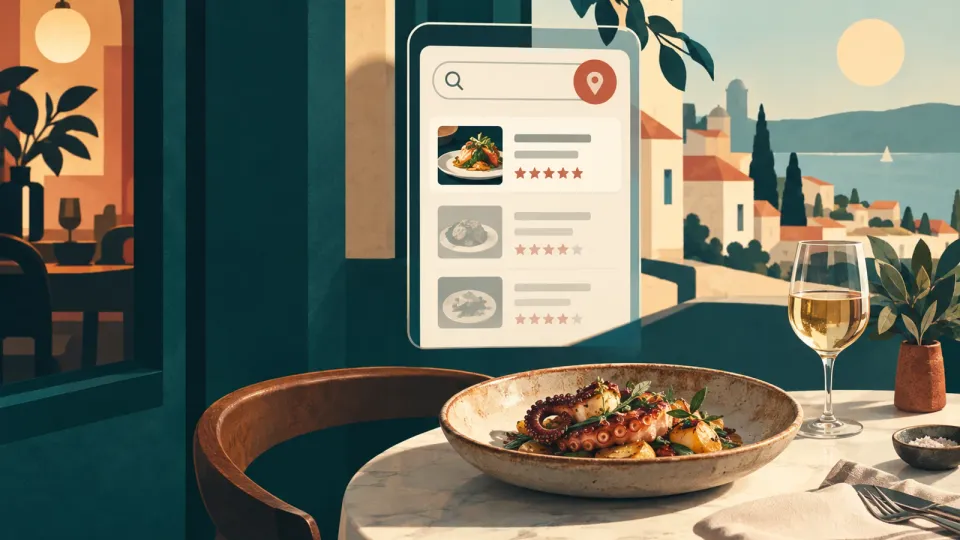
Stop chasing generic “restaurant SEO tips”
“Best [dish] near me” is a local intent query, so your restaurant SEO has to behave like local search engineering, not like blogging.
If you do only one thing this week: make your restaurant match the exact category, menu intent, and trust signals Google uses to decide who serves the query near the user. Most “restaurant SEO” advice misses that and stays stuck in one-liners like “optimize your Google Business Profile.”
Here is the uncomfortable truth I see in the wild: many independent restaurants have a Google Business Profile that is accurate but not aligned to the way customers actually phrase the search. They call themselves “Restaurant” instead of “Thai restaurant,” they upload a couple of random photos from opening week, and they treat reviews like a monthly chore.
Then they wonder why the algorithm keeps sending the “best [dish] near me” clicks to someone else.
The good news is that restaurant local SEO is not mystical. It is controllable levers. You can make your listing and website easier for Google to connect to a specific dish intent, and then you can keep those signals fresh without breaking policies.
In this guide, “restaurant SEO” means two jobs at once:
- Win the local pack and local finder views for high-intent searches like “best pizza near me” and “best francesinha near me.”
- Convert the click into a table or takeout order by making your menu, hours, and availability obvious.
The levers are not all glamorous, but they are the ones that move rankings most consistently.
And before anyone sells you a $3k a month “local SEO package,” you should know which levers are worth paying for, and which are just busywork.
The “best [dish] near me” blueprint (GBP + site intent)
For “best [dish] near me,” Google is trying to answer one question: who is most relevant and most trusted for that specific dish, in that specific area.
Your blueprint is simple:
- Make the Google Business Profile say the right thing for identity (category) and for menu intent (what you actually serve).
- Make the website confirm it with structured data and crawlable menu pages (so the dish is not just mentioned once on a blog post).
- Keep trust signals active (reviews and photo updates) so your listing stays “alive,” not museum-still.
Most restaurants fail step one. They fix everything else and leave the identity signal too broad.
Category defines what queries you can earn
The primary category on your Google Business Profile is the anchor for how your listing is interpreted. If you choose “Restaurant” when “Italian restaurant” or “Pizza restaurant” exists as an accurate option, you are telling Google to treat you as generic. That weakens relevance for dish intent.
Google Business Profile itself encourages accurate categories and photos that represent the business, which is why getting category alignment right is not cosmetic. It is the mapping layer between your business and customer searches. (support.google.com)
Even when people do pick a cuisine category, they often miss the “dish intent” version of that category. For example, “Pizza restaurant” tends to track differently than “Italian restaurant” for some queries, because Google can map the intent to a narrower set of businesses.
Your website should confirm, not compete
A common misconception: that your website must contain the “best [dish] near me” phrase everywhere to rank.
It usually does not. Instead, your site should make it easy for Google to understand:
- What you serve (menu structure)
- When you serve it (hours, availability)
- At what price range (where applicable)
- Where you serve it (location pages if you operate in multiple areas)
Schema can help with that understanding. For example, Schema.org defines how to represent restaurant structure, including things like price range. (schema.org)
If you want one practical output from this blueprint, it is this: write and publish a menu page that matches your GBP identity, then add the structured data that represents the menu and menu items.
The 4 levers that actually move local rankings (with weights)
If you want weights, here is the allocation I use when triaging restaurant local SEO.
Assume a typical independent restaurant with a claimed Google Business Profile, a decent website, and some reviews.
Lever 1, GBP primary category alignment, 30%
Choose the most accurate primary category that matches what you actually are and what people search. “Restaurant” is usually too broad. A cuisine-specific or format-specific category is often the difference between showing up for “best [dish] near me” and showing up for nothing.
Category accuracy is emphasized in GBP best practice guidance. (support.google.com)
GBP category trap: “Restaurant” versus “specific cuisine.”
- If you serve one cuisine type as your core offering, primary category should reflect that.
- If you serve a specific format that people search for as a standalone identity (for example, “pizza restaurant” or “sushi restaurant”), primary category should reflect the format.
When categories are wrong, no amount of blog posting can fully compensate, because Google needs identity mapping first.
Lever 2, menu intent confirmation on site, 25%
Your site should reflect the dishes you want to rank for, in a crawlable way.
That usually means:
- A Menu page that lists the dishes you want to win on
- Optional dish detail pages if you have a broad menu with distinct sections
Then add structured data. Schema.org provides definitions for restaurant representation and MenuItem, which can include item names, descriptions, and offers like price. (schema.org)
Lever 3, review velocity with policy-safe collection, 25%
You do not need review volume cheating. You need a steady stream of legitimate reviews from real diners.
Google’s policies prohibit offering money in exchange for reviews. (boast.io)
So the strategy is operational:
- Ask every satisfied table, consistently, at the right time
- Make it frictionless to leave a review (QR on the receipt, short message at pickup)
- Never gate reviews, never bribe reviews, never tell staff to “only ask happy guests” in a way that creates bias
A review program that respects policy protects the listing long-term.
Lever 4, photo cadence and business realism, 20%
Photos are not just “marketing.” They are proof your business matches what customers expect.
Google explicitly recommends adding business-specific photos, including capturing photos from different directions customers might approach. (support.google.com)
Honest cadence that works for most restaurants:
- Weekly: 3 to 5 new photos (real dishes from the pass, updated dining room shots, takeaway packaging)
- Monthly: refresh your hero set (exterior sign, interior overview, best-selling dish portfolio)
- Ad-hoc: every time you change menu, specials, or hours, update the listing to match reality
You do not need a camera crew. You need consistency and freshness.
What this looks like in practice
If you were to do these four levers for 30 days, you would likely see improved relevance for dish intent before you see any major “rank jump.” That is because the algorithm first needs to trust that your restaurant is what it thinks you are.
Then the trust signals accumulate.
Everything else is decoration.
GBP category trap, how to pick the right one without guessing
The trap is boring and expensive: picking a broad category because you think it covers more.
If you choose “Restaurant” as your primary category when a specific option exists, you dilute your relevance. Google has to work harder to map you to dish-specific intent.
How to choose the right primary category in 20 minutes
Do this when your menu is stable.
- Write down your top 3 revenue drivers (for example, “pizzas,” “pasta,” “tiramisu”).
- In GBP, search the category list for the closest match to what customers are actually buying.
- Pick the category that best matches the core identity, not a secondary activity.
- Add secondary categories only when they reflect a real additional offering.
GBP best practice guidance emphasizes category accuracy and photos that represent the business. (support.google.com)
“Restaurant” versus “Italian restaurant” versus “Pizza restaurant”
Here is the rule of thumb that prevents category thrash.
- If people come to you for a cuisine experience, use the cuisine identity.
- If people come to you for a specific format that is searched as its own identity, use the format.
- If you are a general restaurant with multiple cuisines, keep the primary category broad but ensure your menu intent is still explicit on your site.
How categories interact with “best [dish] near me”
When the query includes a dish, Google is matching a chain:
- Category relevance (identity mapping)
- Content and menu confirmation (on site, structured and crawlable)
- Trust and engagement signals (reviews, photos)
If your primary category is too broad, you start with lower relevance. Everything else has to overcome that handicap.
Secondary categories: what to add and what to avoid
Secondary categories can help if they reflect legitimate offerings, like dine-in, takeout, delivery, or specific formats.
But they can also confuse identity if you add categories that do not match what customers consistently order.
So if you add a secondary category, make sure the website menu and the photos actually support it.
The most common mistake I see
Restaurants add keywords to the business description in hope it “fixes” category mismatch.
It does not. Categories and structured signals do the identity work. Descriptions are supportive.
Fix the category, then support it with menu intent and structured data.
That is the shortest path to “best [dish] near me” visibility.
Photo cadence that builds trust (and avoids spammy uploads)
If you want your GBP to stop looking abandoned, you need photo cadence with purpose.
Most restaurants either upload nothing new for months, or they upload generic stock photos that look like every other listing. Both approaches waste the opportunity.
Google recommends adding business-specific photos and capturing photos from different directions customers approach your business. (support.google.com)
That is the anchor for what “good” looks like: realism and helpful coverage.
What to upload, by photo type
A simple set that covers most restaurants:
- Exterior: sign, street-facing facade, visible entrance
- Interior: overview shot, bar or seating area, dining room lighting
- Dish proof: your top 5 sellers, plated as customers receive them
- Takeaway experience: packaging and labeling (especially if you do pickup)
When customers search “best [dish] near me,” they are not just buying food. They are buying an expectation.
Your photos should make that expectation credible.
How often to upload (honest schedule)
Here is a cadence that is realistic for small teams.
- Weekly: 3 to 5 photos, rotate new dishes and real dining room shots
- Monthly: 1 refresh for each of exterior, interior, and top dish set
- After changes: immediately upload new photos when your menu rotates, you update hours, or you run a seasonal promo
Google does not ask for “daily spam.” It asks for accurate, business-specific content that represents the business. (support.google.com)
So you are optimizing for freshness and consistency, not volume.
Common mistake: relying on one photo album
Restaurants often upload 30 photos once, then stop. That leaves you with a huge gap in freshness.
A listing that updates occasionally looks operational. A listing that freezes looks risky.
Common mistake: photoing what you wish you were
If you want to rank for “best francesinha near me,” then your photos should feature francesinha, not just generic pub interiors.
If your GBP photos do not match your menu intent, customers click and then bounce. That hurts conversions, and it undermines trust.
Practical workflow for busy owners
You do not need a photographer. You need a “photo capture moment” that happens naturally.
- Take a quick photo of the dish before it leaves the kitchen
- Take one interior photo at the busiest time of day
- Post it to GBP when your listing manager has time, once per week
This is operational SEO, not content marketing.
Do it long enough and your listing starts to look like a current restaurant, not a historical snapshot.
Reviews that grow local rankings without policy landmines
Reviews are not a vanity metric. They are a local trust signal that affects whether customers believe you are the “best [dish] near me” option.
The hard part is collecting reviews in a way that does not violate policies.
Google’s guidance prohibits offering money in exchange for reviews. (boast.io)
That one rule blocks a lot of common “growth” hacks and forces you into an operational system: ask at the right time, from real diners, without incentives.
The review velocity strategy that works for restaurants
You want steady review velocity, not bursts.
Here is a policy-safe system:
- Capture intent at service completion: after the last course, after payment, or on takeaway pickup
- Ask once, clearly: one request, short language, easy link
- Collect from everyone, with honesty: do not over-optimize for only positive guests, you just need the system to run every day
If you consistently collect legitimate reviews, your listing becomes harder to outrank.
What not to do
Avoid these tactics.
- Incentives for reviews: do not offer money or anything of value in exchange for reviews. (boast.io)
- Gating behavior: do not restrict access to the review link based on rating or on whether the guest is “happy enough.”
- Fake reviews: obviously, but also avoid any “review writing services.” They create risk.
What to reply to, so reviews convert
When reviews come in, reply like a restaurant manager, not like a robot.
Reply should do two things:
- Thank the guest for the specific experience they mentioned (dish name, service moment)
- Offer a corrective action if there was an issue, without arguing
This matters because reviews live where customers decide.
How to structure your asking message
Use dish-specific prompts because people remember details.
If you want “best [dish] near me,” your review request should align with that dish.
Examples of the type of prompt (adapt to your voice):
- “If you enjoyed the [dish], could you leave a quick Google review?”
- “Tell us how the [dish] came out for you, and share your experience.”
The goal is to increase helpful detail, not to manipulate ratings.
A practical baseline cadence
For small restaurants, a realistic goal is to aim for new reviews every week, not every month.
If you are open for lunch and dinner, ask during both service windows. If you only do dinner, ask only at dinner, but ask every night you have satisfied guests.
That rhythm keeps you competitive and prevents your listing from going stale.
Reviews grow when the system is operational, not occasional.
Schema markup for restaurants: what to add for real menu intent
Schema markup is not magic, but it is one of the cleanest ways to help search engines understand what your restaurant actually offers.
If your website has a menu, schema can describe it in a structured way that is easier for Google to interpret than plain text.
Schema.org includes types for restaurants and for menu items, including how a MenuItem can include names, descriptions, and offers like price and availability. (schema.org)
The minimum schema set I recommend for restaurant SEO
You do not need every possible schema type. You need the ones that map to your customer intent.
Add these to pages that are stable:
- Restaurant (sitewide or contact page)
- Menu (on your menu page)
- MenuItem (on the menu page, or dish detail pages)
Schema.org provides the Restaurant type and MenuItem definitions. (schema.org)
If your menu is large, implement MenuItem on the menu page if it is not too heavy, or on dish pages if you have them.
Use schema where customers look, not where marketers wish they did
The best place to describe menu intent is where customers can read it without friction.
So:
- Put menu descriptions on a real menu page
- Use schema there so the dish list is not just a visual rendering
Common mistake: writing schema without matching the visible page
Schema should mirror what is on the page.
If your menu page says “spicy chicken bao,” but your structured data says something else or omits it, you create inconsistency. That reduces trust.
Schema that helps “best [dish] near me”
The query is dish-specific. Schema is how you express dish entities.
MenuItem is the schema structure that helps define each dish as a discrete item, so “best [dish] near me” has a better chance of matching your content.
And if you include price and availability concepts, you make your listing more complete.
Schema.org’s MenuItem examples include offer price and nested structure for menu sections and items. (schema.org)
Practical implementation workflow
Do this without overengineering.
- Confirm your menu page URL is crawlable.
- Add JSON-LD schema for Restaurant and MenuItem.
- Validate it in a structured-data testing tool.
Schema.org and the types are the reference point for the markup structure, and Restaurant and MenuItem are explicitly defined. (schema.org)
What schema will not do by itself
Schema does not replace:
- category alignment on GBP
- a menu page that actually lists the dishes
- ongoing reviews and photo realism
It supports the system.
Think of schema as the “clarity layer” that stops search engines from guessing what you serve.
The SEO work to ignore (blog fluff, random links, and dish-history content)
If your goal is ranking for “best [dish] near me,” stop spending effort on the stuff that does not map to local intent.
There are three categories of restaurant SEO work that commonly waste money.
1) Blog posts about dish history that are not tied to ordering intent
A dish-history blog post does not tell Google what to do with you.
People searching “best [dish] near me” are not researching the origin of the dish. They want a place and a menu.
A history post might build generic interest, but it does not strongly reinforce local dish intent.
Instead, write content that answers the ordering question, like:
- what the dish includes
- dietary options if relevant
- portion size and spice level
Then surface that content on the menu page, or link it from menu sections.
2) Link building from random food blogs
Local SEO is about relevance and trust in your area, not about collecting links from unrelated websites.
If the link comes from a blog that has nothing to do with your city, it often does not reinforce local authority in a way that helps dish intent.
This is why “we can get you 50 links this month” pitches are usually misaligned. For independent restaurants, links are not the first lever.
3) “SEO by keyword stuffing” on the website
Repeating “best [dish] near me” in headings, paragraphs, and image alt text creates spam patterns. It also makes the site worse for customers.
Your website should help customers decide, and it should clarify your menu intent for search engines.
That is why schema and a real menu structure matter, and why GBP category alignment matters.
The right replacement: operational SEO
Swap the wasted work for the system that compounds:
- correct GBP category identity
- realistic photo cadence
- steady review velocity, policy-safe
- menu intent confirmation on the site with structured data
When those are in place, other marketing can help, but you are no longer guessing.
When a blog can work, and only when it does
Blog content can work if it supports a local ordering question.
For example:
- a page for your seasonal special, linked from the menu
- a neighborhood page if you truly serve that area consistently
- a dish detail guide that translates directly into what you sell today
If the content is evergreen, specific, and tied to real offers, it supports the core system.
If it is just history, it is probably busywork.
A 14-day checklist to win “best [dish] near me”
This is the part where it stops being theory.
If you execute the checklist below for 14 days, you will get the core local SEO levers into place: identity, menu intent clarity, and active trust signals.
Days 1 to 3, fix identity and menu alignment
- GBP primary category: ensure it is the most accurate match to your core offering, not “Restaurant” if a specific cuisine or format exists.
- GBP services and descriptions: make sure they match what you sell today.
- Website menu: confirm you have a dedicated menu page listing the dishes you want to rank for.
Category and business-specific guidance for GBP photos and accuracy is part of how Google recommends representing your business. (support.google.com)
Days 4 to 7, publish schema and prepare photos
- Add structured data for restaurant basics and menu item markup on your menu page, using schema types like Restaurant and MenuItem. (schema.org)
- Create a set of real photos:
- exterior sign
- interior overview
- top 5 dishes
- one takeaway packaging shot
Google recommends adding business-specific photos and capturing photos from different directions customers approach. (support.google.com)
Days 8 to 11, start review collection consistently
- Launch your review ask system.
Do not incentivize reviews. Google’s policy prohibits offering money in exchange for reviews. (boast.io)
- Make the ask dish-specific.
If your dish is “francesinha,” ask guests to mention the francesinha experience in their review.
Days 12 to 14, refine and keep it realistic
- Upload 3 to 5 new photos from the last 7 days.
- Check that your website menu, photos, and GBP descriptions do not contradict each other.
- Reply to the latest reviews with specifics.
What to measure without obsessing
Do not chase rankings every hour. Instead track whether the system is running:
- new GBP photos uploaded weekly
- new reviews requested and collected consistently
- menu page stays updated when your specials change
Local SEO is compounding work.
If you do not have enough reviews yet, you can still win by aligning category and menu intent first, then letting trust signals build.
That is how you get into the “best [dish] near me” conversation without paying an agency to do generic tasks.
One small sentence that changes everything
You do not need “more SEO.” You need more alignment between your GBP identity, your menu intent, and your trust signals.
Conclusion: do this today, then repeat weekly
Restaurant SEO for “best [dish] near me” is not about generic tips. It is about making your restaurant legible to local search for one dish intent at a time.
If you remember only three things, make it these:
- Get GBP primary category right so identity matches the query.
- Confirm menu intent on your site with a real menu page and menu structured data.
- Keep trust signals active with a policy-safe review system and realistic photo cadence.
Everything else, blog fluff and random links, is usually just money spent while the ranking levers stay untouched.
Now, the specific next step you can do today:
- Open your Google Business Profile and audit your primary category. If it is generic, change it to the most accurate cuisine or format that matches your core dish.
Then, immediately after that:
- Upload 5 real photos that match your top-selling dishes, and schedule your review ask system for the next service window.
If you want a second set of eyes before you spend another month guessing, you can get a teardown.
Want a 30-min teardown of your restaurant's local SEO? Book a free audit via the contact form.
Related guides

Restaurant branding from zero: name to bookings
Restaurant branding that converts: naming, menu, signage, and online presence. Get cost ranges, DIY vs pro, and a step-by-step plan to rebrand.

Restaurant marketing: the 4 levers that move covers
restaurant marketing that drives reservations: build Google Business first, then Instagram, then email, then reviews. Stop wasting spend, start booking.

Restaurant name ideas: the 4-part naming framework
Get restaurant name ideas that convert. Use Andre Ginja’s 4 naming archetypes, avoid 3 traps, then check trademarks and domains before you commit.
Restaurant POS comparison: Lightspeed vs Square vs Toast
Restaurant POS choice is integration plus reporting, not the sales pitch. Compare Lightspeed, Square, Toast, check delivery links, avoid payment markups.