
Alfama restaurants, honest local list
Alfama restaurants, no reheated cod, no amplified fado for show. 6 great picks, 3 overrated spots, plus reservation tips.
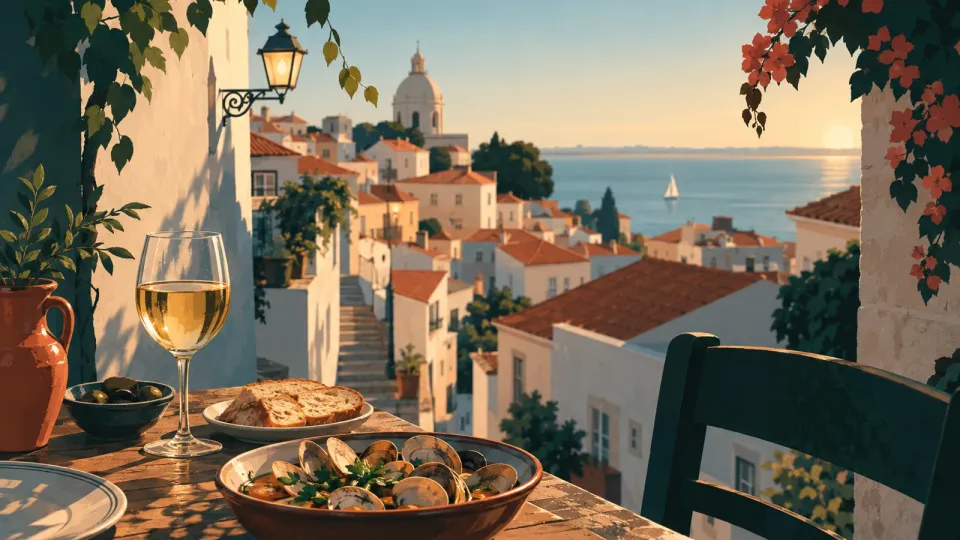
Alfama has great little tascas, but you have to pick the right one
Alfama swallows visitors in a rush, and that changes everything: prices go up, honesty goes down, and you suddenly see “bacalhau” that tastes like tourism. The trick is simple, look for places that feel like proper neighbourhood homes, with a short menu, classic dishes, and service that does not push you toward a fado experience first, food second.
Instead of trying to beat Alfama by force, choose with intent. For lunch, you want food that can handle a walk and still pairs well with a beer or a house wine, without the pressure of a show. For dinner, you either want a spot that treats tradition like kitchen work, or a fado venue where the music is not just marketing.
There is one rule I always use, and it dramatically reduces the chances of ruining your day: if the menu looks like a tourist catalogue with “fado show” in huge letters and “generic Lisbon” dishes, run. In Alfama, the real tascas usually sound more modest.
And yes, cod exists in Alfama, because all of Lisbon is talking about it. But that is not an excuse for repetition. Bacalhau à Brás, for example, is made with shredded cod, potato straw, fried onion, scrambled egg, olives, and chopped parsley, so when it is done well it has a clear signature. (pt.wikipedia.org)
If you want an honest map of what is worth it right now, here is a short list with no drama: 5 tascas that survive tourism, 3 picks that are worth booking, and also 2 to 3 overrated places that everyone points to, but I would not take guests to, just to avoid the risk.
Practical note: Alfama is all hills and tiny alleys. Even if you reserve, plan for an extra 10 to 20 minutes of walking, depending on where you enter the neighbourhood.
The 5 Alfama tascas that still feel like the neighbourhood (and what to order)
Here is the useful part: 5 tascas that, in my experience and based on what you can find on menus and public descriptions, keep their focus on traditional cooking and Alfama’s rhythm. They are not “perfect for social media”. They are good for actually eating well.
-
Taberna Sal Grosso (Alfama)
If you want snacks and cod that does not feel like an excuse, this is one of the most consistent options. It is on Calçada do Forte 22. (tabernasalgrosso.pt)
What to order: bacalhau pastel or cod in a “snack” version, if it is on the daily menu. On a recent menu, you can find items like pastel de bacalhau. (thefork.com)
-
Tasca do Chico (Alfama)
This is a safe bet when you want Portuguese food with energy, and cod shows up with real presence. There are records of typical dishes that include roasted cod, bife à portuguesa, caldo verde, and bacalhau pastéis. (guiadacidade.pt)
What to order: roasted cod or caldo verde to warm up before the walks.
-
Taverna d’El Rey (Alfama)
If your trip includes fado as part of the plan, this makes sense, because the public reference ties the restaurant to the neighbourhood’s history and symbolism, and it is linked to fadista Maria Jô-Jô. (visitlisboa.com)
What to order: go for the classic Portuguese dishes and pick a main course grounded in local tradition, without trying to “invent” your dinner. The magic here is the context.
-
Tasca da Bela (Casa de Fados em Alfama)
Tasca da Bela is one of those doors everyone has heard of, so it can fall into the “too touristy” trap. I like using it the right way: as a dinner, with rhythm, and without demanding originality.
There are public references to its fado-meets-meals format, with dishes such as pataniscas and peixinhos da horta, and the show starting at the times listed on booking platforms and local info. (timeout.pt)
What to order: pataniscas if they are on the daily menu, then choose a simple main course.
-
Antù Alfama
If you want something more contemporary without losing the identity, Antù is an alternative for a dinner with some sophistication, but without turning into an “author’s restaurant” that leaves you lost.
The public description places the venue in the heart of Alfama, with a proposal for contemporary Portuguese cuisine with Mediterranean inspiration. (tripadvisor.com)
What to order: go for a main course with fish and vegetables as the centre of the plate, and finish with a dessert that is not “all chocolate”. In Alfama, chocolate usually shows up in very industrial versions.
The part that matters: in all these options, the strategy is the same. Pick what feels most “Alfama” in your moment, not what sounds most exotic on the menu.
2 to 3 overrated spots in Alfama (so you do not ruin your night)
Not everything that appears at the top of search results deserves the line and the high expectations. Alfama has highly talked-about places because they are near photogenic viewpoints, or because they do fado with big-show pomp. What I criticize is not the tradition, it is the mismatch between promise and kitchen.
-
Places where “fado show” drives the menu
It might look like a generic warning, but it becomes very specific once you see it: the menu has two pages of show and half a page of food. In those places, the food is often the vehicle for the show, not the reason you are there.
-
Places where the cod is always the same “copy and paste” version
Cod can be great, but it has to be consistent with the technique. If a restaurant sells bacalhau à Brás as “the standard cod” and the texture is always off, you have a problem. I remember the typical bacalhau à Brás composition: shredded cod, potato straw, fried onion, scrambled egg, olives, and chopped parsley. (pt.wikipedia.org)
-
Restaurants with menus too long for the size of the space
In Alfama, many places are small. If the menu looks “too big” for the kitchen, generally speaking it means there are dishes that are not cooked to order with the same care.
I am not going to name names just to be uncomfortable, because that would be unfair, and probably indefensible to someone who likes that format. Instead, use a simple way to filter on the ground.
How to spot an overrated place before you step in (quick check in 20 seconds):
- Look at the menu and compare a short list of classic dishes with an infinite list of variations.
- Ask what the dish of the day is. If there is no clear answer, you have failed the test.
- Check whether there is a main dish that fits the tradition (cod with proper technique, meats that come back to the table with intention, soups and snacks that do not feel “pre-fabricated”).
If you already have a reservation at one of the famous places and you do not want to cancel, you can still save the meal: order only one cod item or one main course. Do not build a “tasting lunch” with four things. Alfama does not forgive excess.
Where to eat in Alfama for lunch: the best spot for Sunday
For Sunday lunch in Alfama, what works best is a place that can handle conversation, has dishes you can “recharge with”, and is not thinking only in terms of fado shifts.
My pick for Sunday is a tasca with traditional cooking and a neighbourhood pace. To keep it simple, I give you one route: Tasca do Chico, because it is the kind of place where roasted cod, bife à portuguesa, and even starters like bacalhau pastéis make sense for a long weekend meal. (guiadacidade.pt)
What to order for Sunday, no-fail version:
- If you want comfort: caldo verde first.
- If you want a real “dish of Lisbon”: roasted cod (or whatever cod option fits their logic and is consistent with what the restaurant presents publicly).
- If your table is mixed: share starters and keep the main course for the centre of attention.
Why is Sunday more delicate than it seems?
Because Alfama fills up with visitors, and restaurants feel the pressure. At that time, the priority stops being “pampering” and becomes “speed and stock”. If you land in a place that does not reorganize well, the dish of the day becomes lukewarm, and that ruins your afternoon walk.
When should you book, and when does walk-in work?
- Reservation: if you are going at tight times, 13:00 to 13:30, especially in the centre of the neighbourhood.
- Walk-in: 12:00 to 12:30 or later, like 14:00, when the first wave has already passed.
If you want a second plan, it also works well to have “Plan A and Plan B”. Taberna Sal Grosso is another good lunch alternative that does not depend on the show, because it is described as a taberna with snacks and a focus on traditional cooking. (tabernasalgrosso.pt)
And here is a chef tip, not an influencer one: in Alfama, ask for water and eat a bit slower in the first 10 minutes. Lunch flows better, the kitchen “grabs” your palate more easily, and you end up choosing the main course more confidently.
If this is your first visit, tell me your date and your pace (early or late), and I will adjust the meal order for your day.
Reservations versus walk-in in Alfama: the golden rule to save time
In Alfama, the time you lose standing in line is time you will not get back. The choice between reservation and walk-in depends on two things: time and the type of meal.
Golden rule (works even when the neighbourhood looks chaotic):
- Dinner with fado: reservations are recommended. If you want music, you also want to sit at the right time.
- Dinner without fado as the priority: walk-in can work, but only if you are flexible.
- Lunch: walk-in works better than dinner, but Sunday is the exception.
Practical example, where show timing and hours really matter. At Tasca da Bela, public information indicates fado show times, starting around 21:00 to 21:30 and continuing until about midnight on several days. (tascadabela.eatbu.com)
If your plan is truly dinner with fado, arriving without a reservation near those hours is asking to wander hungry through alleys.
How to decide in 30 seconds when you are standing there:
- Ask your group, “Are we really going for fado, or do we just want to eat well?”. If it is fado, reserve.
- If you still have energy to walk for another 5 minutes, walk-in might be worth it.
- If your energy is on the edge, choose a single plan and reserve.
To make it easier, here is a mini decision calendar:
- Before 13:00: walk-in tends to be easier.
- 13:00 to 13:30: reservations help.
- 20:30 to 21:30: dinner with fado requires a reservation.
- After 22:00: you can still walk in at some places, but only if you are willing to accept a less “pretty” table.
In Alfama, “pretty” often means “poor ventilation and limited visibility”. I prefer to eat well and hear well, even if the table is not the most Instagrammable.
Final observation: Alfama is not only restaurants, it is also noise, echo, stairs. A reservation does not guarantee a great table. It does guarantee that you do not eat at the wrong times.
If you want, share your dates and the number of people, and I will help you build a meal plan with realistic timings (no magical promises).
Your last dinner before you leave: do this for a proper send-off
Your last dinner in Alfama should, by definition, be the place that closes the story of the trip. It is not necessarily the most famous, it is the one that gives you the best memory of flavour and context.
If you can choose only one line: go somewhere where tradition is fully embraced and it does not feel like “food as a show”. Taverna d’El Rey is a strong choice for that role, because it is publicly presented as an Alfama restaurant, on a main entrance street of the neighbourhood, with ties to history and symbolism, and context connected to fado. (visitlisboa.com)
What to order for your last dinner (keep it simple):
- Start with a snack or a simple soup to open your palate.
- Choose a main course from Portuguese cuisine, and finish with a dessert that is not too heavy.
And here is the rule that prevents regrets: do not use your last dinner to try your “Plan B”. Use it to confirm something you already know works. A farewell meal has to be an intentional choice, not a decision made under stress.
If you prefer a format with clear fado and a more “in the mood” vibe, Tasca da Bela can also be your last dinner, as long as you go in with the right mindset: fado as the experience, food as the base. (timeout.pt)
And if you want a send-off that feels more “around the table” than “on stage”, Taberna Sal Grosso works well for that kind of night, because it focuses on traditional snacks and is associated with the neighbourhood as a taberna. (tabernasalgrosso.pt)
Another mistake many people make when picking their last dinner is distance from where you are sleeping. In Alfama, walking at night can be beautiful, but it also wears you out. So decide in advance, and make sure you can get there and leave without ending up doing a Z-shaped walk.
Before you book, ask yourself:
- Do I want a calm, tasty night with context, or do I want fado as the central event?
- Does my group have the energy for alleys, or do I want to get back quickly?
Pick the answer and book accordingly.
If you tell me where you are staying (area is fine, I do not need the address), I will tell you which of the three fits your final route best.
Mini checklist for ordering well in Alfama (so you do not fall into automatic cod)
The most common mistake in Alfama is treating the neighbourhood like a “gastronomy postcard”. Then you end up ordering what shows up in all the photos, without thinking whether it actually matches your appetite in the moment.
The checklist I use is short, and it works because it forces you to choose with intent:
-
First, choose the role of the cod
- If you want bacalhau that is “almost fail-proof”, bacalhau à Brás has a clear signature: shredded cod, potato straw, fried onion, scrambled egg, olives, and chopped parsley. (pt.wikipedia.org)
- If you are craving something else, do not force cod just because it is “Lisbon”. Alfama has snacks and meats that also work very well.
-
Second, pick based on the hour’s rhythm
- Lunch: order something that will not feel heavy after the walk.
- Dinner: if the house has fado, accept the rhythm and choose a dish that will not make you “sleepy” before the show.
-
Third, use the menu as a signal of the kitchen
A menu that is too long, repetitive, or full of options without focus is almost always a sign the kitchen cannot keep consistency.
-
Fourth, confirm the dish of the day
Even if you are not deciding to order it, the dish of the day tells you whether the kitchen is truly active, or whether it is just serving a fixed menu.
-
Fifth, control the number of “experiments”
In Alfama, I see many visitors ordering 4 things to “try everything”. Then the obvious happens: half of it goes cold, or your palate gets tired. Do the opposite, choose one main course and 1 starter, and let the kitchen shine.
If you want a starting point based on public references: at Tasca do Chico, you can find dishes like roasted cod, bife à portuguesa, caldo verde, and bacalhau pastéis. That gives you a core set of choices without having to guess everything. (guiadacidade.pt)
And at Taberna Sal Grosso, public mentions include bacalhau dishes and snacks such as bacalhau pastel on recent menus. (thefork.com)
What I want you to do with this is simple: when you see the menu, first decide the style of your meal. Then pick the dish. That mental order prevents 80% of bad choices.
And yes, you can still have a less-than-perfect day in a good restaurant. But with this rule, your chances go way up, and your trip becomes a memory of real food, not frustration.
How to fit Alfama into your route without wasting time switching zones
Alfama does not fit as “just another stop”. It fits as a block. That changes how you choose a restaurant, because logistics affect the quality of the experience.
Thinking in blocks is simple:
- Choose an axis, for example, the Castle area to Sé (and back).
- Eat your meal at the point where your walk ends, instead of trying to have dinner on the opposite side of the neighbourhood.
If you are in Alfama with 1 to 2 days in Lisbon, I recommend using the neighbourhood as your night and lunch, not as a 40-minute stop. Alfama punishes rushing.
Now the practical detail that few people mention: after meals, your body asks for less steep areas. So when your day is already tiring, pick places that are more “near the entrance” to the neighbourhood.
Taverna d’El Rey is described as being in one of Alfama’s main entrances. (visitlisboa.com)
For a last dinner before you leave, that is gold. You can dine and still leave Alfama without it feeling like you are walking downhill from a stadium.
To arrive and leave with less stress, use public transport and plan the last walk segment. I am not going to invent prices or detailed timetables here, but you can check official fares and passes before your trip.
For Lisbon, CARRIS publishes information about new fares from January 1, 2026, and confirms that monthly and 30-day passes are not updated in that specific announcement. (carris.pt)
The VIVA portal explains the validity logic and management of tickets (for example, a monthly pass with validity from the first to the last day of the month it was purchased for). (portalviva.pt)
In practice, this gives you less time thinking about tickets and more time eating.
If this is your first visit, here is a quick fit, like a mental calendar:
- Day 1: lunch in Alfama, walk to viewpoints (Miradouros), dinner earlier.
- Day 2: late brunch (or a lighter lunch), and a farewell dinner somewhere where context matters, like Taverna d’El Rey.
And one final rule: do not schedule everything at the same time. Reserve one restaurant for the main moment, and leave a little margin for the second meal. Alfama does not forgive delays.
If you want, tell me how many nights you have in Lisbon and which day has the most energy, and I will reorganize this logic around your schedule.
FAQ about Alfama restaurants: bookings, hours, and what to avoid
FAQ 1: In Alfama, should I reserve, or can I just walk in?
Reservations make sense especially for dinner with fado and for tight time slots. At Tasca da Bela, there is reference to fado starting around 21:00 to 21:30, so arriving without a plan in that window is risky. (tascadabela.eatbu.com)
FAQ 2: What is the best thing to order in Alfama so you do not fall into traps?
If you want something with a clear signature, bacalhau à Brás is a good test: shredded cod, potato straw, fried onion, scrambled egg, olives, and chopped parsley. (pt.wikipedia.org)
FAQ 3: What does “overrated” mean in practice in Alfama?
Usually it is a place where the show drives the menu, or where cod shows up as a “tourist default” instead of being chosen with coherent technique. It is not the fado, it is the mismatch.
FAQ 4: What is the best option for Sunday lunch in Alfama?
I would go for Tasca do Chico for a Sunday lunch that can handle conversation and brings classics like caldo verde, roasted cod, and bacalhau pastéis. (guiadacidade.pt)
FAQ 5: What is the best place for the last dinner before you leave?
To close the trip with less logistical stress, Taverna d’El Rey is a solid choice because it is described as being in one of Alfama’s main entrances. (visitlisboa.com)
FAQ 6: Where can I confirm prices and transport to get to Alfama without stress?
What matters is the official fare information and the ticket-pass portal. CARRIS publishes information about fares from January 1, 2026. (carris.pt)
And the VIVA portal explains the validity of a monthly pass. (portalviva.pt)
FAQ 7: How do I avoid spending too much time walking after dinner?
Book your dinner at a place with easy access to your way out of the neighbourhood, and avoid the “opposite end” of the day. If you are finishing your trip, prioritise spots with more direct access, like the ones described as being in Alfama’s main entrances.
If you want, tell me what day of the week you are visiting Alfama (Monday, Thursday, Saturday, etc.) and whether you prefer fado or simply great food. I will adapt the choices to your pace.
Closing thoughts: plan each meal before you go
If you want to leave Alfama with the right feeling, do one thing even before tomorrow: choose the role of each meal.
- Sunday lunch: pick a place with the pace of neighbourhood cooking, like Tasca do Chico (classics and energy). (guiadacidade.pt)
- Your last dinner: choose context and logistics, like Taverna d’El Rey, described as being in one of Alfama’s main entrances. (visitlisboa.com)
Then apply the rule that protects you from “tourism by inertia”:
- One main course, one starter, and zero plans to “try everything”.
If you have fado on the horizon, use the reservation as a tool. For a place with fado, Tasca da Bela has public references for show start times, so it makes sense to book to avoid arriving late to what you came for. (tascadabela.eatbu.com)
Finally, and this is practical: save an alternative for each meal. If the first place fails because it is full, you have your Plan B without wasting time, without being hungry, and without doing an exhausting improvisation through stairs.
Written by Andre Ginja, Founder, andginja
Related guides
Best restaurants in Lisbon, a local’s working list
Best restaurants in Lisbon, by occasion, with overrated picks called out, tasca value meals under €25, and pastelaria stops. Download list.
Michelin restaurants Lisbon: the actual list
michelin restaurants lisbon, ranked by value. Book the right star first, spot the Bib Gourmand, and expect realistic tasting menu prices.

Chiado Lisbon: eat, shop, and see in one walk
Chiado Lisbon in 2 to 3 hours: the best walk, Bertrand Bookshop, Café A Brasileira, top lunch picks, and a Bairro Alto sunset plan.
Lisbon markets: Ribeira to Campo de Ourique reality
Lisbon markets explained fast: when Time Out Market is worth it, Campo de Ourique for locals, and the quiet Mercado da Baixa. Get the plan.