
Algarve Beaches: Pick the Right Coast Stretch
Algarve beaches by region, western coves, central resort sands, eastern barrier islands. Learn what each stretch is best for, how to reach it.
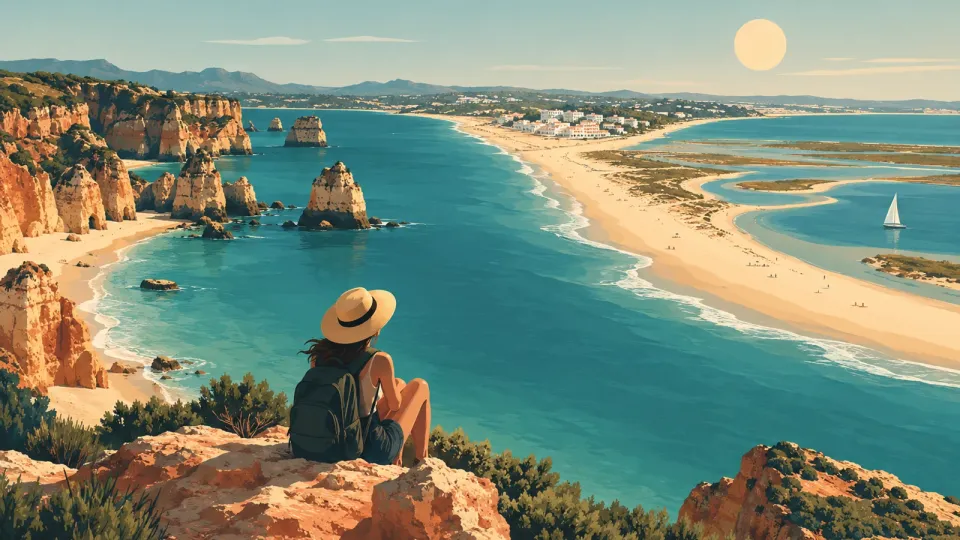
Algarve beaches are not one experience, pick the coast stretch
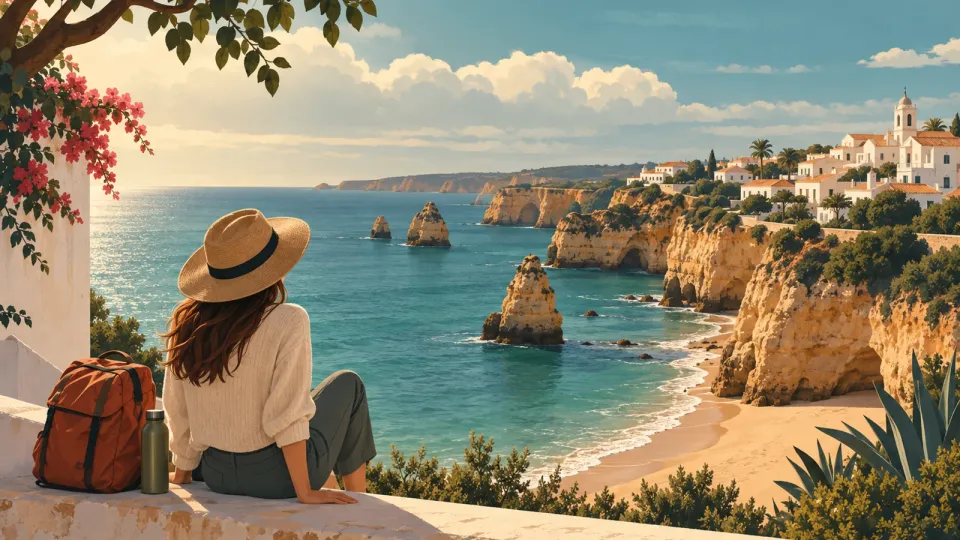
If you treat “Algarve beaches” as one list, you will waste time. The Algarve’s shoreline changes fast, from the Atlantic cliff coves in the west, to the wide resort bays in the middle, then to the protected barrier islands and lagoons in the east.
Here is the surprising part: the same day can feel different depending on which stretch you choose. In the west (Lagos area), you often trade space for shelter and dramatic views. In central resorts (think Albufeira and nearby), you get longer sand, easier logistics, and more services within walking distance. In the east (Ria Formosa and Ilha barreira), your “beach day” is partly a nature visit, with boardwalks, shallow water, and ferry travel.
For a trip you can plan independently, use a simple rule:
- Choose the west for photo-ready cliffs and sheltered coves.
- Choose the center for long beaches and family-friendly access.
- Choose the east for dune systems, calm channels, and barrier island beaches.
This guide compares those three coast styles so you can match beaches to your priorities, not to a generic ranking.
A common mistake is to expect “all Algarve beaches” to be sandy, flat, and easy to reach. In reality, some of the most famous bays require stairs, and some are inside protected lagoons where access is managed. If you plan with that in mind, you will arrive ready, pack correctly, and spend your time on the beach you actually wanted.
Throughout, you will see concrete examples from specific municipalities and protected-area guidance, plus practical transport tips for getting around.
Western Algarve coves (Lagos): drama, shelter, and stair access
Lagos delivers the “cliff beach” Algarve look, but it comes with a logistics trade. If your ideal day includes turquoise water and dramatic limestone edges, start in the west with the Lagos coastline, especially the pocket coves around Praia do Camilo and Praia da Dona Ana.
What to expect on the western stretch
- Small to medium coves tucked between cliffs, often photographed from above.
- More shelter than open bays, because headlands and rock formations block wind.
- Staircase access. Even official tourism descriptions mention that Camilo is reached via a stairway with a large number of steps.
For a real comparison, here is how these two famous neighbors differ.
Praia do Camilo vs Praia da Dona Ana (same coastline, different feel)
- Camilo is compact. Its access is via a long stairway (VisitPortugal describes a stairway involving about 200 steps). (visitportugal.com)
- Dona Ana is adjacent but gives you more room to spread out. Lagos municipal guidance lists both beaches in the same access framework and treats them as a linked coastal area. (cm-lagos.pt)
- Some visitors plan a photo-first strategy: one beach early for tight light, then move to the other. Local “choose between” guides commonly frame Camilo as the smaller, faster-filling cove and Dona Ana as a bit more spacious. (discoverlagos.com)
The access rule you must plan around
In the Lagos area, access to Dona Ana and Camilo has been regulated in a formal municipal regulation focused on how people reach these beaches, specifically noting that access is “exclusively” via the extensive staircases. If you ignore this, you can lose time at the top, especially in peak periods. (cm-lagos.pt)
How to pick the right beach for your day
Use this “two question test”:
- Do you want a cove that looks cinematic even from the stairs? If yes, choose Camilo or Dona Ana.
- Do you want to minimize vertical movement? If yes, start by choosing Meia Praia instead of the cliff beaches.
Meia Praia is the big exception in western Lagos. The Municipality of Lagos places Meia Praia close to central waterfront points and identifies it as a main beach area near the city. (cm-lagos.pt)
That matters if you are filming handheld content, carrying towels, or traveling with kids or beach gear.
A photography-minded planning tip (without overpromising)
If your work includes stills or video, treat the cliff top as part of the shoot. The Lagos coastline around Ponta da Piedade is often framed from viewpoints and cliff paths, and multiple Lagos guides highlight walking paths along the western beaches. Plan one short viewpoint walk before you go down to the sand. (visitus.pt)
What to pack differently for western coves
- Water and layers: even on a sunny day, cliff shade and wind shifts change comfort quickly.
- Footwear: staircases and uneven surfaces matter for steady movement.
- A light kit: these beaches favor less clutter. You will appreciate a small bag you can carry down efficiently.
If you remember only one thing, remember this: the western Algarve is about experience and access trade-offs. Choose coves when you want the scenery, choose the larger beach when you want easy logistics.
Central Algarve resort beaches: long sand, easy logistics, more options
If your priority is a straightforward beach day, the central Algarve’s resort-style stretches usually win. You want a long line of sand, facilities nearby, and fewer “vertical access” surprises. In this zone, planning is less about finding the perfect cove and more about choosing the right bay for your mood.
What “central resort” typically gives you
- More continuous beachfront that supports walking, swimming access points, and family routines.
- A bigger ecosystem nearby: beach bars, rental umbrellas, and food options are generally easier to find within the same coastal area.
- Higher chance of “something happening”, from water activities to evening movement.
Instead of naming every resort beach in the Algarve, focus on the comparison logic that matters for you.
When central beats the west
- You want to move between beaches by car or short transit without thinking about stairs.
- You need room for a towel, a small production setup, or simply a relaxed layout.
- You prefer to arrive later in the day without immediately planning around a tiny cove’s capacity.
When central loses to the west
- You want dramatic cliffs and “postcard” coastal geometry.
- You want the feeling of a hidden cove.
A common misconception is that the “best Algarve beaches” are always the smallest. In practice, a larger resort bay can be the best choice if your main goal is comfort and time efficiency.
A second misconception is that the Algarve center is all the same water. Even within the resort zone, conditions change by how the coastline faces wind and how sheltered the bay is. That is why you should use the coastline style you chose as your first decision.
How to plan your center day like a pro
- Pick your base beach area based on movement. If you want minimal stairs, choose the resort bay.
- Use a short “walk test.” Before you commit for the whole day, walk from your parking or drop-off to the sand once, then decide if carrying gear feels manageable.
- Reserve a different activity slot for late afternoon. Central beaches are often better for strolling, filming relaxed b-roll, and grabbing dinner nearby.
If you also want nature moments, add them with purpose. The east (Ria Formosa) is where barrier islands and dune systems become the main event. The west (Lagos) is where cliffs and coves dominate. Central is where your main beach day stays easy.
A practical tip for independent travel
When you choose central, keep your day plan flexible. Central beaches make it easier to change your mind at the last minute, because you are not betting everything on a single stair-access cove.
Eastern Algarve barrier islands (Ria Formosa): shallow water and protected access
Ria Formosa changes the Algarve from “coast” into “lagoon world.” In the east, you often reach beaches by ferry or boat to barrier islands, like Ilha da Culatra and Ilha da Armona. That is not a detour, it is part of the experience.
Why this stretch feels different
Ria Formosa is a protected natural system where beaches sit behind barrier islands. The result is a different rhythm:
- More shallow, protected waters in many areas, compared with exposed open-ocean cliffs.
- Boardwalks and crossings that guide movement through sensitive dune and lagoon habitats.
- Nature rules you should respect, because this is not a simple “park it and go” coastline.
Protected-area guidance you can trust
The state and protected-area messaging about the barrier islands emphasizes how visitors should reach these islands and how to move responsibly. ICNF (Instituto da Conservação da Natureza e das Florestas) describes the barrier islands in the Ria Formosa context, including places like Culatra and Armona, and frames boardwalks and crosswalks as part of protecting the area. (icnf.pt)
A second source focuses on practical arrival. Ria Formosa’s educational and visitor information material explains how to get to the park and highlights key places and access points like Faro and Olhão. (myriaformosa.com)
How to choose your barrier island day
Use the “water comfort” lens.
- If you want calmer-feeling beach water, start by thinking about lagoon-connected beaches and barrier islands.
- If you want dramatic open-ocean views, that is more likely the west.
One locally described framing for Ria Formosa “impossible to miss” places highlights ferry departure points near Faro (Cais Comercial de Faro) and how ferries depart near Olhão for islands like Culatra and Armona. (riaformosa.pt)
What to do if you dislike ferry planning
Many people avoid the east because they assume they need a complex schedule. The better approach is to treat ferry timing as a structure for your day.
A practical planning framework:
- Choose your island first (for example, Culatra or Armona).
- Plan a beach block around the boat window.
- Build slack time for the walk between docks and the sand.
You will also find operator-specific schedules published by multiple sources. One example, a site focused on Olhão island routes, frames that ferries are a common way to explore the Ria Formosa and indicates that timetables are organized by island and season. Do not treat any third-party timetable as guaranteed for your exact travel day, but do use the approach to decide what to check next. (amoteolhao.com)
Avoid a mistake that ruins the day
People sometimes go to a barrier island expecting a flat, dune-free beach like some resort stretches. But barrier islands include dunes and protected habitat, which means you will walk farther than you expect, and you will follow marked paths.
Pack for “nature access,” not “city beach access”:
- Closed-toe shoes or at least footwear with grip.
- Sun protection for open dunes and boardwalk exposure.
- A small water plan, because you will likely move away from dense city services.
The east is excellent for filming calm water and dune textures. Just remember that your “beach day” includes transport and habitat-aware movement.
Western vs central vs eastern: choose by your goal, not by popularity
Here is a direct decision guide you can use before you book anything: pick your Algarve beach stretch based on what you want your day to feel like.
Goal A: “I want cliffs, coves, and postcard viewpoints”
Choose the western coves (Lagos area).
- Start with Praia do Camilo and Praia da Dona Ana, both accessed via extensive staircases. This is not a minor detail, Lagos municipal regulation explicitly frames access as being exclusively through those staircases. (cm-lagos.pt)
- Use Meia Praia when you want the easy base beach within the same Lagos municipality. (cm-lagos.pt)
Quick self-check: if stairs feel like a deal-breaker, do not force the west.
Goal B: “I want one main beach day with minimal friction”
Choose the central resort beaches.
You are optimizing for:
- Easy movement across sand.
- Nearby services.
- The ability to change plans without losing half the day.
Goal C: “I want calm water, dune textures, and nature-led access”
Choose the eastern barrier islands (Ria Formosa).
- Expect ferry or boat access for islands such as Culatra and Armona in the Ria Formosa system. (icnf.pt)
- Treat boardwalks and marked paths as part of the itinerary because ICNF describes this as protection for sensitive habitat. (icnf.pt)
Goal D: “I want beaches where the water quality signal is strong”
For a quick proxy, look at the Blue Flag system for specific beaches. As an example within Lagos, the Municipality of Lagos reported that several beaches in Lagos, including Meia Praia, Camilo, Porto de Mós, and Luz, were classified in 2019 with “Qualidade de Ouro” related to excellent water quality. (cm-lagos.pt)
This is not a universal guarantee for every day, but it helps you shortlist.
A budgeting misconception to avoid
People sometimes assume “east is free and west is expensive,” or the opposite. Your real cost driver is access type:
- West: you may spend more time and effort on footwear and stairs.
- East: you may spend more time and money on ferry and transport to the island.
- Center: you may spend more on convenience and nearby services.
Make your choice based on your priorities, then plan logistics to match.
If you are traveling with gear for photography or filming
- West: plan shots from above, then descend with a minimal kit (and confirm access rules).
- Center: plan a wide b-roll sweep along one bay.
- East: plan for textures and calm water, then build time for ferry movement and walking paths.
This framework keeps you from the most common trip failure mode: arriving at a beautiful beach that does not match your actual day goal.
A day-by-day itinerary template that matches each coast stretch
Use this template to build a trip that feels intentional. It is designed for independent travelers planning their own Algarve days, and it matches the three coastline styles.
Template: 3 beach blocks, one per stretch
Block 1, Western coves (Lagos) for scenery and cove shots
Morning
- Start with a cliff-coast walk and viewpoint shots.
- Choose between Praia do Camilo and Praia da Dona Ana based on how much you want to descend and how compact you prefer the sand.
Midday
- If you want a break from stairs, swap to Meia Praia for a calmer, easier sand base within Lagos. (cm-lagos.pt)
Evening
- Keep dinner near your accommodation base so you do not lose time moving.
Block 2, Central resort beach for long sand time
Morning
- Arrive early for parking and to set up without rushing.
- Walk from drop-off to sand once, then decide if you will bring a heavy kit.
Midday
- Stay longer. Central beaches are built for staying put.
Evening
- Plan a low-effort coastal walk or content capture (wide shoreline, promenade rhythm).
Block 3, Eastern barrier islands (Ria Formosa) for nature-led beach time
Morning
- Choose your island, for example Culatra or Armona.
- Plan ferry time as part of your schedule. Ria Formosa visitor framing highlights departure points near Faro and Olhão and the barrier island concept. (riaformosa.pt)
Midday
- Use boardwalks and marked crossings. ICNF guidance emphasizes protecting habitat by using boardwalks and crosswalks. (icnf.pt)
Afternoon
- Film or photograph textures, dunes, and shallow channels.
A realistic misconception to correct
Some travelers treat the east as an “add-on” and then rush it. Barrier islands reward a slower pace because you are moving through habitats. You need time for transport, walking, and settling.
How to adapt this template for your transport style
If you are car-based
- West: expect parking constraints near stairheads at peak times, so arrive early.
- Center: your car is a shortcut for switching between adjacent bays.
- East: parking plus ferry planning may take longer than a straightforward beach.
If you are train-based, using Lagos and Faro as anchors
The Algarve line connects major Algarve nodes. CP (Comboios de Portugal) describes the Algarve line as an axis that includes Intercidades and Alfa Pendular services to Faro and Regional services between Lagos and Faro and between Faro and Vila Real de Santo António. (www2.cp.pt)
CP also states that electrification works enable direct journeys between Vila Real de Santo António and Lagos from 19 July (year stated by CP material). CP describes the change as avoiding transfers in Faro and includes a frequency increase for Regional in peak hours. (www1.cp.pt)
Important note: for exact departure times on your day, check CP’s timetable search. (cp.pt)
One specific thing you can do next, right now
Pick your three stretch categories (west, center, east) and assign one beach “anchor” to each block. Once you do, your packing becomes obvious and your travel time stays realistic.
How to get between beach stretches without losing a whole day
Transport can quietly decide whether your Algarve trip feels smooth or stressful. The key is to separate “local beach movement” from “regional travel” and then plan around the travel structure.
Step 1: Use the Algarve railway for regional connections
CP describes the Algarve line as combining long-distance services (Intercidades and Alfa Pendular) to Faro and Regional services on key segments. (www2.cp.pt)
That matters because it lets you anchor lodging in places like Lagos for the west and Faro for the east, then move by train instead of driving the entire coastline.
If you want the simplest east access plan, remember this: Ria Formosa barrier islands connect most easily through the Faro or Olhão side. Visitor guidance for Ria Formosa points to Faro and Olhão access points for reaching islands like Culatra and Armona. (myriaformosa.com)
Step 2: Treat ferries as their own travel block
For the eastern barrier islands, you are not just “going to a beach.” You are joining a lagoon system with ferry departures.
Ria Formosa visitor materials describe where ferries depart from near Faro, and they also describe that ferries go to islands such as Culatra and Armona, and that there is a calm-water option on the east side of Armona. (riaformosa.pt)
The practical implication: schedule your east island block for the time you can realistically dedicate to transport and walking.
Step 3: Use municipal guidance when stair access is involved
In Lagos, the access structure is formal. The municipal regulation for access to Dona Ana and Camilo specifically frames access as being exclusively via extensive staircases. (cm-lagos.pt)
So your movement planning is not just “how to get there.” It is “how to get down and back up.” If you plan your day around a stair beach, you also plan around hydration, footwear, and time.
A quick time-planning checklist you can use immediately
- For western coves: decide how many stair descents you will do in one day. One is often enough.
- For central beaches: allocate longer continuous beach time, because these are easier to use as your base.
- For eastern islands: allocate a full block, not a short hop.
Common mistake to avoid
Many travelers treat travel time as a single number, “Lagos to Faro” or “Faro to Olhão.” In reality, your total time includes walking, waiting, and transfers. CP’s structure for the Algarve line, and Ria Formosa’s ferry-based access model, make it easier to plan correctly when you think in blocks rather than in a single transfer hop. (www2.cp.pt)
If you want one concrete next step
Write your trip on one page as three blocks: West (Lagos coves), Center (resort bay), East (Ria Formosa barrier island). Then map transport by block, using CP for regional legs and ferry access for the east. This structure prevents last-minute scrambling.
Practical beach planning checklist (what to pack, where to stand, what to watch)
A great Algarve beach day is mostly planning details. The three coast styles require different “small decisions” because access and conditions differ.
Packing checklist by stretch style
Western coves (Lagos, Camilo and Dona Ana)
- Grip footwear for stairs and uneven coastal surfaces. Camilo is reached via a large stairway. (visitportugal.com)
- Minimal gear for efficient carry-down. The municipal access regulation frames the experience as stair-based. (cm-lagos.pt)
- Water you can carry, because you may be farther from large, easy pickup points.
Central resort beaches
- Sun and shade planning: long sand time means you need steady shade strategy.
- A flexible setup for swapping between swimming, walking, and filming.
- If you are carrying equipment, do a “walk test” once before committing.
Eastern barrier islands (Ria Formosa, Culatra and Armona)
- Closed-toe shoes for dunes and boardwalk transitions. ICNF frames boardwalk and crossings as protection for habitat. (icnf.pt)
- A sun kit plus water. Dune exposed walking is not the same as shaded town promenades.
- A ferry block mindset, because your schedule includes transport time.
Where to stand and how to shoot (without guessing weather)
Since you are planning your own trip, focus on light and viewpoint strategy that does not depend on guaranteed conditions.
- West: use the cliff top as your first capture location, then descend only after you have your overview shots.
- Center: capture a wide shoreline sweep, then step toward activity zones for texture.
- East: focus on lagoon edges, dune lines, and shallow water patterns.
What to watch for, access and rules
In some areas, access is not just informal. Lagos municipal guidance includes formal regulation for beach access to Dona Ana and Camilo. (cm-lagos.pt)
In protected lagoon systems, ICNF guidance emphasizes using boardwalks and crosswalks to protect habitat. (icnf.pt)
These are not “paperwork details.” They change how you move, what route you take, and how comfortable you are.
A simple misconception correction
Do not assume every “famous Algarve beach” is easy to reach. For example, even a standard travel description states that Camilo involves many steps. (visitportugal.com)
Actionable micro-plan for today
- Pick one stretch for tomorrow, west or center or east.
- Pack the checklist items for that stretch style.
- Decide your maximum “movement effort” for the day (for west, stairs count; for east, ferry plus dune walk counts).
That is the fastest way to stop surprises and start enjoying the beach you planned.
FAQ: Algarve beaches by stretch, which one should you choose?
Which Algarve beach stretch is best for dramatic cliffs and cove swimming?
Choose the western Algarve around Lagos, especially Praia do Camilo and Praia da Dona Ana. Camilo access is stair-based, with VisitPortugal describing the route as involving about 200 steps. (visitportugal.com) The Lagos municipality also regulates access for Dona Ana and Camilo, describing stair-only access. (cm-lagos.pt)
If I do not want stairs, where should I go instead?
For a lower-effort base in the same Lagos area, pick Meia Praia. The Municipality of Lagos lists Meia Praia as a main beach area positioned near key points in Lagos, including the historic center area. (cm-lagos.pt)
What makes the eastern Algarve (Ria Formosa) different from normal beaches?
It is a protected lagoon and barrier island system, so beach time often includes ferry or boat access. ICNF describes barrier islands and emphasizes protecting habitat by using boardwalks and crosswalks. (icnf.pt) Ria Formosa visitor materials also highlight access via Faro and ferries to islands such as Culatra and Armona. (riaformosa.pt)
Are central Algarve resort beaches good if I want one simple beach day?
Yes, central resort-style beaches are typically best for a long, continuous beach block with easier local movement. The trade-off is that you usually give up the extreme cliff-and-cove look you get in Lagos.
How do trains help with Algarve beach planning?
CP describes the Algarve line as serving Faro with Intercidades and Alfa Pendular, and serving Regional routes including Lagos to Faro and Faro to Vila Real de Santo António. (www2.cp.pt) For exact schedules on your travel dates, use CP’s timetable search since departures vary. (cp.pt)
What is the best way to avoid a bad match between your beach and your day?
Use the stretch selection rule:
- West for cliffs and coves (plan for stairs).
- Center for long sand and convenience.
- East for barrier island beaches (plan for ferry time and dune movement).
Then choose your packing kit based on the stretch style. The goal is to match access reality to your comfort level, not to chase one generic “best beach” list.
Conclusion: Build your Algarve beach plan in three moves
If you remember nothing else, remember this: the Algarve is three different coast experiences. When you choose western coves, central resort beaches, or eastern barrier islands on purpose, you avoid the most common trip mistake, arriving at a beautiful beach that does not match your day.
Use these three moves to make your plan work.
- Choose your stretch type first
- West (Lagos) for cliff coves like Camilo and Dona Ana, and plan for stair access rules. (cm-lagos.pt)
- Center for one easy long beach block with more logistical simplicity.
- East (Ria Formosa) for barrier island beaches, plan for ferry access, and use boardwalks and marked crossings. (icnf.pt)
- Assign one anchor beach per day block
Pick one “anchor” beach for each stretch, like:
- West anchor: Praia do Camilo or Praia da Dona Ana (and optionally Meia Praia as your low-effort backup). (cm-lagos.pt)
- Center anchor: your resort bay of choice for long sand time.
- East anchor: Culatra or Armona as your barrier island destination. (riaformosa.pt)
- Pack for access, not for an imagined beach
- West: grip footwear, minimal kit.
- Center: sun and easy movement.
- East: footwear for dunes and boardwalk transitions, plus ferry time in your schedule.
One specific thing you can do today
Open a notes page and write three lines:
- “Tomorrow, West, Lagos, anchor beach is ____.”
- “Next day, Center, anchor beach is ____.”
- “Final beach block, East, Ria Formosa, anchor island is ____.”
Then, based on those choices, check only the access type you need (stairs for Lagos, ferry for Ria Formosa, simple beach logistics for the center). This single step turns “Algarve beaches” into a plan you can follow.
Related guides
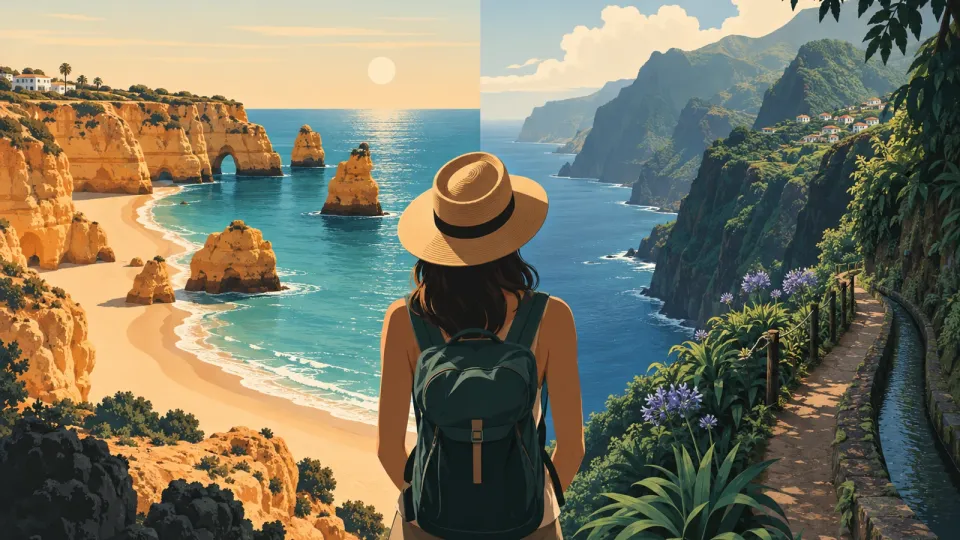
Algarve or Madeira: choose by beaches, walking
Algarve or Madeira: choose by beaches, walking and transport. Compare sand versus cliffs, levadas versus coastal trails, and plan routes car-free or with ease.
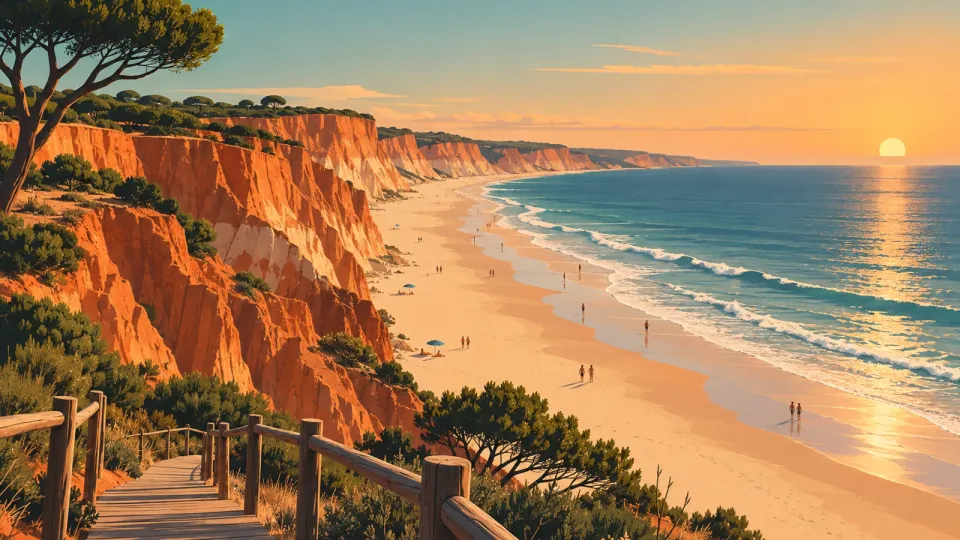
Praia da Falésia: the Algarve’s longest beach, what no one tells you
Praia da Falésia, 6 km of sand: a practical guide to entrances, real parking, best light and sunset, and whether resort stays are worth it.
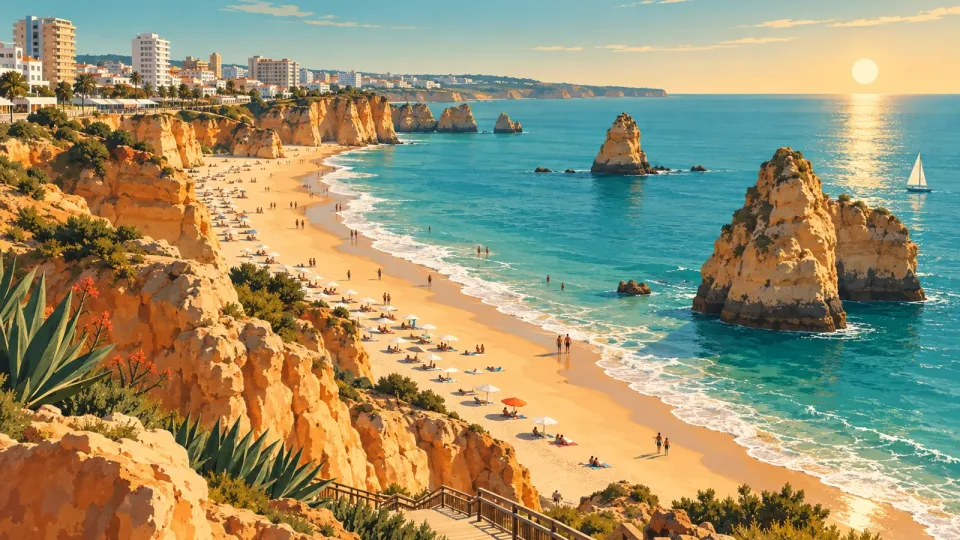
Praia da Rocha, honest Algarve hero guide for Portimão
Praia da Rocha, honest guide: where to stay, how to get from Portimão, parking, where to eat without tourist traps, and the best beach time.
Algarve in October: Plan Your Trip Step by Step
Algarve in October can work well if you plan around cooler nights and rain chances. Use a town base, flexible beach time, and packing checklist.