
Madeira beaches: sand, pebbles, and natural pools
Madeira beaches guide: sand, pebbles, and natural pools. Learn what is paid versus free, plus practical tips to plan your best coastal swim.
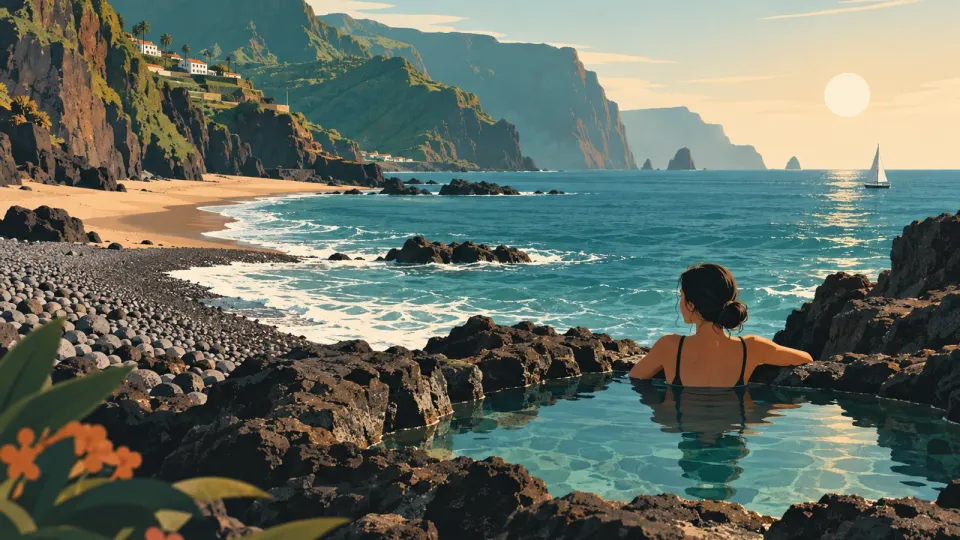
Madeira’s “beaches” are often black sand, smooth pebbles, or lava pools
Most islands have a simple choice, sand beach or rock cove. Madeira flips that idea. On much of the island, volcanic coastlines give you black volcanic sand, smooth pebbles, and natural sea-water pools carved by lava. That is why “the beach day” you picture may actually be a pool day.
A good mental model is this: Madeira coastal bathing places usually fall into three buckets.
- Beaches (sand or pebble shore): you enter from the shoreline.
- Lidos and bathing complexes: the town builds a sea-water pool or protected steps and platforms.
- Natural pools: sea water enters lava rock hollows through openings, often with less predictable conditions.
This distinction matters for planning. A “beach” with imported sand can behave like a classic beach, while a “natural pool” can be calm one day and rough the next, because waves surge into rock channels.
One more surprising point: even when you want sand, Madeira can be picky. Several classic sand areas on Madeira have sand that is not originally volcanic. Many guides describe the sandy beaches at Calheta and Machico as having sand that was imported. (portugalgetaways.com) On the other hand, the island’s best-known natural swimming places are famous precisely because they are lava rock pools, not a shoreline beach. (pt.wikipedia.org)
Before you pick a coastline, decide your priority.
- If you want maximum comfort (showers, changing rooms, lifeguards), aim for a lido or paid natural-pool complex.
- If you want maximum nature and photography, choose free natural pools or pebble beaches, but pack for variable entry conditions.
Keep this filter in mind as you compare Madeira’s coast island-wide, from Funchal’s sea-water pools to the north coast’s lava basins.
Paid natural pools in Porto Moniz vs free pools nearby (how to choose)
Porto Moniz is the easiest place on Madeira to spot the island’s “natural pool” style, but it is also where visitors make the most common mistake: they think there is just one pool area. Porto Moniz actually has more than one pool zone along the seafront, including a municipal paid complex and other more exposed natural areas nearby. (madeirainfo.com)
Here is the practical difference you can use immediately.
The municipal paid pool complex (Piscinas Naturais do Porto Moniz)
The paid complex is the one set up for visitor comfort. Sources describing the municipal facility emphasize amenities like sun loungers, showers, and safety support, and also note differences by season in opening hours. (findmadeira.pt) Even when sources vary on exact hours, the key planning idea stays the same: a paid complex is designed to be more predictable for families, and it typically has staff or a managed setup.
The more “natural” free-access pools nearby
The other areas around Porto Moniz are often described as more raw and more exposed to the Atlantic, which can make them better for dramatic surf photography but less reliable for a calm swim. (flagra.pt) That does not mean “unsafe by default,” it means you should treat entry as variable.
How to decide in one minute
Ask yourself:
- Do you want changing space and a managed bathing setup? Choose the paid Porto Moniz natural pool complex. (madeirainfo.com)
- Do you want wild rock pools and a more exposed coastline feel, and you are willing to read the sea before entering? Choose the free natural pools nearby. (thejolie.pt)
What to pack differently
For the paid complex, pack like a beach day.
- Towel
- Swimwear
- Water shoes if you have sensitive feet
For the free pool areas, pack like a rocky-entry day.
- Water shoes (traction matters on volcanic stone)
- A small dry bag for your phone
- A light layer for wind near the north-west corner
One misconception to avoid
Do not assume that “natural pool” automatically means “always calm water.” Natural pools depend on wave energy and how water gets into the lava openings. Sources describing the Porto Moniz system stress how sea water fills pools through rock channels. (flagra.pt)
If you only have one north-west swim slot, you can still make the right call by matching your comfort needs to paid versus free pool zones.
Seixal’s black-sand beach and Poças Naturais for a “pool within a bay” day
Seixal gives you a different Madeira mood. Instead of the dramatic Porto Moniz vibe, Seixal often feels like a protected bay where volcanic cliffs frame a black-sand shoreline, plus nearby natural pools that look like sea-water basins.
A common way Seixal gets described is as a pairing: Praia do Seixal (black-sand beach) with Poças Naturais do Seixal, also linked with names you may see like Poças das Lesmas in travel references. (guiailhadamadeira.com) Many sources describe these pools as volcanic-origin natural pools close to the Seixal beach. (portugaltravel.org)
What kind of entry you can expect
Plan for a pebble-to-sand mix and rocky edges.
- The shoreline is typically not “soft golden sand” like Porto Santo.
- The pool edges are usually volcanic rock, which can be slick after waves.
Because access and footing matter, you should treat this as a water shoes and careful entry location, not a bare-foot casual beach.
Paid access and facilities: what to check on arrival
For Seixal, you will see references that separate the general beach area from managed or concession arrangements. Some sources describe the broader Seixal visit areas and note the presence of facilities in the wider bathing zone, while other pool pockets are described as more natural. (visitportugal.com)
To avoid guesswork, use this checklist on site.
- Look for any signposted ticketing or restricted access at the entry point of a pool zone.
- Confirm whether the spot you plan to use is public beach access or a separate regulated bathing area.
- If a pool area is concession-managed, follow posted rules about swim conditions and allowed entry points.
A practical navigation tip for photographers
Seixal is photogenic because the black sand shoreline and natural pools create contrast: dark rock, blue Atlantic water, and surf foam. Travel guides and natural-pool write-ups often emphasize that the pools sit close to the beach area, so you can shoot both shoreline and pool compositions in one walk. (guiailhadamadeira.com)
Common mistake: going at the wrong moment
Natural pools and semi-protected bays can change quickly with the tide and wave sets. If you arrive and see strong surge at the openings, do not force it. Step back, observe the rhythm, then enter once water movement looks manageable.
If your goal is a calmer, scenic swim day with black-sand textures, Seixal is often the most rewarding alternative to Porto Moniz’s best-known lava complex.
Funchal’s sea-water lidos: when you want steps, platforms, and a safer swim feel
If you are staying around Funchal, you might want a swim without committing to a north-coast day trip. In Funchal, the solution is often a sea-water bathing complex, sometimes called a lido.
A flagship example is the Complexo Balnear do Lido in São Martinho, Funchal. Sources identify it as a known open-air sea-water pool complex in Funchal. (pt.wikipedia.org) This is a different experience from Porto Moniz’s lava basins, because the layout is built for visitors: you do not need to “read” rock entrances to find water access.
What a lido changes for your planning
A lido usually gives you:
- Clear entry points (steps and platforms)
- A more controlled bathing space compared to open rock pools
- Facilities you can use without walking along uneven volcanic shorelines
Even if the exact set of facilities varies by season, tourism descriptions of Madeira’s bathing complexes repeatedly emphasize visitor comfort items such as changing or bathing support in sea-water pool areas. For example, official tourism materials describing Madeira bathing and beaches mention amenities like showers, changing access, and snack bars in the summer for pool and beach spaces. (visitportugal.com)
How to distinguish a lido from a “natural pool” on your map
Use this quick rule.
- If you see a named bathing complex in the city center or near the promenade, it is likely a lido.
- If you see terms like Piscinas Naturais or Poças Naturais, it points to natural lava rock pools.
The misconception to avoid
Do not assume Funchal sea-water pools are the same thing as private resort pools. Complexes like the Lido are public-facing bathing spaces in the city, with their own rules and operations.
Where to focus your time
If you want the simplest swim day in Funchal, plan your time like this:
- Start in the late morning to give yourself time to find the entrance.
- Bring swim shoes if you expect rough edges around pool steps.
- Plan for wind. The Atlantic can feel sharper on exposed promenade edges even when the city feels warm.
What to verify before you go
Because operations can change seasonally, check for signage on site about:
- Entrance rules
- Any seasonal closure days
- Whether loungers or lockers are available
If your priority is comfort and predictability, Funchal’s lidos are the best “urban swim” option, and they let you enjoy Madeira coast water without the long drive to the north-west.
Pebble and black-sand beaches: the traction and comfort test you must pass
Madeira’s most common beach texture is not fluffy sand. You will often find black volcanic sand and smooth pebbles. That sounds minor until you step onto it, because footwear, entry angle, and waterline access change how safe and enjoyable your swim feels.
Many Madeira beach summaries emphasize that the island’s volcanic coast creates shorelines made of pebbles and black sand more often than soft sand. (portugalgetaways.com) This is why “bring shoes you trust” is not advice for worried travelers. It is basic equipment for the coast Madeira gives you.
Do this traction test before you commit
When you arrive at a pebble beach:
- Walk 10 to 15 steps along the wet edge, where stones are slick.
- Notice if your foot rolls sideways. If it does, switch to water shoes.
- Check where you will exit, sometimes the most difficult section is the last 5 meters.
Choose your entry type
Pebble and black-sand beaches usually give you two entry styles.
- Gradual shore entry: you can wade in and swim outward. This is easier for families.
- Rocky edge entry: you step from a ledge into deeper water, or climb down steps near coves. This is better for confident swimmers.
Pack for comfort, not just swimwear
A pebble-beach day needs more than towel.
- Water shoes with a grippy sole
- A small bag for wet items
- Sunglasses with a strap, salt spray hits hard
Common mistake: treating pebbles like sand
Sand hides discomfort. Pebbles expose it. Even if the water is calm, you can still end the day with sore feet if you entered barefoot or rushed your exit.
How to compare beaches quickly
Use a two-question framework.
- Where is my safe exit? If you cannot clearly see where you will climb back up, move to another spot.
- How steep is the waterline? If waves hit the stones with full energy, avoid and switch to a more sheltered inlet.
Why this matters for filming and photography
For film and photography planning, the pebble coast can be a gift. The dark rocks and black sand often create strong contrast, and the shorelines can form dramatic leading lines. But you need stable footing to shoot at the waterline. Stabilize your stance, keep your camera secure, and do not stand on uneven stones near surge.
If you embrace Madeira’s pebble reality, you get a distinctive coast aesthetic and smoother planning than trying to force “classic beach” expectations onto a volcanic shoreline.
Porto Santo is the sand exception, so use it intentionally for a different coastal day
If you came to Madeira expecting long sandy beaches, the island’s sister destination, Porto Santo, is the clear answer. Porto Santo is known for 9 kilometers of golden sand with calm, crystal-like waters described by official tourism resources. (visitmadeira.com)
This matters because Porto Santo is not just “another beach.” It is the best match to the classic “sand beach day” you might be picturing.
How Porto Santo changes the swim experience
- You enter from sand rather than pebbles or lava rock edges.
- The shoreline experience is longer and more continuous, so you can walk with less switching between coves.
The Madeira and Porto Santo tourism pages emphasize Porto Santo’s long golden-sand beach as the signature attraction. (visitmadeira.com)
Use Porto Santo with purpose, not accidentally
If your trip is already planned around Madeira’s island-wide coastal comparison, Porto Santo can still fit, but only if you treat it as the sand counterpoint.
A useful planning approach:
- Reserve Porto Santo for your “classic beach” day.
- Reserve Madeira’s volcanic coast and pools for your “texture and rock” days.
That way your photos and memories match the place, rather than you forcing one coastline style to cover another.
A common misconception
Do not assume Porto Santo is part of the “Madeira beaches” list in the same way. Many beach comparisons put Porto Santo into separate categories because the sand and sea conditions feel different. Tourism and travel resources frequently describe Porto Santo as distinct, with its own beach-focused attraction. (visitmadeira.com)
What to bring
Porto Santo does not eliminate beach prep needs, but it changes them.
- Sunscreen (golden sand often reflects heat)
- Light beachwear
- Water and a hat
Quick decision rule
If your top priority is sand over stone, go to Porto Santo. If your top priority is lava pools and black-coast textures, stay on Madeira.
Even in a Madeira-focused comparison, this “sand exception” helps you build a well-balanced itinerary where each day has a clear coastline identity.
How to verify paid access, closures, and opening hours (without guessing)
The fastest way to ruin a beach plan is to rely on yesterday’s info. Madeira’s bathing areas can change with season, staffing, and municipal rules. So you should verify access and operations using local authority sources when possible.
Here is a verification workflow you can use for Madeira beaches, lidos, and natural pools, with examples from Porto Moniz and Seixal.
Step 1: Identify the category (beach, lido, natural pool)
- Natural pools often appear under names like Piscinas Naturais or Poças Naturais.
- Lidos appear as bathing complexes in city areas, such as the Complexo Balnear do Lido. (pt.wikipedia.org)
- Beaches appear as shoreline beach entries, sometimes with different access routes.
This step matters because each category has different rules.
Step 2: Check the municipality or official visitor information page for that site
For Porto Moniz, there are official municipal pages listing beaches and points of interest, including Piscinas Naturais do Porto Moniz. (portomoniz.pt) There are also municipal document areas that host related records and regulations. (portomoniz.pt)
Even when a travel blog gives advice, treat it as secondary. Use municipal and tourism board information to confirm:
- whether a pool zone is paid
- the general facility description and any season logic
Step 3: Look for rules, tariffs, or regulations documents when you need certainty
For Seixal municipal pool rules, Seixal’s website publishes documents that cover regulations and rules for pool use. (cm-seixal.pt) For municipal managed services in Seixal’s bathing context, documents around concessions and managed areas exist as well. (sociedadesdesenvolvimento.com)
For travelers, you do not need to read every legal clause. You only need to extract the practical pieces:
- Is entry ticketed?
- Are there time windows?
- Are there dress code or entry restrictions?
Step 4: Check opening hours and seasonal closure cues for paid pool complexes
For Porto Moniz, sources describing the paid municipal complex mention season-based opening hour logic. (madeirainfo.com) Because winter and summer schedules can differ, you should avoid planning to arrive at the “latest possible time” unless you confirm the specific day.
Step 5: On the ground, look for three signs
When you arrive at any bathing area, look for:
- Ticket or pay station signage (paid access)
- Rules posters (lifeguards present or not, swim restrictions)
- Gate or fence status (temporary closures)
If the signage is unclear, choose an alternative nearby zone. Porto Moniz is a good example where nearby pool areas can have different access styles, so you can adjust without losing your day. (flagra.pt)
One common mistake to avoid
Do not treat “natural” as a synonym for “always open.” Natural pools can still be subject to safety decisions, weather impact, or municipal management of nearby access.
If you want one action today, save these steps as your quick checklist. Then, when you reach Madeira, you verify locally instead of relying on memory or guesswork.
A practical island-wide coastal comparison plan (north, south, and city)
To compare Madeira beaches, pebbles, and natural pools across the whole island, you need a plan that respects geography. The north-west, the south coast, and the Funchal area give you different bathing styles.
This section gives you a simple comparison framework you can apply whether you have a half day or a full day in each region.
Region 1: North-west, Porto Moniz and the lava pool signature
What you are testing: lava pool entry versus managed comfort.
- Priority stop: Piscinas Naturais do Porto Moniz (paid municipal pool complex). (findmadeira.pt)
- Comparison stop: a more natural pool area nearby if you want a wilder rock look. (thejolie.pt)
Your objective: feel the difference between controlled steps and natural openings that respond to waves.
Region 2: North-east to north, Seixal black sand and Poças Naturais
What you are testing: pebble to black sand shoreline plus nearby natural basins.
- Priority beach: Praia do Seixal described as black sand, with nearby natural pool areas. (guiailhadamadeira.com)
- Natural pool focus: Poças Naturais do Seixal (often referenced with local names). (portugaltravel.org)
Your objective: decide if you like bay-framed rock pools more than open north-west lava pools.
Region 3: City coast, Funchal sea-water lidos
What you are testing: a town-built sea-water pool experience.
- Example: Complexo Balnear do Lido in São Martinho, Funchal. (pt.wikipedia.org)
Your objective: do you prefer predictable entry points and facilities over wild lava rock.
Region 4: “Classic sand” day (optional), Porto Santo
What you are testing: sand and continuous shoreline comfort.
- Signature: 9 km of golden sand. (visitmadeira.com)
Your objective: decide if you need one sand-first day to balance volcanic-coast swims.
How to structure a comparison day like a producer
You do not need a complicated script. Use three data points in your notes so you can choose next time.
- Entry friction: how hard was it to get in and out (bare footing, steps, traction)?
- Water calm: was it wave-swept or protected?
- Comfort features: did you have showers, lockers, and an easy nearby base?
Mistake to avoid when comparing
Do not compare “daytime photo conditions” to “swim comfort.” A dramatic stormy look can create terrible footing and unpredictable surge. Compare by safety and entry experience first, then look at aesthetics.
Step-by-step plan you can follow today
- Pick one region close to your current base.
- Decide your category priority, beach, lido, or natural pool.
- Verify paid access and opening hours using local sources for the specific site.
- Pack according to the category, water shoes for pebble and lava rock days.
When you plan like this, your coastal comparison becomes actionable. You are not collecting places. You are collecting evidence about what works for your swimming style and comfort needs.
FAQ: Madeira beaches, paid pools, pebbles, and natural swimming access
Are Madeira’s “natural pools” the same as beaches?
No. Natural pools are typically lava rock basins where seawater flows in through openings, while beaches are shoreline entry zones made of sand or pebbles. Porto Moniz’s Piscinas Naturais are described as seawater pools formed by volcanic rock. (pt.wikipedia.org)
Which Madeira area is best if I want sand rather than pebbles or lava rock?
For a classic sand day, use Porto Santo. Official tourism sources describe Porto Santo Beach as 9 kilometers of golden sand. (visitmadeira.com) Madeira Island itself has fewer “classic sand” experiences, with many volcanic coast shorelines made of black sand or pebbles. (portugalgetaways.com)
How do I avoid paying for the wrong Porto Moniz pool zone?
First, recognize that Porto Moniz is not just one pool. Sources describing Porto Moniz mention a paid municipal pool complex and also other more natural pool areas nearby. (madeirainfo.com) On arrival, look for ticket or gate signage at the specific entry point you want to use.
Do lidos in Funchal have a different feel from lava natural pools?
Yes. Funchal’s lidos are sea-water bathing complexes built for visitor access. The Complexo Balnear do Lido is described as a known open-air sea-water pool complex in Funchal. (pt.wikipedia.org) Natural pools often require you to read wave conditions because seawater enters rock basins directly. (flagra.pt)
Should I bring water shoes for Madeira pebble and black-sand beaches?
You should assume you will want them. Multiple sources emphasize that Madeira’s volcanic coastline often means pebbles and black sand rather than soft sand. (portugalgetaways.com) Water shoes reduce slip risk during entry and make exits easier when stones are wet.
Is paid access likely to change with seasons?
For some managed pools, yes. Sources describing Porto Moniz’s municipal paid complex note season-based opening logic. (madeirainfo.com) That is why you should verify the day’s access signage or local official info once you travel.
What is the fastest way to compare Seixal and Porto Moniz for swimming style?
Use the same three criteria in both places: entry friction, water calm, and comfort features. Seixal is often described as a pairing of black-sand beach with nearby natural pool basins. (guiailhadamadeira.com) Porto Moniz is known for lava pools, including a municipal paid complex. (pt.wikipedia.org)
What can I do today to improve my Madeira beach day planning?
Pick one specific site you plan to visit and verify its access category (beach, lido, or natural pool) from local visitor information, then confirm paid access signage on arrival. For Porto Moniz, official visitor info pages exist for the natural pool area. (findmadeira.pt)
Make your next Madeira swim day better, starting with one choice
Madeira is not a single “beach island.” It is a mix of sand or pebbles, plus lidos, plus natural lava pools where seawater pushes into rock shapes.
Your best next step is not to collect more beach names. It is to decide which bathing category you want today.
- Choose a lido if you want built entry points and city convenience, like the Complexo Balnear do Lido in Funchal. (en.wikipedia.org)
- Choose Porto Moniz paid pools if you want the municipal natural pool setup for easier comfort planning. (madeirainfo.com)
- Choose Seixal black sand and Poças Naturais if you want bay-framed volcanic textures and you are ready for rocky entry with water shoes. (guiailhadamadeira.com)
- Choose Porto Santo if you want the long sand experience, 9 kilometers of golden sand. (visitmadeira.com)
Then do one verification action before you leave your accommodation: look up the category for your target stop and confirm whether it is paid or free at the specific entry point. Porto Moniz, in particular, can vary by pool zone, so signage on site is your final authority. (thejolie.pt)
If you want one thing you can do today, make it this: write down your “entry plan” in one sentence. Example format:
- “I will visit the pool zone that has steps and managed access, and I will bring water shoes in case edges are slick.”
When your plan is clear, you lose less time to uncertainty, and you spend more time filming, photographing, and actually swimming.
Related guides

Algarve or Madeira: choose by beaches, walking
Algarve or Madeira: choose by beaches, walking and transport. Compare sand versus cliffs, levadas versus coastal trails, and plan routes car-free or with ease.

Porto Santo Beach Guide: Plan a Golden Island Stay
Plan your Porto Santo beach holiday. Learn how to get there, where to swim, Blue Flag zones, and how to choose day trip vs stay.

Madeira in December: Coast vs Mountains Planning
Madeira in December means microclimates. Choose coastal fallback plans and a mountain swap plan using official IPMA weather and IFCN trail status.
Madeira itinerary for 4 days the right way
madeira itinerary for 4 days, split by north vs south climates. Do Funchal, Porto Moniz, the right levada, and Pico do Areeiro sunrise.