
Renting a car in Portugal: what foreigners need to know
Renting car Portugal? Avoid toll, insurance, fuel, and parking traps. Learn Via Verde vs EasyToll, what to buy in insurance, and driving tips.
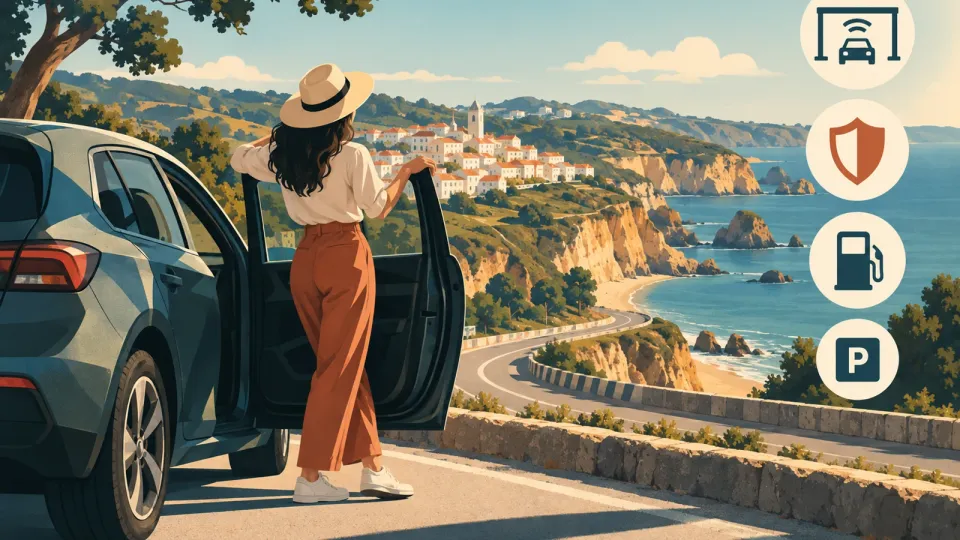
1) Renting car Portugal: the real friction starts at tolls
The most expensive surprise in Portugal is not a dent, it is toll logic. In practice, your rental contract decides whether tolls are handled through a device (Via Verde) or through plate-based billing (EasyToll), and that changes what you must do, when, and how disputes get resolved.
Portugal runs a mixed toll system. Some motorways still feel like “classic” toll roads; others are electronic-only. The key operational point for a rental car is simple: if you drive on an electronic segment without the correct arrangement, you can end up paying extra admin charges after your trip.
For most visitors, your car will come with an e-toll device, and rental companies have been required to equip rental fleets accordingly since January 1, 2023. Hertz explicitly references the legal basis behind that requirement and states the device must be in place for rentals. See Hertz page. (hertz.pt)
Here is the lived, Lisbon-first framing: you can handle tolls like a local with one tiny habit. Before you leave the rental desk, open the contract and confirm what toll solution is attached to your car, then take a photo of the device or the contract line that mentions it. When you are tired, that photo is the difference between “easy, automatic billing” and “why did I get a letter two weeks later?”
If your itinerary is Lisbon, Porto, and the Algarve, your toll exposure is still different by region. Lisbon city driving is mostly about parking and ZTL-style restrictions on certain roads, not motorways. The moment you go intercity, especially on the A2 toward the coast or down to the Algarve, you start hitting electronic toll reality.
Common misconception: “If there is a toll booth, I can just pay cash.” Not always. Some electronic-only corridors do not offer that option, and Portugal uses plate-based systems to charge what happened. AskPortugal’s guide explains the “no booths, you must be registered or use a device” model for the electronic segments. (askportugal.com)
You do not need to memorize toll names. You just need to ensure the rental car is set up to pay the way the road charges, then keep the receipts your contract provides.
2) Via Verde vs EasyToll: choose the one that matches your route
Via Verde is the “drive through and it charges” system for vehicles with the electronic device. EasyToll is the “plate, border setup, then billing” system for foreign-registered cars that enter Portugal by road. If you pick the wrong one, you might still pay tolls, but you make your own life harder at the exact moment you want it easiest.
AskPortugal gives the clearest practical description of both systems: Via Verde relies on the device or registration to pay electronic tolls without stopping; EasyToll is set up at key land borders and charges tolls in the following period to the credit card you registered. (askportugal.com)
So which one matters for you?
-
If your rental car comes with a Via Verde device: treat it as the default and do not improvise by trying to “avoid” it. The car is designed for those lanes.
-
If your rental does not include the device and you still plan to use electronic segments: EasyToll or a border-based entry method can be the safer setup. The goal is to ensure the system can match your plate to the right payment arrangement.
-
If you rented and you changed plans mid-trip: do not assume the original setup still matches your new route. Electronic-only roads do not care about your intentions, they care about the configuration linked to the vehicle.
There is also a “rent the device” option that some visitors use. AskPortugal calls out the concept of “Via Verde Visitors” as a temporary device available via participating locations, often described as a per-day fee plus tolls. (askportugal.com)
What this means in real travel behavior: I drive Portugal constantly, and the biggest time-saver is friction removal. You do that by confirming the toll setup at pickup and then sticking to your plan for how tolls are paid.
Avoid this toll trap #1: using the wrong lane and assuming it will still bill correctly. Even if you have a device, you can miss the intended lane logic (for example, mixing exit types) and create a “how did that get charged?” situation. In forums, travelers describe the confusion this causes when they enter a Via Verde lane but exit through a different style of toll point. (reddit.com)
Now the rule of thumb I use for travelers who do not want to research tolls at 23:00 the night before pickup:
- If you see “Via Verde device included” or equivalent in your rental paperwork, assume Via Verde is the system.
- If you did not receive any device and you did a border entry setup, assume EasyToll is the system.
Finally, know that administrative timing matters. Portugal Tolls’ FAQ explains that if tolls are not handled through an electronic device arrangement, post-payment processes can run within legal deadlines, but admin costs can be involved. (portugaltolls.com)
You cannot negotiate time limits on the road. You can only set up the correct mechanism up front.
3) Insurance in rental car portugal: what to refuse, what to buy
For rental insurance, your objective is not “more coverage.” It is to avoid coverage that looks good on a website but fails on the specific claims that happen in real trips.
Most travelers focus on the deductible or the label (CDW, LDW, SCDW, TP). You should focus on two questions instead:
-
Who is paying for damage to the rental car (collision and damage), and what is your excess if something happens?
-
Who is paying for third-party injury or property claims (liability), and what exclusions exist?
Portuguese rental terms often break coverage into components like CDW (damage), theft coverage, and third-party liability. For example, Waygo’s rental guide (English PDF) defines coverage components such as CDW and Theft Protection, and it also spells out that excess applies when claims occur. (waygo.pt)
A second real-world terms document (Drivalia’s general conditions in English) includes the concept that the renter is part of a civil liability insurance arrangement in accordance with legal requirements, and it discusses CDW and theft coverage concepts within their contractual framework. (drivalia.pt)
Now, what to refuse.
Refuse insurance upgrades that mainly duplicate what your credit card or travel insurance already covers. In my experience, the sales pitch makes this messy, because you are paying for a label while you actually need to verify the exact claim types and exclusions.
Instead, refuse the “I think it covers everything” assumption. Read the contract line that defines what is covered and what triggers the excess.
What to actually get.
-
A damage waiver that reduces or removes the excess for the rental car’s body and mechanical damage. This is your main protection against the common scenario: curb rash, parking misjudgments, hail or wind damage.
-
Third-party liability coverage that matches a realistic driving scenario. Portugal is not reckless, but you will drive narrow streets and crowded roundabouts. Liability is not the place to gamble.
-
Theft protection if it is available as a separate component and the contract makes the conditions clear.
The misconception I keep seeing: “CDW means I do not pay anything if the car is damaged.” In most systems, CDW reduces your responsibility, but you still have an excess, and claims can be handled based on the contract’s rules.
A practical test that takes 60 seconds: before you sign, look for the excess amount (sometimes called franchise, deductible, or excess) for damage and theft. Then find out what scenarios void the coverage.
Portugal-specific exclusions can include driving under the influence, driving outside the authorized territory, or losing keys and interior accessories depending on the contract. Waygo’s guide includes examples of excluded scenarios (such as driving under the influence and driving outside Portugal) as part of its document. (waygo.pt)
Another misconception: “Fuel damage is covered.” No. Fuel-related claims are often treated as negligence or as outside normal coverage, and the contract may exclude interior accessories and keys.
Avoid insurance trap #2 (this one is common in the rental office): signing without photographing the damage and fuel condition report. If you do not have a timestamped record of the car’s existing condition, you can be pressured to accept responsibility for pre-existing issues.
My standard move: a short video walk-around at pickup and drop-off, showing odometer, scratches, wheels, and lights. Then you can argue from evidence, not from memory.
If you want a simple baseline approach: get enough coverage that you can survive a small parking mistake without paying a large excess, but avoid stacked add-ons that only reduce your paperwork and not your real risk.
4) Fuel policy in Portugal: the full-to-full rule and the refill traps
Fuel is where “cheap rate” becomes expensive, because fuel charges are usually priced like a convenience store, not like a gas station.
Your best outcome is a full-to-full policy: you pick up the car full, you return it full, and you pay for exactly what you used at local pump prices.
The most useful practical point is what you do at pickup. If you are handed a car that is not full, stop and fix it there. If the desk refuses, ask for an adjustment in writing, then photograph the gauge.
Some rental contracts set the baseline in their terms and documents, but fuel policy details can differ by company. In the absence of a contract-specific guarantee, treat the full-to-full approach as your safest personal standard.
What goes wrong most often is not that you “run out” of fuel. It is that you return the car “close enough” and the rental company charges you for missing liters at their internal rate.
Even though fuel policy varies, the broader full-to-full logic is universal: prepaid or “return empty” systems shift pricing risk to you, because the rental company chooses the “missing fuel” price you will effectively pay.
A specific, Portugal-shaped reason you might feel trapped: many visitors concentrate on tolls and insurance and ignore how frequently they refuel when driving between coast towns. In narrow Algarve streets, you may park, walk, and then drive again, which multiplies the number of fueling stops.
So here is the friction removal method I recommend:
- Plan your last day fuel stop before your final parking spot. Do not wait until you are trying to return the car under time pressure.
- Use the smallest “reality buffer” you can manage, like planning to return with more than one bar on the gauge.
Now the misconception to kill: “If it is just a few kilometers, I can return with almost-empty.” In rental car agreements, “almost-empty” often becomes “charged for a full tank top-up,” and that pricing is where travelers lose the most.
You should also watch for pump strategy. In Portugal, fuel is frequently cheaper outside city centers, and in places like Lisbon and Porto, the most convenient pumps can be pricier. You save money by refueling earlier on your route, not by hunting the very last pump near the return location.
There is one more operational detail: if your rental company advertises a certain fuel method in its general conditions, follow it. Fuel policy language is part of the legal agreement, and you do not want a dispute about the gauge level.
My “works every time” approach: decide you will always return full, then manage your trip like that decision exists in your navigation. If you do that, fuel becomes a normal expense instead of a rental office problem.
5) Parking strategy in Portugal: Lisbon, Porto, Algarve are different animals
Parking is the fourth friction point, and it is the one that changes your trip’s mood more than any toll does.
In Lisbon, parking is often time-limited, zone-based, and enforced with consistent follow-through. In Porto, you get similar city-center constraints, but the street geometry can change how hard it is to maneuver a rental car into the space you imagined. In the Algarve, parking reality is about season density and narrow hotel lanes.
Lisbon is run by EMEL for many meter and zone systems, and parking meters are zone-priced, with maximum time limits. Leaseboa’s explainer highlights EMEL-operated street meters and the zone-based structure, and it warns that on-street parking can be unforgiving. (leaseboa.com)
The practical implication for visitors: the rental car you booked for road trips does not automatically come with an “easy city mode.” Your parking plan is part of your route.
What to do when you arrive in Lisbon or Porto.
- Assume you will pay for parking, even if you think you will find free street spots.
- Treat garages as your “damage control” option. A garage makes the “return the car cleanly and on time” goal easier.
In the Algarve, parking is less about meters and more about access and maneuvering. Many properties have access that looks simple until you are in a rental car with wider mirrors, and you discover the only safe option is a public lot nearby.
One misconception: “I will just park in a side street for 20 minutes.” Side streets can still be enforced, and time-limits can be strict.
So plan parking like a local who has been burned once.
If you are staying in central Lisbon, I strongly prefer a garage that you can access without stress. If you are day-tripping, I plan one “anchor parking” spot where I can leave the car, then do walking. That reduces the number of times you play the Lisbon parking lottery.
For example, if you are flying into Lisbon and you know you will drive out next morning, airport-area garages can be easier to predict than city-center on-street hunting. Even parking pricing varies by facility and distance to terminals, but choosing a known facility reduces decision fatigue.
Here is my single bulleted list for this section, because parking decisions should be simple:
- Book or pre-select parking for each city stop, then drive to the parking first, not the viewpoint first.
Avoid parking trap #1 (named): trusting “free parking” signs without checking time limits and enforcement zones. If you are parked in the wrong zone, the ticket arrives, then the hassle follows.
Avoid parking trap #2 (named): returning the car after a late dinner run without enough time to repark in the correct facility. Late returns lead to poor fuel decisions and rushed damage checks.
Also, remember the rental car size. If you are visiting historic neighborhoods, do not overestimate whether you can park a wider vehicle. Choose a model that fits the street geometry, not one that fits your online preferences.
If you want a measurable next step: before your first city day, open your map and identify one garage or lot near your accommodation and one near your main activity. If you do that, you stop making parking decisions on the fly.
6) Driving in Portugal: Lisbon, Porto, Algarve, and the speed camera reality
Driving feels different in each region, and the rental car surprises come from the road behavior, not from the vehicle.
Lisbon is where your attention needs to be highest, because narrow lanes, one-way streets, and pedestrian-heavy areas force quick maneuvers. Porto is where the street shapes can turn “I know how to park” into “I need to re-queue.” The Algarve is where you spend time thinking about access roads, roundabouts, and tight hotel lanes during high season.
Your biggest safety upgrade is planning your driving times. If you can, avoid peak hours in Lisbon and Porto, and accept that your “average driving time” will not match what your navigation says if you spend time circling parking.
Speed cameras exist, and enforcement is not theoretical. You will see guidance from Portuguese-focused driving resources that explain that enforcement can include speed cameras and that rental plate information can be forwarded to the rental agency for payment handling. Autolisboa’s guide describes strict enforcement and the general process where fines can be forwarded when you are driving a rental car. (autolisboa.com)
What to do with that information.
Do not treat Portugal like you can speed “a little.” Treat it like you can drive smoothly and safely and still be on time.
Another driving reality is toll road selection. The moment you take a motorway, you are playing in a system where speed, lane discipline, and toll logic all combine.
Practical driving behaviors that reduce stress:
-
Keep lane discipline on toll roads. The “fast lane” thinking of some countries is a mental trap if you are not used to the lane signage.
-
Use navigation early, not at the last turn. Lisbon especially punishes late navigation decisions.
-
Drive like you might need to stop. Many rental car issues happen when you are trying to beat traffic and park quickly.
One travel misconception to avoid: “Portugal roads are forgiving because people drive calmly.” People can drive calmly and still enforce right-of-way and lane rules, and cameras do not care whether you “feel safe.”
If you want to reduce friction, build a driving rhythm.
- One long intercity segment, then one city parking segment.
- Do not attempt two city parking segments back-to-back.
This is also why tour operators often recommend specific sequences, because they reduce the number of “hard” maneuvers.
On the toll side, remember that some electronic corridors are cashless. AskPortugal’s explanation of electronic segments like the former SCUT motorways highlights that you must use the correct device or register the number plate, or you pay via an established mechanism within a time window. (askportugal.com)
So your driving plan is not just about roads. It is about the payment and documentation plan.
Finally, if you are landing in Lisbon and then going to Porto, I recommend doing the intercity drive in the daytime if possible. Not for romance, for setup. Daytime makes parking and signage easier, which indirectly reduces toll and damage disputes.
7) The 4 rental friction points you must plan for before pickup
You only truly have four “gotchas” that matter, and they all show up before or right after you collect the keys.
-
Tolls (Via Verde device versus EasyToll or other plate billing setups)
-
Insurance (what reduces your excess, what is excluded, and what you must document)
-
Fuel (full-to-full rules, the “near empty” charging problem, and refuel planning)
-
Parking (zone enforcement in Lisbon and Porto, access and lane geometry in the Algarve)
Let us make these operational, so you do not end up with a trip that feels like a sequence of minor disputes.
Tolls: your contract and device setup are the decision. Hertz explains the mandatory e-toll device requirement for rentals since January 1, 2023. (hertz.pt) Then AskPortugal explains Via Verde versus EasyToll logic in a way travelers can act on. (askportugal.com)
Insurance: coverage is not the label, it is the excess and the exclusions. Waygo’s guide spells out CDW components and excess logic, and it lists excluded scenarios (like driving under the influence and driving outside Portugal) as examples. (waygo.pt) Drivalia’s general conditions show how civil liability insurance and CDW coverage are framed in rental terms. (drivalia.pt)
Fuel: protect yourself with full-to-full behavior. Even if the exact per-liter penalty depends on the rental agreement, the mechanism is the same: if you return not-full, you pay a convenience markup.
Parking: in Lisbon, the city uses zone-based street meters operated by EMEL, with time limits, and enforcement is consistent. (leaseboa.com)
Now, here is how to handle all four at pickup, in a way that takes you less than 15 minutes.
-
Take photos: car condition, fuel gauge, odometer.
-
Take a screenshot or photo of the toll setup line in your contract (or the device info).
-
Ask one insurance question that forces clarity: “What is my excess for body damage and for theft, and what is excluded?” Then capture the answer if it is written.
-
Ask for the fuel policy and confirm it in writing or in the contract.
That is it. Four checks.
Common misconception: “I will fix it later.” You cannot fix toll lane logic later, and you cannot always fix insurance paperwork later. Parking and fuel you can manage more easily, but only if you plan time and do not rush.
Avoid these two named rental traps.
-
Trap A: The toll improvisation trap. You think, “I will just avoid toll roads.” Then you accidentally use an electronic-only corridor. AskPortugal’s guide explains how those segments require the correct device or plate registration. (askportugal.com)
-
Trap B: The damage evidence trap. You do not document the car’s existing condition, then you return it and the rental company disputes pre-existing scratches.
If you do the four checks at pickup, you prevent both traps.
Your trip becomes about the destination again, not about reconciling invoices.
Andginja reality check, framed as traveler behavior: this is exactly the kind of “quiet operational detail” that decides whether a software-like system (toll payments, insurance claims, booking operations) stays predictable or turns into support tickets.
If you want the simplest next step after reading this: when you book, build a checklist in your notes app, then open it at pickup. That sounds silly, but it works because it stops you from signing while tired.
8) A Portugal road-trip setup that actually works (and reduces surprises)
The goal of a good Portugal car rental setup is not just “arrive safely.” It is “arrive without extra paperwork.”
Here is a route behavior pattern that I see work for Lisbon-based travelers who go beyond Lisbon, and it avoids the typical trap sequence.
First, decide your driving days and your parking days.
- Intercity days are about one or two long segments.
- City days are about walking and one controlled parking location.
This is how you reduce toll and parking interactions, because every time you reposition inside a city, you increase the number of decisions.
Second, choose your rental car size based on the tightest place you will actually drive, not the easiest place. In Portugal, tight streets are common in Lisbon and old-town neighborhoods, and the Algarve can also surprise you with lane widths around resorts.
Third, treat tolls as automatic or as planned. If the car includes a Via Verde device, it is designed to handle electronic tolls in a drive-through model. (sixt.pt) If it does not, your setup must match the toll road technology via EasyToll or a plate billing mechanism. (askportugal.com)
Fourth, manage insurance with evidence, not optimism. If you are buying damage waiver coverage, pair it with documentation. If you are not buying extra, you still must document condition, then drive carefully.
And now the “what I do” part, lightly, because it is operational advice not memoir.
When we shipped a PT-PT voice receptionist pilot at Appleton Medical Care, the timeline and workflow that mattered was the intake and the first record, because everything later depends on what you wrote down at the start. The same principle applies to car rentals: take photos and confirm the exact clauses early, because later you spend your trip arguing about what should have been clear.
Portugal-specific operational reminders:
-
Electronic toll corridors can charge you without stopping. Expect that toll logic to depend on the device or plate registration.
-
Lisbon street parking can be zone-limited and enforced by the city system. (leaseboa.com)
-
Speed enforcement can result in fines handled through rental plate information processes. (autolisboa.com)
Now, the two action upgrades that most travelers skip.
-
Before you leave the pickup desk, verify the toll setup and insurance excess by reading the contract lines, not by listening to the sales pitch.
-
At return, run the damage report again with your photos and video. Make sure the return process matches your pickup documentation.
This is how you prevent the support nightmare where someone says, “The contract said,” and you say, “But I thought.”
One more thing, because it matters for foreigners: if you drive using any local or foreign driving license, verify your compliance with Portuguese driving expectations. While the exact requirements depend on your situation, Portugal provides guidance on vehicle driving and licensing on government portals. (www2.gov.pt)
I am not pushing you into bureaucracy. I am saying: check eligibility before you land, so your rental does not become blocked at the desk.
Closing the loop with a traveler mindset: Portugal road trips are fantastic because the country rewards route selection and calm driving. You ruin that by letting tolls, insurance, fuel, and parking become a set of unknowns.
Fix the unknowns at pickup. Then drive. Then return with evidence.
9) Conclusion: do these 6 checks today, and your Portugal rental stays boring
If you do one thing, do this: treat renting car Portugal like operating a system. Your toll arrangement, insurance excess, fuel policy, and parking plan all interact, and the rental desk is where the configuration happens.
Here are the six checks that turn surprises into routine.
-
Confirm toll setup: Via Verde device included, or EasyToll or plate billing arrangement. Hertz references the rental e-toll device requirement since January 1, 2023, so ask what applies to your specific car. (hertz.pt)
-
Confirm whether electronic-only toll segments apply to your route, especially if you are driving across the country rather than staying in a single region. AskPortugal explains how electronic segments require the correct mechanism. (askportugal.com)
-
Read insurance excess and exclusions, do not rely on labels. Waygo’s guide illustrates how CDW and excess can work. (waygo.pt)
-
Use a full-to-full mindset and plan your last refuel before returning the car.
-
Decide your parking strategy for each city stop. In Lisbon, street parking is zone-based with time limits through EMEL-operated meters. (leaseboa.com)
-
Document pickup and return condition with photos or short video, then match that evidence to the contract.
Two “named traps” to remember:
-
The toll improvisation trap, where you assume you can avoid electronic logic. AskPortugal describes how electronic corridors can be cashless and device or plate based. (askportugal.com)
-
The damage evidence trap, where you return without your own record and you get blamed for pre-existing issues.
One specific next step you can do today: download the Portugal driving cheat sheet so you have toll setup questions, parking habits, and a fuel-return checklist in one place. That keeps you from making decisions while tired at the rental desk.
Download the Portugal driving cheat sheet (no email required).
Related guides

Algarve Without a Car: Faro, Tavira or Lagos
Algarve without a car. Compare Faro, Tavira and Lagos for 3 to 5 nights, then follow a simple checklist for rail, buses, and island access.

Lisbon to the Algarve by train, coach or car
Lisbon to the Algarve by train, coach, or car: compare journey patterns, where you arrive (Faro vs Lagos), luggage rules, and last mile options.

Portugal by Train: Routes, Stations and a Car-Free Week
Portugal by train: routes, stations and a car-free week. Learn CP service types, pick practical stations, and follow a realistic Lisbon to Porto plan without a car.

Where to stay in Madeira: base with or without a car
Where to stay in Madeira: choose a base with or without a car. Compare Funchal/Lido, Caniço, south and north options, plus a car-free plan.