
Things to Do in Faro: Old Town, Culture, Ria Formosa
Things to do in Faro for a city break: walk the Old Town landmarks, plan culture indoors, and add a flexible Ria Formosa park excursion when it suits you.
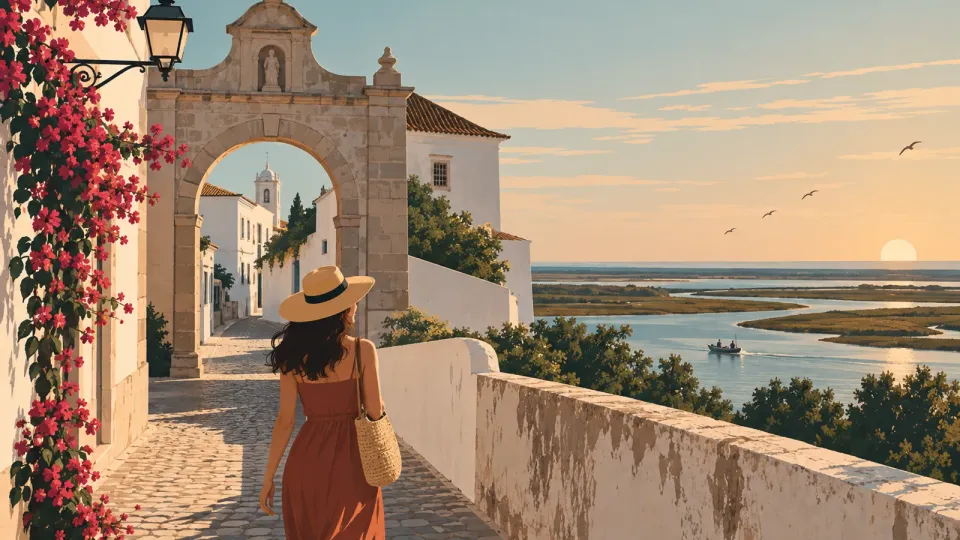
Why Faro’s Old Town feels bigger than the city itself
Faro’s Old Town (historical centre) is compact, but it works like a time machine. You enter through a single iconic gate, then you can weave between cathedral history, convent-sized museums, and narrow streets built for strolling. Start at the walled gateway called Arco da Vila, the main entrance to the area known as vila adentro (into the town). (cdn.visitportugal.com)
The first mistake many visitors make is treating Faro like a “pass through” stop on the Algarve. It is actually designed for slow movement. The Old Town layout gives you visual landmarks close together, so you do not need long commutes to keep your day interesting. Think of it as a walking set, with doors that lead from street to courtyard, then to museums and churches.
A quick way to turn that compactness into a better day is the gate-to-grid method. Use Arco da Vila as your anchor point, then pick one direction for an hour. In a city like Faro, that reduces backtracking, and it helps you avoid the “we saw the highlights, now what?” problem.
Here are three practical advantages of starting inside the walls:
- Clear start point: Arco da Vila is the main gateway into vila adentro, so you can orient immediately. (cdn.visitportugal.com)
- Museum flow: The main Museu Municipal de Faro is located behind the cathedral in the historical centre area, so you can combine architecture and collections without big travel gaps. (faromuseum.pt)
- Culture density: Churches and heritage sites cluster around the cathedral and nearby squares, which makes indoor alternatives easier when you need a break from sun or wind.
If you want your trip to feel more cinematic than checklist-like, do one thing before lunch, one museum mid-afternoon, and keep the evening lighter. That rhythm matches Faro well because the Old Town is built for evening walks, while the Ria Formosa park is easier to add as a flexible excursion later.
Today-ready plan: Stand at Arco da Vila, choose a route direction, and set a 60-minute timer for slow walking before you decide on your next stop. (faroportugaltourism.com)
Walk the Old Town landmarks in the right order (not randomly)
If you want Faro to “click” fast, walk its Old Town landmarks in a sequence that keeps your photos and your energy aligned. The easiest order is: Arco da Vila, then the cathedral area, then the museum, then back out through smaller heritage points.
- Enter via Arco da Vila
Arco da Vila is the main gateway to the walled Old Town of Faro. It is a visual threshold, and it is also a practical orientation tool because it marks the entry to vila adentro. (faroportugaltourism.com)
- Add Faro Cathedral (Sé de Faro) to anchor your culture block
Sé de Faro is one of the best “indoors-friendly” culture stops because you can plan a half-day around it. The cathedral planning information notes a typical visit time range, and it also highlights that you can include the museum and bell tower depending on your pace. (sedefaro.pt)
How to make this step more useful: if you like architectural detail, do the exterior first, then go in when you want a cool-down. If you like views, prioritize the bell tower option.
- Use Museu Municipal de Faro as your mid-day museum reset
The Museu Municipal de Faro is widely treated as the main city museum. A helpful way to plan is to treat it as your “temperature and attention reset,” especially if you are visiting in a season with stronger sun.
You can reach it logically from the cathedral direction in the historical centre. A Faro museum guide notes that visitors often access the historical center through Arco da Vila and then continue toward the cathedral, with the museum located just behind it on Largo Dom Afonso III. (faromuseum.pt)
- Finish with smaller streets and church stops near squares
Do not over-plan the last leg. Faro’s Old Town rewards loose walking once you have your backbone landmarks done.
One common misconception is that you need to see “every church.” In reality, in Faro you can pick one or two that match your mood:
- If you want something striking and unusual, consider the Capela dos Ossos, an ossuary chapel tied to the Carmelite church Nossa Senhora do Carmo. (en.wikipedia.org)
- If you want a calmer historic setting, Igreja de São Pedro sits in Largo de São Pedro and is within walking distance of the Old Town area and the marina. (faroportugaltourism.com)
A flexible order that works even if you arrive later:
- 30 to 45 minutes, Arco da Vila entrance and gate area
- 1.5 to 2 hours, Sé de Faro (church, museum options, and tower depending on interest)
- 1 hour, Museu Municipal de Faro
- 45 to 90 minutes, one additional church and slow street walking
Today-ready plan: Download a map on your phone and mark three pins only: Arco da Vila, Sé de Faro, and Museu Municipal de Faro. Everything else becomes a bonus, not a requirement. (cdn.visitportugal.com)
Culture indoors when the weather changes your plans
Indoor culture in Faro is not limited to one museum. You can build a full “works even if it rains” block around heritage buildings, cathedral collections, and museum spaces that naturally slow your pace.
Start with the cathedral complex. The Sé de Faro planning information explains that a visit can take between 45 minutes and 2 hours, depending on whether you include the museum and bell tower, which makes it easy to fit into a flexible day. (sedefaro.pt)
Next, treat the Museu Municipal de Faro as the indoor centerpiece. A museum guide notes the museum’s relationship to the historical centre route: it is located just behind the cathedral on Largo Dom Afonso III, which supports an efficient indoors plan without long walking detours. (faromuseum.pt)
If you enjoy “built detail” and you also want something more atmospheric than a typical gallery, add at least one church stop:
- Igreja de São Pedro (Saint Peter’s Church) is in Largo de São Pedro and is described as being within walking distance of the Old Town and the marina. (faroportugaltourism.com)
- Capela dos Ossos is an ossuary chapel associated with Nossa Senhora do Carmo. (en.wikipedia.org)
You might be thinking: “I have already seen churches, will this feel repetitive?” The useful answer is to change what you pay attention to. Pick a theme.
Try this indoor attention framework:
- One theme per stop
- Sé de Faro, look for layout and chapels
- Museu Municipal, look for objects and materials
- Igrejas, look for stonework, tiles, and spatial light
- One photo rule
- Take just 5 photos inside each stop, then stop and write short notes on your phone. This forces you to notice specific details instead of photographing everything.
- One break point
- When you switch locations, give yourself 10 minutes to reset. Indoors culture is most enjoyable when you do not rush.
A common planning mistake is to assume that “indoor” means “easy hours.” Hours can vary by season and by site. Instead of guessing, use the official planning pages where available. For Sé de Faro, the official information page provides the visit time guidance and planning context. (sedefaro.pt)
For a flexible film, photography, and digital workflow, this indoor block also gives you consistent lighting and fewer external variables. It helps you keep your captures cohesive even if the day’s light changes.
Today-ready plan: Set aside 2 hours for Sé de Faro (choose whether to include the museum and bell tower), then add Museu Municipal de Faro immediately after. (sedefaro.pt)
A flexible Ria Formosa park excursion you can add any day
The best way to add nature to Faro is to treat Parque Natural da Ria Formosa as an optional chapter, not a mandatory schedule. The park sits between Faro and surrounding lagoon and islands, and it is known for its layered coastal landscape rather than one single beach.
A strong reason to plan it as flexible: you can shift your excursion based on timing and your energy level after the Old Town. If you want indoor culture first, you can still make a nature window later. If you start outdoors, you can swap to indoor culture if the light changes.
Here are the park essentials that matter for planning:
- It is a protected coastal lagoon system. Official park information describes Ria Formosa as a unique lagoon system protected by a barrier of sandy islands. (riaformosa.pt)
- It has official visitor infrastructure. A practical “how to get to the park” PDF for Ria Formosa lists opening times and location guidance for the park headquarters and an education centre.
The most useful planning details from that PDF are the opening times:
- RFNP Headquarters and Interpretation Centre: 9:00 to 17:00
- CEAM (Centro de Educação Ambiental de Marim): Monday to Friday 8:00 to 20:00, weekends and public holidays 10:00 to 20:00
- It also lists closure dates: 1 January, 1 May, and 24 to 25 December (myriaformosa.com)
That means you can reliably build a half-day nature plan around the visitor infrastructure. You do not need to guess how long you have.
What about the “how do I get there?” part?
The same PDF includes GPS coordinates and routing instructions from the EN 125 road direction from Faro, plus motorway guidance around Olhão. (myriaformosa.com)
Now, the big question for Faro visitors is whether you should go by boat to an island, or keep it on land. For a flexible day, use this decision rule:
- Choose on-land park experience if you want more comfort and less ferry coordination.
- Choose island hopping by boat if you want the lagoon-to-sand visual contrast that makes Ria Formosa feel special.
Boat services can vary by season and operator, so do not lock yourself into only one plan. Still, you can plan around the fact that there are shuttle ferry options from Faro to barrier islands, including routes to islands such as Ilha Deserta and Ilha da Culatra, described as operating daily throughout the year by a shuttle operator. (ilhadeserta.com)
If you are sensitive to birdlife and protected-area rules, remember that Ria Formosa is a conservation setting. One official protected-area planning document advises contacting the park services for activities that involve aircraft without motor, which is a reminder that certain types of activity may need pre-checks. (icnf.pt)
Today-ready plan: Choose your park window using the official opening times, then aim for 9:00 to 17:00 at the headquarters, or use CEAM hours if you want a later indoor nature education slot. (myriaformosa.com)
The walking-time test for choosing your Faro day mix
Faro rewards planning by time blocks, not by attraction counts. A good Faro city break plan does two things: it keeps you within walkable clusters and it protects you from decision fatigue.
Use the walking-time test below. It is simple, and it works for both Old Town landmarks and nearby culture stops.
Step 1: Anchor to one zone
Pick one of these as your anchor:
- Old Town inside the walls, anchored at Arco da Vila (faroportugaltourism.com)
- Cathedral and museum area, anchored at Sé de Faro and Museu Municipal de Faro (sedefaro.pt)
- Park visitor plan, anchored at RFNP Headquarters and Interpretation Centre or CEAM Marim (myriaformosa.com)
Step 2: Set a hard walk limit
For a city break, set a maximum walk of 20 to 25 minutes one way between the places you choose. If a stop breaks the limit, you either swap it, or you treat it as an end-of-day bonus.
Why this matters in Faro: the Old Town is compact but not flat in your experience. You get visual payoffs quickly, but you can still waste time if you bounce between far apart points.
Step 3: Build a three-block day
Try this mix, designed around what Faro is best at:
- Block A (morning): Old Town landmarks
- Start at Arco da Vila and do one heritage sequence toward Sé de Faro. (cdn.visitportugal.com)
- Block B (midday to afternoon): Museum or cathedral culture
- Use Sé de Faro’s suggested visit time range of 45 minutes to 2 hours based on whether you include the museum and bell tower. (sedefaro.pt)
- Add Museu Municipal de Faro as a next-step indoor reset. (faromuseum.pt)
- Block C (late afternoon or evening): either indoor repeat or park chapter
- If you want nature, build around RFNP Headquarters 9:00 to 17:00 or CEAM hours. (myriaformosa.com)
- If you want a lighter day, skip the park and keep your final leg inside the Old Town streets.
Step 4: Add a “weather fallback” without changing your plan theme
A common mistake is to abandon the entire plan when conditions change. Instead, switch indoors while keeping the same theme:
- If outdoor light is harsh, switch from street walking to cathedral and museum blocks.
- If it is too windy for island boat time, use CEAM hours for a later indoor nature education slot. (myriaformosa.com)
For photographers and filmmakers planning a consistent visual set, time blocks also help you keep color temperature and contrast controlled. You shoot architecture and museum objects in calmer indoor lighting, then you reserve one outdoor session for the lagoon atmosphere.
Today-ready plan: Write your day as three times on paper or notes: morning Old Town, midday cathedral and museum, late afternoon either CEAM or another heritage stop. Your only decision is which optional chapter to choose. (faroportugaltourism.com)
Get around Faro smoothly: use transport like a tool, not a burden
You do not need a complicated transport plan to enjoy Faro. The trick is to avoid “random travel,” where you spend time coordinating instead of seeing.
First, understand the biggest mobility truth: Faro is small enough that your Old Town and cathedral area can work on foot. That means you only need transport decisions for arrival points, the park excursion, and optional boat departures.
Airport to city: choose a single bus route and commit
Faro Airport guidance notes that bus routes connect the airport to the city centre and vice versa. (faroairport.pt)
One specific bus option is highlighted by Faro Airport bus information pages: the circuit 16 bus, described as heading to Praia de Faro via the airport and passing through the bus terminal station in the city area near the marina. (en.aeroportodefaro.com)
If you prefer to use the main city bus terminal as your hub, the same information cites the Terminal Rodoviário de Faro location at Avenida da República 5. (en.aeroportodefaro.com)
Why this matters for your itinerary: the bus terminal location near the central area can reduce walking stress when you land with bags.
Intercity access: plan your arrival and departure around rail hubs
If you are traveling beyond Faro, rail access is a big plus. A broader Faro city overview notes that the main station is operated by Portugal’s national railway operator Comboios de Portugal (CP), and it lists Alfa Pendular, Intercidades, and regional services as part of the station’s connections. (cp.pt)
You can also use CP’s published materials and station-focused pages to validate route options. For example, CP’s Alfa Pendular route document lists Faro as a station on long-distance services. (cp.pt)
For route planning, a practical tip is to avoid planning tight same-day transfers. Portugal rail can be very reliable, but your day still includes time for walking, ticket handling, and the reality of how long Old Town takes when you stop for photos.
Ria Formosa transport: match your mode to your ambition
For the protected-area chapter, the transport choice depends on whether you want land visitor centres or island viewpoints.
- For visitor infrastructure and walking trails around the headquarters area, you can plan around the park headquarters directions and opening times. (myriaformosa.com)
- For island experiences, you can use shuttle ferry or boat operator services. A shuttle ferry operator describes ferries and speedboat shuttles between Faro and islands such as Ilha Deserta and Ilha da Culatra, with daily options described as operating throughout the year. (ilhadeserta.com)
Do not assume that “daily” means “every hour.” For any boat plan, your best practice is to check operator guidance close to your travel day.
Common misconception: you need a car for Ria Formosa
Many visitors think you must rent a car for Ria Formosa. That is not always true. Faro has ferry and park access options, and your itinerary can stay comfortable if you plan around the visitor centre and choose one island option rather than trying to cover everything.
Today-ready plan: Pick one transport hub based on where you start today. If you are near the Old Town, stay on foot for the first two blocks. If you need a park day, use the park hours as your schedule anchor, then travel time becomes a supporting detail. (myriaformosa.com)
A one-day “flex day” itinerary for Faro culture with an optional park chapter
Here is a Faro plan that stays interesting even if you change your mind. It is built around three reliable anchors: Arco da Vila, Sé de Faro, and the Ria Formosa park infrastructure. Then you add either an indoor culture detail or the park chapter based on your timing.
Morning, start inside the walls (09:00 to 11:30)
-
09:00 to 09:30, enter via Arco da Vila Use Arco da Vila as your orientation. It is the main gateway to the walled Old Town, and it naturally starts the vila adentro walk. (faroportugaltourism.com)
-
09:30 to 11:00, walk toward Sé de Faro Keep this part slow. Faro rewards short pauses for tile details, stone textures, and street compositions.
-
11:00 to 11:30, quick photo stop and reset Take 5 photos maximum. Write one note about what you liked, so your later editing choices are faster.
Midday, culture indoors (11:30 to 15:00)
-
Sé de Faro (45 minutes to 2 hours) The official planning page describes a visit time range of 45 minutes to 2 hours, depending on including the museum and bell tower. Use that range to choose your level of depth. (sedefaro.pt)
-
Museu Municipal de Faro (about 1 hour) Add the municipal museum after the cathedral direction. A museum guide notes that visitors access the historical centre through Arco da Vila and continue toward the cathedral, with the museum located just behind it on Largo Dom Afonso III. (faromuseum.pt)
Afternoon, choose one: indoor contrast or street return (15:00 to 16:30)
Option A, indoor contrast
- Add one church stop that changes the tone.
- Igreja de São Pedro is in Largo de São Pedro and is described as within walking distance of the Old Town and the marina. (faroportugaltourism.com)
- Capela dos Ossos is an ossuary chapel linked to Nossa Senhora do Carmo. (en.wikipedia.org)
Option B, street return
- Walk back through smaller streets near where you enjoyed earlier viewpoints. In Faro, this is where you discover the “in-between” compositions that look great in video too.
Late afternoon, optional park chapter (16:30 to 19:00)
This is your flexibility window.
-
If you want the park visitor centre plan, use official opening times:
-
RFNP Headquarters and Interpretation Centre: 9:00 to 17:00
-
CEAM Marim: Monday to Friday 8:00 to 20:00, weekends and public holidays 10:00 to 20:00 (myriaformosa.com)
-
If you want a boat island experience, remember that shuttle services exist between Faro and barrier islands like Ilha Deserta and Ilha da Culatra and are described as operating daily throughout the year. (ilhadeserta.com)
Planning mistake to avoid: leaving the park decision too late
If you start your nature chapter at 17:30, you are more likely to end up with only island time and not visitor centre time. For a balanced flex day, aim to decide by mid-afternoon.
Today-ready plan (the decision rule): If you still have energy and want nature learning, choose CEAM Marim because it can stay open later on most weekdays (8:00 to 20:00). If you only want visuals, choose a short island shuttle option. (myriaformosa.com)
Faro trip FAQ for old town, indoor culture, and Ria Formosa
What is the best starting point for exploring Faro’s Old Town?
Start at Arco da Vila, the main gateway to the walled Old Town (vila adentro). It gives you an immediate orientation point, and it works as the natural start of a walk toward Sé de Faro and the museum area. (faroportugaltourism.com)
How long should you plan for Sé de Faro (Faro Cathedral)?
Plan 45 minutes to 2 hours, depending on whether you include additional elements like the museum and the bell tower. This range is published on the official Sé de Faro information page, which makes it easier to build a flexible city break schedule. (sedefaro.pt)
Where does Museu Municipal de Faro fit into an Old Town day?
It fits right after the cathedral direction. A municipal museum guide notes that the museum is located just behind the cathedral on Largo Dom Afonso III, and it also describes the common visitor flow from Arco da Vila toward Sé de Faro. (faromuseum.pt)
Can you plan a Ria Formosa park visit without making it the whole trip?
Yes. Treat it as a flexible chapter using official visitor infrastructure opening times. The park headquarters and interpretation centre runs 9:00 to 17:00, and CEAM Marim runs Monday to Friday 8:00 to 20:00 and weekends and public holidays 10:00 to 20:00. (myriaformosa.com)
Do you need a car to include Ria Formosa from Faro?
Not necessarily. You can plan around the park visitor centres and walking access, and you can also add island experiences via shuttle ferry or boat operator services. A shuttle operator describes daily year-round services from Faro to islands like Ilha Deserta and Ilha da Culatra, but you should still confirm departure times close to your day. (ilhadeserta.com)
What is the easiest way to get from Faro Airport into the city?
Use bus links to the city centre. Faro Airport guidance states that you can find several bus routes everyday from the airport to the city centre, and other airport bus information describes options such as circuit 16 heading via the airport and toward Praia de Faro, with reference to the city bus terminal area near the marina. (faroairport.pt)
What should you do if the weather changes your plan mid-day?
Swap your street time for an indoor culture block without changing the theme. For example, if you are already in the cathedral area, use Sé de Faro (with its published time range) plus the Museu Municipal. Then decide whether your park chapter happens later, based on CEAM or headquarters opening times. (sedefaro.pt)
Make your Faro day work today, not “sometime this trip”
Faro is easiest when you treat it like three coordinated scenes: Old Town entry, cathedral and museum culture, and an optional Ria Formosa park chapter. That structure prevents the two most common issues on Faro city breaks: rushing the heritage, or leaving nature planning too late.
Use these next-step takeaways as your checklist:
-
Anchor your walking at Arco da Vila, the main Old Town gateway. (faroportugaltourism.com)
-
Build your indoor culture block around Sé de Faro’s 45 minutes to 2 hours planning range. (sedefaro.pt)
-
Add nature flexibly with official visitor infrastructure hours.
-
RFNP headquarters, 9:00 to 17:00
-
CEAM Marim, weekday 8:00 to 20:00, weekends 10:00 to 20:00 (myriaformosa.com)
One common misconception is that Faro is “small, so it is short.” In reality, it is compact in geography but rich in textures, chapels, and museum objects. You get a bigger experience by choosing fewer stops and giving each stop a clear attention goal.
Your one thing to do today: Open your phone notes and write a 3-block plan with times:
- Morning: Arco da Vila and walk toward Sé de Faro
- Midday: Sé de Faro (target a time within 45 minutes to 2 hours) plus Museu Municipal de Faro
- Late afternoon: choose either CEAM (using its published hours) or keep it Old Town with another heritage stop
Then pick one optional final stop based on how your energy feels at 15:00.
If you want a simple decision rule for that final choice: if you are curious and want nature learning, choose CEAM Marim. If you want atmosphere for images, stay in the Old Town streets and choose one contrasting church. (myriaformosa.com)
Related guides
Praia de Faro Guide and a Day in Ria Formosa
Praia de Faro access, city vs lagoon, and a practical Ria Formosa day plan. Learn transport options, tides-aware tips, and what to pack.
Ria Formosa: Choose Faro, Olhão, or Tavira for Islands
Plan Ria Formosa trips from Faro, Olhão, or Tavira. Compare islands vs mainland walks, boat options, and responsible wildlife viewing tips.
Algarve Without a Car: Faro, Tavira or Lagos
Algarve without a car. Compare Faro, Tavira and Lagos for 3 to 5 nights, then follow a simple checklist for rail, buses, and island access.
Restaurants in Faro: where the city really eats
Local Faro picks for seafood and small plates, work lunches, and proper dinners. Skip the tourist traps, get the map at the end.