
Alfama Lisbon walking guide beyond the postcards
alfama lisbon walk route with real food stops, viewpoints, and fado. Walk most of it, skip the tourist traps, and move with confidence.
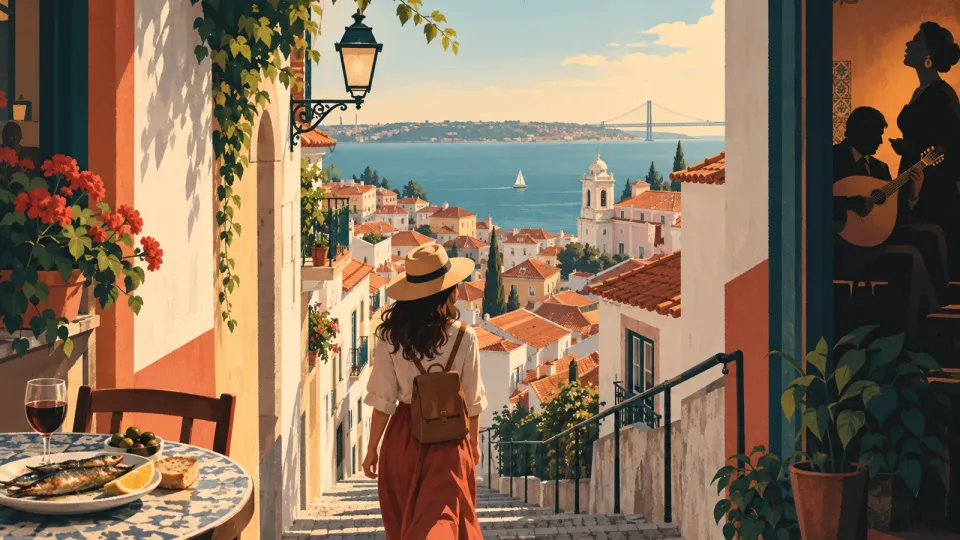
Start in Alfama the right way: walk, then earn your views
The best “Alfama Lisbon” experience is not the cathedral viewpoint or tram 28 photos, it is the 6 PM alleys between São Vicente and Santa Apolónia, when the neighborhood shifts from postcard to real life.
Most visitors arrive with a single loop in their head: Sé Cathedral viewpoint, then tram 28, then a fado dinner that costs whatever the menu says. That loop works, but it is slow, crowded, and you miss the part that makes Alfama feel like Lisbon’s oldest operating system.
Here is the mistake I see constantly: people try to “fit Alfama” into the same time window as the rest of central Lisbon. Alfama rewards a different tempo. Start earlier for light and logistics, save the densest walking for later, and let dinner be the moment you sit down without rushing.
Use this mental model for your day:
- Alfama is a staircase of micro routes. Each viewpoint has a downhill neighbor and a lunch tasca neighbor.
- Tram 28 is the shortcut you use only when it saves you from a climb you would regret. If you are already walking, use tram 28 like seasoning, not like the whole meal.
- Eat in Alfama, not next to it. The best places are inside the lanes, not at the big-sight edges.
If you want a reliable anchor for where to start: Lisbon’s tram 28 climbs through Alfama after passing through Graça and then descends via São Vicente areas, with common stops tied to the Alfama and surrounding viewpoints. That is exactly why your route should treat tram 28 as a “connector,” not a “tour.” (santosdelisboa.pt)
The rest of this walk is built around one promise: by the time you reach your viewpoints, you already know the neighborhood rhythm, so the views feel earned instead of rented.
2-hour Alfama walking route that actually feels local
Below is a tight, doable 2-hour walking route through Alfama that avoids the “photo, shuffle, repeat” loop. It is designed as a connected chain: street, viewpoint, short climb, food stop, then a second viewpoint and a final wander.
0:00 to 0:25, Sé Cathedral area to the view corridor Start near Sé de Lisboa, the area most itineraries use because it is the easiest landmark. From there, walk into Alfama’s lanes, but do not stay on the main edges. Move toward the viewpoint corridor by following the natural flow of people who look like they know where they are going, then branch away after the first big open space.
0:25 to 0:45, Miradouro das Portas do Sol (fast photo, then slow down) This is your “get oriented” viewpoint. It is one of the Alfama perspectives people name for a reason, because the rooftops and church towers read clearly in one glance. Use it as a quick reset: 10 minutes, wide view, then keep walking downhill. (historicquarters.com)
0:45 to 1:05, Miradouro de Santa Luzia (the nicer stop to linger) Just around the corner you get another angle that pairs well with the lanes you just walked. This viewpoint is often described as overlooking Alfama and is directly tied to the “Santa Luzia” route through the quarter. Linger longer here than at Portas do Sol. If you only have time for one of these, prioritize the one you will sit at, not the one you will stand at. (lisbonportugaltourism.com)
1:05 to 1:30, lunch tasca lane time (eat before the crowd pressure hits) Now you switch from sightseeing to fuel. Pick a small place on the lane you are already in. You want a tasca vibe, not a “menus online” vibe. The goal is simple: finish lunch, then move without needing a map for every turn.
1:30 to 2:00, São Vicente de Fora to Santa Apolónia drift End your route by drifting toward the São Vicente de Fora side of Alfama, then walk toward Santa Apolónia as the neighborhood opens toward the river direction. This is where the alleys start to feel less like a museum and more like home.
One practical tip that changes the whole experience: keep your pace slower than you think you need. Alfama is not just steep, it is full of “micro destinations.” The wrong pace forces you to miss them.
If you only remember one rule: walk the lane sections. Use tram 28 only at the moments you are about to lose time to a climb you can avoid.
The one miradouro everyone skips: Graça beats forcing Senhora do Monte
Both Graça and Senhora do Monte are valid Lisbon skyline experiences, but if you want the Alfama-focused story, the best move is usually: pick Miradouro da Graça and treat Senhora do Monte as your backup.
Here is the direct answer: if you want to connect Alfama to a viewpoint without adding a “climb punishment,” start with Miradouro da Graça. The spot is tied to the Graça neighborhood and is the viewpoint people reference when they are using tram 28 as a connector to the hill walk and then into Alfama. (santosdelisboa.pt)
Why I push Graça: you get a viewpoint experience that feels like you are still in the city’s living layer, not just at a high platform. The approach also creates a calmer transition from Alfama’s steep lanes.
When Senhora do Monte wins If the weather is clear and you want the higher perspective, Miradouro da Senhora do Monte is the classic name people drop. You can also connect it with the Graça area since both sit in the broader Graça zone. (pt.wikipedia.org)
But here is the mistake to avoid People treat Senhora do Monte as an obligatory stop and end up zigzagging between viewpoints, then they are too tired to enjoy the lanes. That is how Alfama turns into a checklist.
If you want an easy decision framework:
- Choose Miradouro da Graça if you want a smooth bridge between Alfama and a hill walk.
- Choose Miradouro da Senhora do Monte if you are chasing height and your schedule can handle the crowd friction.
One more detail: if you are using tram 28 for navigation, several route guides describe the line passing through Graça and then descending toward Alfama. That makes Graça a natural “view anchor” for your timing. (santosdelisboa.pt)
So yes, Senhora do Monte is famous. But Graça often gives you the better sequencing, which is what makes Alfama feel coherent instead of chaotic.
Eat like Alfama lives there: lunch, tasca, dinner picks
Alfama restaurants are where tourists burn time. They either go too early, too close to Sé, or they pick a “fado place” for dinner and end up with a generic show.
The better approach is to split meals by energy level: lunch is for warm, local food that does not slow you down. Tasca is for the quarter itself, not the restaurant brand story. Dinner is when you commit to fado, but only where the room feels like it has pride in the craft.
Because I do not want to fabricate claims about review scores or ticket prices, I will give you a practical, Lisbon-lane way to choose and three concrete options you can actually target.
Lunch pick: stop for Portuguese comfort inside the lanes
For lunch, your best bet is a tasca-style place near the viewpoints you already used (Portas do Sol or Santa Luzia zones). You want quick service, honest Portuguese staples, and seating that is not designed around “Instagram first.”
If you are walking your 2-hour route, schedule lunch right after Miradouro de Santa Luzia, before you head deeper toward São Vicente. That timing avoids the “everyone arrived at once” feeling that makes alfama dining stressful.
Tasca pick: choose a room with fado proximity, not a tourist stage
At this point in the day, you want something light-ish for later, but still proper. Think small plates and local flavors. The best sign is when the place is clearly part of the neighborhood rhythm, with people rotating in and out rather than a single tour group cycle.
Dinner fado pick that earns its price: Casa de Linhares
For dinner, the easiest way to avoid the overpriced trap is to pick a fado venue with a consistent nightly program. One strong option is Casa de Linhares, because it is described as a house where fado happens every night and it is tied to an established fado route. (roteiro.museudofado.pt)
This is not “pay for fado.” It is “pay for the room to do fado well,” and then let dinner be an event, not a liability.
The human mistake I would fix in your plan
People who do Alfama on a tight schedule try to eat at the viewpoint itself. That fails. Viewpoints are for looking. Restaurants are for eating. If you want the calmest meals, treat the miradouros as pauses, and the tastas as destinations.
One short checklist for where you eat
- If the menu feels like a translation of itself, move on.
If you want, tell me your travel dates and dietary constraints and I will help you pick which lane you should target for lunch and tasca, based on how your walk timing fits.
When to walk Alfama vs ride tram 28 (so you do not waste a day)
Tram 28 is iconic. It is also, in the wrong moment, a time sink.
Here is the direct answer: if you can handle slopes and you are already in Alfama, you should walk most of the route and use tram 28 only to connect between your hill viewpoint choices and where you want to end your day.
Why this works in practice is simple. Lisbon’s tram 28 moves through key neighborhoods that relate to Alfama, Graça, and the central areas people pair with viewpoints. Many route descriptions note that the tram passes through Graça and then into Alfama-related areas along historic streets. (santosdelisboa.pt)
That means tram 28 is a connector between “walking blocks,” not a replacement for walking the blocks.
The walking-first rule for Alfama
Walk when:
- You are between viewpoints, or you can see a downhill lane that ends near a food stop.
- You want to feel the neighborhood, not just arrive at it.
- You are going from São Vicente direction toward Santa Apolónia or vice versa.
Ride tram 28 when:
- You are tired, your schedule is tight, and you would otherwise lose time waiting or descending without a plan.
- You are using it to reposition from Graça into Alfama, or to reset your day rhythm.
A concrete timing approach
If you follow the 2-hour walking route described earlier, you usually will not need tram 28 at all during that block.
Then, after your viewpoint sequencing, use tram 28 in a single pass to get yourself closer to the next lane cluster, rather than letting it decide your entire itinerary.
Tickets and cost sanity check
You may also want cost context, because it affects whether you buy a daily pass or just tap a single journey.
Some 2026 tram 28 guides describe a standard Carris/Metro single ticket price around €1.90, and also mention Zapping pay-as-you-go credit described around €1.72 per Carris journey, as well as a 24-hour Carris/Metro ticket described around €7.25. (historicquarters.com)
For more official “what the pass covers,” the Lisboa Card official benefits page (via CP) states it offers unlimited public transport, including bus, metro, tram, and funicular journeys. (cp.pt)
The common misconception to kill
“Take tram 28 to see Alfama.”
You will see parts of Alfama from a moving carriage, and you will miss the lanes that make Alfama feel real. Tram 28 is for orientation and quick relocation. The walk is for the story.
Practical next move
Map your day as walking blocks. Then decide tram 28 once, not repeatedly. One tram ride used intentionally beats five tram decisions made emotionally.
Your fado night plan: reserve smart, arrive early, avoid the tourist script
Fado is not just music in Alfama. It is atmosphere, and atmosphere needs time.
Direct answer: reserve your fado dinner in advance, aim to arrive early enough to settle, and treat the show as part of dinner, not an interruption after you already ate.
The first trap is timing. People book last minute, arrive late, and end up thinking the venue is “slow” when what is actually happening is they missed the warm-up rhythm of the room.
Choose venues with consistent nightly programming
A solid way to avoid random “fado marketing” is to pick venues where fado is described as happening every night. Casa de Linhares is presented as a house where fado happens every night, with an established artist lineup reference through a dedicated fado route page. (roteiro.museudofado.pt)
That does not guarantee your exact singer that night, but it tells you the room is genuinely built around fado, not around a seasonal gimmick.
Arrive early enough to do the pre-show version of Alfama
Your pre-show walk should be short and local. Walk one lane loop, grab a small drink if you want, then sit down.
If you try to tour Sé Cathedral and two miradouros and still arrive on time, you will rush dinner. Rushing dinner is the easiest way to turn fado into a background track.
Budget reality, without pretending it is fixed
Fado prices change based on menu and package. Rather than invent numbers, use this operational rule: if a venue offers a one-size-fits-all “tourist bundle,” expect less control over the experience. If you reserve directly with the venue, you usually get clearer options.
Some Lisbon fado writeups discuss typical cost ranges for dinner-related experiences and the need for reservations. For example, a Lisbon fado overview states that for fado houses with dinner, reservations are required and that there is an approximate average price reference and a note about around-table costs. Treat these as direction, not as guarantees for your specific night. (santosdelisboa.pt)
The “fado museum” misconception
Some travelers try to handle fado by visiting the museum first and then booking whatever dinner pops up. The Museu do Fado is real and worth it if you like context. It is managed by EGEAC and has official pages that describe its programming and opening hours details. (egeac.pt)
But museum first should not become your fallback when you still need a good dinner plan. If you only have one night in Alfama, prioritize the live room.
A simple timing script
- Walk Alfama earlier.
- Eat lunch and tasca inside the lanes.
- Reserve a fado dinner venue for your evening.
- Arrive early, sit, and let the room pace your evening.
If you do that, you avoid the “tourist script” where everyone is doing the same sprint to a show, then leaving immediately as if it was a ticketed attraction.
One thing to do today
Check the fado venue reservation policy for your date and lock your dinner time early, because the best rooms do not stay flexible.
Sé to Santa Apolónia: the Alfama landmarks path without the detours
If you want an Alfama Lisbon itinerary that feels like navigation, use a landmark chain: Sé Cathedral to the viewpoint corridor to Santa Apolónia. That is where Lisbon’s steep geography naturally sorts your walking.
Direct answer: the cleanest landmark path is Sé, then Miradouro das Portas do Sol, then Miradouro de Santa Luzia, and finish drifting toward Santa Apolónia.
Why I like this route is that it matches how the tram 28 corridor and the viewpoint corridors connect. Route guides often reference key stops and the way tram 28 descends through historic districts and connects up to Graça and Alfama areas. (santosdelisboa.pt)
But the real win is what the route gives you: you avoid detours that happen when you follow only one “must-see” pin.
The landmark chain explained
Sé Cathedral (your orientation anchor)
Sé helps you understand where the slopes “start.” Even if you do not do a full interior visit, it is the geographic statement: this is Lisbon’s old center.
Miradouro das Portas do Sol (your first skyline reward)
Portas do Sol is widely described as a key Alfama viewpoint, and it is literally named as an Alfama area street, which tells you it is embedded in the neighborhood fabric. (pt.wikipedia.org)
Miradouro de Santa Luzia (your second reward that deserves longer time)
Santa Luzia is often described as offering views over Alfama and is tied to the route that many self guided walking guides use as a viewpoint stop near the quarter’s church namesake. (lisbonportugaltourism.com)
Finish near Santa Apolónia (your “walk out” ending)
If you finish toward Santa Apolónia, you naturally move toward trains and river direction. That prevents the classic problem where you end your day far from anything useful.
The detours you should resist
- Skipping the viewpoint corridor entirely. Then you lose the “earned” city reveal.
- Overdoing Sé Cathedral area time. It is a landmark, not the whole neighborhood.
- Ending back where you started. That always feels like a loop, not a day.
A weather adjustment that keeps the plan intact
On hot days, shorten each viewpoint stop. Sit for 5 to 10 minutes, then continue. On cooler evenings, keep Santa Luzia as the longer stop, because it sets up your dinner mood.
A Lisbon-native tip about timing
Your best Alfama moment is often later in the day, when lanes settle into evening flow. That is why your route should not start and end at the viewpoint only. You want the neighborhood living layer, not just “scenic snapshots.”
If you plan this as a chain, you stop fighting the geography, and Lisbon stops feeling like a maze.
Alfama safety and comfort tips that keep the day fun
Alfama is beautiful because it is messy in the right way, steep lanes, tight corners, and people walking with purpose. That also means you need comfort rules.
Direct answer: wear grippy shoes, keep your phone secure on narrow lanes, and plan one “rest stop” so you do not run yourself out of energy before dinner.
Shoes and pace, not just aesthetics
Alfama’s lanes are uneven, and the slope is real. If you wear shoes that look good but do not grip, you will slow down and start getting careful in the wrong places.
Pick shoes for traction and for walking comfort. Then pace like you are doing a neighborhood tour, not a race.
The phone and bag rule in narrow lanes
On busy parts of Alfama, your bag should be secure and close to your body when the lane narrows. This is not paranoia, it is basic street navigation.
A practical technique: keep your phone in your pocket when you are moving, then take it out only when you stop at a viewpoint or a doorway area.
Don’t let tram 28 crowds hijack your plan
Tram 28 is historic and in demand. Some 2026 tram guides describe queues and crowded conditions, and recommend waiting for the next tram if your stop is packed. (lisbonitinerary.com)
That advice is not about being cautious for no reason. It is about protecting the core of your day, your walking time.
Build one rest stop into the route
Your rest stop can be lunch, a tasca pause, or a sit at Santa Luzia. The point is simple: if you treat every mile as sightseeing, you end up tired at the exact moment you want to enjoy your dinner.
Accessibility note without making it a debate
If you have mobility constraints, do not “push through” the steep lanes just to keep a perfect map. Use tram 28 as a connector earlier rather than later, so you spend less time negotiating terrain.
Museum option if rain ruins the lanes
If weather turns, there is one fado-adjacent “comfort move” that still fits Alfama. The Museu do Fado is managed by EGEAC and has an official presence with opening hours information on its pages. (egeac.pt)
It is not a replacement for the lanes, but it keeps your plan coherent.
A final misconception to avoid
“Alfama is only stairs and crowds.”
It is also small, quiet pockets and local rhythms. You find those when you walk beyond the first viewpoint cluster, and you avoid cramming the neighborhood into a single rush hour.
If you want to make your day feel calm, treat the route like a flow. Walk, pause, eat, walk again, then settle into dinner.
Plan your Alfama walk
You have a complete Alfama Lisbon plan now, the part that most itineraries skip: the pacing, the viewpoint sequencing, and the food blocks that prevent you from turning Alfama into a queue.
Here is the actionable summary, in the order you should follow it.
- Do the 2-hour route that chains Sé, Miradouro das Portas do Sol, Miradouro de Santa Luzia, lunch, then your drift toward São Vicente and Santa Apolónia.
- Choose your miradouro strategy: start with Miradouro da Graça for smoother sequencing, keep Senhora do Monte as the backup when conditions are ideal.
- Use tram 28 once as a connector, not repeatedly. Walk most of the neighborhood blocks.
- Reserve your fado dinner at a venue built for nightly fado programming, such as Casa de Linhares, so dinner becomes the highlight instead of an improvisation. (roteiro.museudofado.pt)
And if your travel window is tight, send yourself a screenshot of your “landmark chain” (Sé to Portas do Sol to Santa Luzia to Santa Apolónia). That way, you never fall back into the generic “follow the loudest crowd” decision loop.
Written by Andre Ginja — Founder, andginja
Related guides
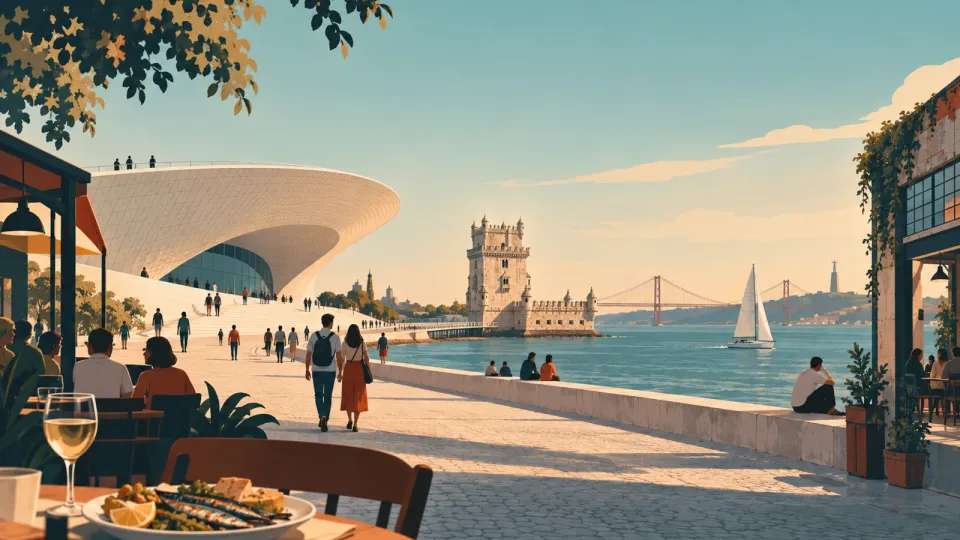
Belém Lisbon: Beyond Pastéis de Belém
belem lisbon goes far beyond Pastéis and the Tower. Use this half-day order, MAAT + riverside walk, plus tasca lunch and LX Factory pairing.

Best beaches Lisbon: Cascais to Caparica picks
Best beaches Lisbon, from Carcavelos to Caparica. Match surf, families, quiet time, and party vibes, plus train vs Uber vs ferry options.
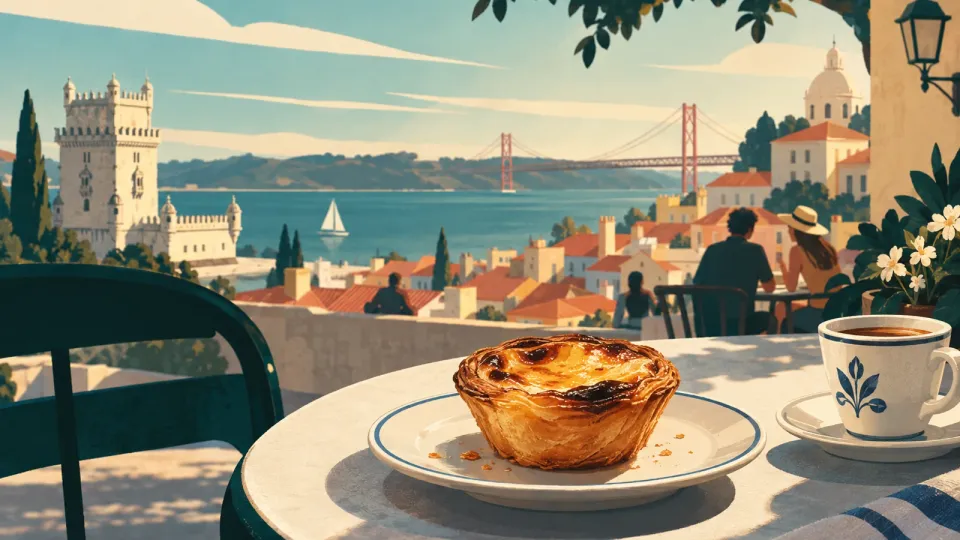
Best pastel de nata lisbon, where locals actually go
best pastel de nata lisbon, Belém vs Manteigaria, plus a locals-first list by neighborhood. Skip the wrong queue, eat the right tart.
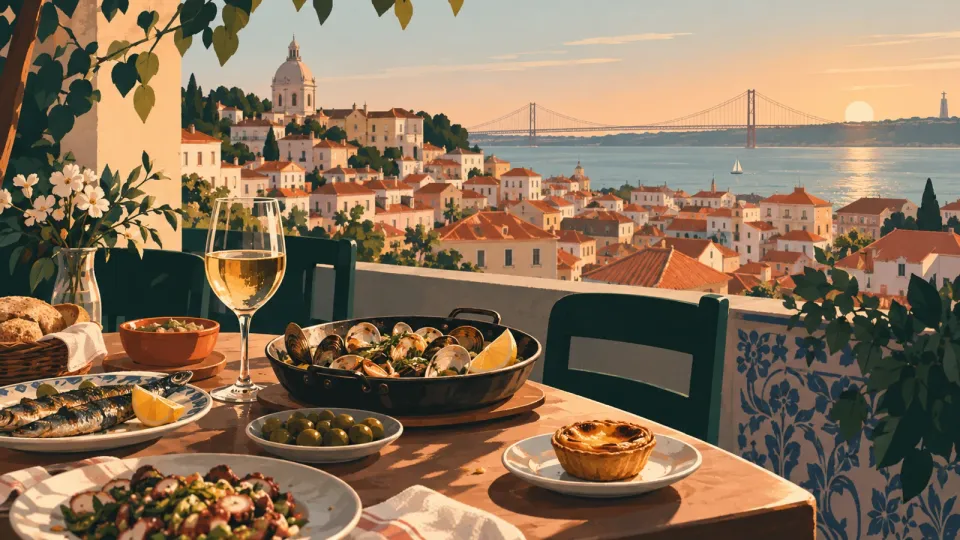
Best restaurants in Lisbon, a local’s working list
Best restaurants in Lisbon, by occasion, with overrated picks called out, tasca value meals under €25, and pastelaria stops. Download list.