
Best restaurants in Lisbon, a local’s working list
Best restaurants in Lisbon, by occasion, with overrated picks called out, tasca value meals under €25, and pastelaria stops. Download list.
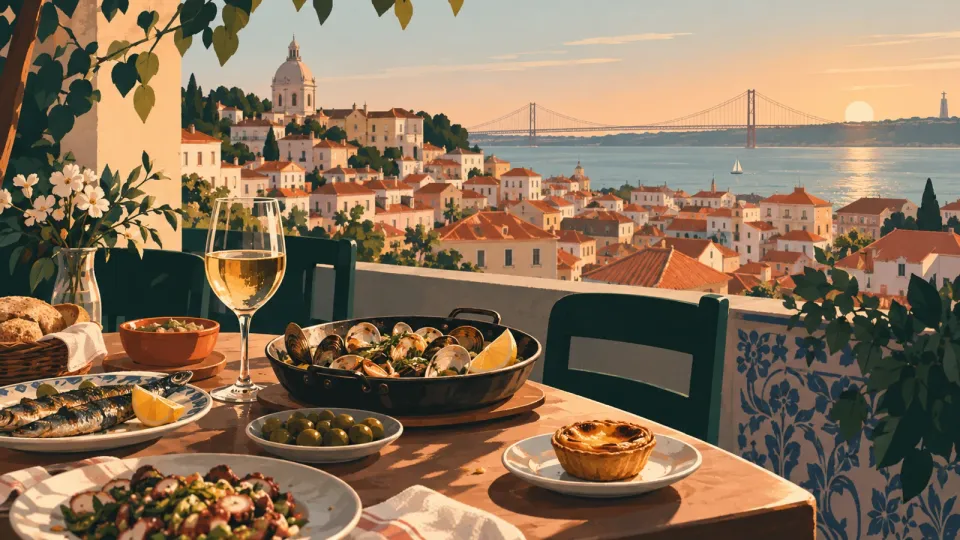
Best restaurants in Lisbon: your first-night plan (that actually works)
The best way to eat well in Lisbon is to stop chasing “the list” and start picking by occasion: first night calm, hangover fix, group dinner, splurge, and your late-night “one more” meal.
Lisbon has a real range, but the menus are only half the story. The other half is timing, line behavior, and whether you want to pay for craft or convenience. If you’re trying to decide between “famous” and “good,” here’s my rule: in Lisbon, the truly great places usually feel busy for a reason, not because they’re a content machine.
If you only do one thing before you arrive, do this: choose one reservation-worthy dinner for your middle night, then fill the other nights with walk-in friendly tascas and pastry stops. Your schedule stays flexible, and you avoid the classic traveler mistake, spending your best appetite hours waiting.
Here is how I’d structure a 2 to 4 day eating run for a visitor who wants maximum payoff.
- First night (easy win): pick a place where you can order comfortably without studying the menu for 20 minutes. I prefer Portuguese classics in a room that feels “lived in,” not a showroom.
- Hangover lunch (fast and forgiving): a tasca counter meal with wine, soup, and something grilled or stewed.
- Big dinner (reservation time): one “splurge” restaurant that justifies the reservation, not necessarily the highest price.
- Last night (go where you’ll remember the feeling): something with a view or a long, satisfying meal pace.
You asked for best restaurants, so I’m going to be blunt about the overrated ones later. For now: assume you will love at least one meal you did not pre-plan, because Lisbon rewards improvisation.
Also, pastelaria is food culture here, not dessert. If you want a city that rewards your “one sweet” habit, Lisbon is the place.
First night in Lisbon: start with comfort, not chaos
Your first night should feel like a warm handshake, not an endurance test. In Lisbon, that means picking a dinner that serves well even if you arrive tired from flights, trams, and hills.
I like two styles for the first night. One is Portuguese comfort in a space that feels old-school. The other is modern Portuguese, but with a menu that still reads like food you want to eat, not a puzzle.
The comfort criteria I actually use
When I’m deciding where to take friends on day one, I check four things:
- Ordering friction: if the menu is heavy on tasting logic, you will lose energy and slow down.
- Timing behavior: if the kitchen moves slowly by design, it’s better for your last night, not your first.
- Wine sanity: I want a house wine that tastes like wine, not like an extra performance.
- Noise level: Lisbon restaurants can be loud. On night one, you want “lively,” not “unhearable.”
A pastelaria stop that sets the whole trip tone
Before or after dinner, I strongly recommend a pastelaria pick. Pastéis de nata are the headline, but the real win is learning how Portuguese breakfast sweets fit into daily life.
If you are doing Belém, know that Pastéis de Belém is a specific named shop, and the brand is tied to Rua de Belém 84 to 88 in Lisbon. (visitportugal.com) The point is not to debate authenticity. The point is to treat it like a ritual and time it so you do not waste your entire evening in a line.
My “overrated but not worthless” call
Some very famous dinner rooms are beloved because they are photogenic and central. That doesn’t automatically mean the food is bad. It usually means the experience is sold twice: once by taste, once by location.
If you want to try one anyway, go with a smaller expectation and make it your second choice, not your first reservation. Lisbon dining is better when you give your best appetite to the places that feel effortless.
If you are staying central and walking is your plan, you will also do well picking a spot within 10 to 15 minutes of your hotel. Hill walking before dinner is cute for 20 minutes. After that, it changes your taste perception.
First night wins happen when you pick food that is good even under jet lag.
Hangover Lisbon: the tasca meal under €25 that beats the hype
The best “I overdid it last night” meal in Lisbon is a tasca order that costs less than your regret. You want something straightforward, salty, and warming, ideally with a soup component and a grilled or stewed main.
You asked for one tasca that beats the trendy spots under €25. Here is the mindset: Lisbon tascas usually win by doing fewer things well, and by not making you wait for a “concept.”
What “under €25” should actually include
If a restaurant claims it is value but your bill becomes a tasting menu plus drinks, that is not value. In Lisbon, a genuine tasca under €25 usually looks like:
- A prato do dia (dish of the day) or a grilled Portuguese staple
- A simple starter that is filling (often soup)
- A house wine you can finish without thinking
- A dessert or coffee if you are still human
Travel guides that talk about Lisbon budget tiers commonly describe tasca style meals in roughly the €15 to €25 band, depending on what you order and whether you include wine and dessert. (lisbon-trip.com) I see the same pricing rhythm in real life, and it tracks how locals actually eat.
One pick you can build a hangover plan around
If you want a tasca-style meal that feels like Lisbon instead of like a restaurant brand, pick a place that serves traditional Portuguese food at counter or simple table service. This is where you get the kind of meal that tastes like “today” rather than “last month’s menu.”
A specific example of a traditional tascas area meal option that fits a traveler-friendly budget range is A Tasca do Chico, which is described as traditional Portuguese cuisine with a fado element, and listed with a broad price range around €10 to €30 per person on common aggregator pages. (restaurantguru.com) I still treat it as a “mid-range” bet rather than a hard guarantee for your exact €25 ceiling, because Lisbon pricing depends on what you order.
So the practical rule is this: if you order seafood plus wine plus dessert, you might drift above €25. If you stick to one main plus a simple starter, you can keep it under.
The misconception I want to kill
People think a “cheap” meal in Lisbon has to be basic. That’s backwards. Cheap in Lisbon is often code for, “you get the version locals repeat.” Repetition is how taste gets refined.
Quick step to place your order like a local
When you sit down, ask what the staff recommends for today. If the menu is long, ask what is most popular at lunch. Lisbon kitchens are used to daily flow, and they will guide you to the dish that is actually at its best.
Hangover rules: drink water before you order, keep your first meal simple, then let dinner be the creative one.
Big group dinner: where the service won’t fall apart
Big groups expose the weak spots in a restaurant fast. In Lisbon, I’m not scared of crowds, I’m scared of mismatched pacing, when appetizers arrive 30 minutes apart and everyone feels annoyed.
For group dinners, your job is to pick places that can handle staggered orders, and restaurants where the floor team has a clear system.
The group dinner checklist (the stuff that saves the night)
When I’m booking for 6 to 10 people, I look for:
- Reservation availability: if a place is impossible to book, it will also be hard to coordinate.
- Menu structure: places with a few strong mains and a predictable pattern keep the table calm.
- Pacing reputation: restaurants that serve slowly by design are okay for small couples, not big groups.
- Wine handling: if you need a “split the bill” nightmare, you will lose time.
Time Out Market Lisboa as the group pressure valve
If you have a mixed group, a food hall can be a clever move. Time Out Market Lisboa is a food hall inside Mercado da Ribeira at Cais do Sodré, and the concept is curated by Time Out Portugal. (en.wikipedia.org)
Why it works for groups is simple. Everyone can pick their lane, you can still eat together, and nobody has to wait while one person orders a multi-course tasting.
Also, when you are planning for late lunch or early dinner, it helps that the market concept is built for flow rather than a single slow table rhythm. The Time Out Market FAQs state opening details, and you can use the official sources as your reference point. (timeoutmarket.loadhtl.com)
The overrated group trap
The trap is the “one famous place, one shared experience” plan. Sometimes it works. Often, it fails because the restaurant is busy in a way that is optimized for individual pairs, not a table of 9.
So instead of forcing one room, pick one anchor meal and then add a second “safe” option nearby if the first choice becomes stressful. Lisbon streets are walkable, and that flexibility is a superpower.
A reservation reality you should assume
Some popular fine dining rooms in Lisbon require advance booking. For example, 2Monkeys at Torel Palace Lisbon, a Michelin star restaurant, states reservations are required in advance on its official site. (torelpalacelisbon.com)
My advice for groups: assume you will need reservations for your “nice dinner,” then treat everything else as walk-in or flexible.
If you are traveling in peak season, build a two-plan evening. Group dinners should feel like a win, not a project.
Splurge night: pick the one meal you let yourself overpay for
A splurge night in Lisbon should do one job: make you feel like you got a special, well paced meal. The biggest mistake is splurging on a restaurant that is famous but not actually right for your appetite that day.
In Lisbon, the best splurges tend to have three things. They have credible technique, they have pacing that respects a full evening, and they have a room vibe that doesn’t feel like you are rushing to finish.
How I choose a splurge when I refuse to waste money
I do not start with stars. I start with fit.
- If you want a long evening, choose a restaurant that signals a longer service arc.
- If you want intimacy, choose a room that is not overly chaotic.
- If you want Portuguese flavor done at a high level, choose a restaurant that stays in the Portuguese lane.
Example of a restaurant where reservations are part of the deal
When a restaurant is explicitly reservation required and built for a high-end experience, you are less likely to be disappointed by the “process.” A direct example: Alma (Henrique Sá Pessoa), a Michelin star restaurant, includes reservation guidance on its official reservations page. (almalisboa.pt)
This matters because Lisbon fine dining is often not walk in friendly for peak hours. You need to plan.
Another example, because reality beats vibes
2Monkeys at Torel Palace Lisbon explicitly says reservations are required in advance on the official site. (torelpalacelisbon.com)
So when you are thinking about splurging, treat “reservation required” as a feature, not a nuisance. It usually means the restaurant has tighter coordination and fewer surprises.
The overrated splurge that tourists keep repeating
Some places are overrated for one reason: the food can be good, but the experience becomes about the brand and the view more than the cooking.
That is not “bad.” It is just not the most efficient way to buy a great meal. If you do one of those on your last night, you will enjoy it more because the stakes are lower. If you do it on your splurge night, you will compare it unfairly to the better options.
A small practical tip that upgrades your splurge
If you can, book for a time that gives you breathing room from sightseeing. In Lisbon, hills tire you. Tired taste buds want comfort, and you pay less attention to delicate flavors.
Splurge night is not when you should be rushing up 400 steps to “make dinner work.” It is when you slow down.
Late night Lisbon: eat after the night gets loud
Late night food in Lisbon is a genre. You want something that keeps your night alive without making you feel heavy, and you want it to work after you have been out drinking and walking.
This is where Lisbon differs from cities that “shut down” at 23:00. In Lisbon, the food rhythm can stretch, especially around areas where people gather. The trick is picking a place that serves consistently, not one that turns into an improvisation disaster.
My late-night rules
- Choose a place with fast turnaround for mains or snack sized dishes.
- Order fewer things but choose satisfying classics.
- Do not overbook late night: if you have to wait for a table, you lose the vibe.
Ramiro as late-night adjacent, not late-night fantasy
Cervejaria Ramiro is famous, and it is not a random pick. But it is also famous for lines, and it is better treated as a “late lunch to early dinner” move rather than a final hour rescue.
Ramiro’s reservation terms show that it can accept reservations with a charge at booking, and that the charge is deductible when you pay for your meal. (cervejariaramiro.com) This is useful because it signals how the restaurant manages demand.
If you are thinking of Ramiro, plan it as a scheduled event. Do not treat it as “we’ll just see if we can get in.”
Overrated late night behavior to avoid
The overrated behavior is chasing the closest “cool” spot that does not actually serve what you want at night. Lisbon’s nightlife means restaurants get packed with people who are not there for the menu.
So pick a place that is known for real food, not just a social scene.
If you are with friends, late night is also when sharing small plates makes sense. Everyone gets to try a bite without committing to a full second meal.
A small hack: time your sweet after late food
If you do late dinner plus a sweet, do it smart. Pastelaria is best when you still have room for crisp pastry textures.
Pastéis de Belém is a famous option with a stated address and shop identity listed by tourism sources. (visitportugal.com) If you go for the “classic,” go with the idea of a warm, satisfying end.
Late night Lisbon should feel like you are eating with the city, not fighting it.
The pastelaria you should not skip (and the queue math)
Lisbon’s food culture is not only savory. Pastelaria is a daily ritual, and it trains your palate for how Portuguese sweetness should taste, not how “dessert” tastes in other countries.
If you skip pastries, you miss a core part of the trip. Not because it is trendy, because it is local behavior.
Start with the two pastry truths
First: Pastéis de Belém is a specific shop at Rua de Belém 84 to 88, and tourism references identify it by name and address. (visitportugal.com) Second: Pastel de nata is the broader category, and the city offers multiple excellent versions.
So here is my practical strategy. Do one “classic” stop, then add one “local favorite” pastry stop that feels less like a stadium.
A second pick: Manteigaria (for a different pastry vibe)
If Belém is your classic, Manteigaria is a popular alternative that many travelers use as their second stop. Time Out Market Lisboa even features Manteigaria Pasteis de Nata inside the market, which makes it a convenient “no extra planning” option. (timeout.com)
That matters because you can keep your day schedule, especially if you are already in the Cais do Sodré area.
Queue math, the thing most guides skip
The queue is not just time. It affects your mood, your meal choices, and your appetite. If you go to Belém, treat it like a morning or late afternoon ritual, not a rushed midnight detour.
What to order (yes, it changes the experience)
Get a warm pastel if possible. Lisbon bakeries are built around fresh texture. Eating it quickly helps you notice the custard and pastry contrast.
If you do want to play it safe, choose one pastry stop per day. Two in one day can be too much sugar unless you are truly on holiday and already strolling for hours.
The misconception that makes people dislike pastel de nata
Some people try pastel de nata expecting a cake slice experience. That is not what it is. It is crisp pastry, hot custard, and a specific sweetness style.
If you treat it like a warm snack instead of a dessert course, you will understand why Lisbon locals treat it like everyday pleasure.
Pastelaria is also a great social trick. You can keep walking while you eat, and nobody has to sit through a formal meal just to “try something.”
Reservation reality in Lisbon: what you can walk into vs what books out
Lisbon reservations are not “optional.” They are a planning tool. If you treat all restaurants like they are walk in by default, you will lose time and sometimes get stuck.
Here is the reservation reality I’ve seen repeatedly, and the practical way to plan around it.
The rule of thumb that saves you
- Fine dining and signature seafood and big-name places: plan reservations or expect queues.
- Tascas and casual Portuguese counters: you can often walk in, especially for lunch.
When a restaurant itself states reservations are required, believe it. For example, 2Monkeys at Torel Palace Lisbon says reservations are required in advance. (torelpalacelisbon.com) Alma (Henrique Sá Pessoa) provides explicit reservation guidance on its official page. (almalisboa.pt)
Ramiro’s demand management shows you the stakes
Cervejaria Ramiro’s reservation terms show that booking involves a charge per person that is deductible against your meal payment. (cervejariaramiro.com) Even if you are not booking, this tells you they are operating in a controlled demand environment. That is the opposite of “walk in anytime.”
When you do not want to reserve, pick the safer categories
If you are the type who hates locking a time slot, you can still eat brilliantly in Lisbon. You just avoid:
- places that are explicitly reservation required
- tasting heavy fine dining for your first or last night
Instead, you lean into:
- tascas with daily food flow
- food hall concepts where the table pacing is flexible
Time Out Market Lisboa is useful here because it is a food hall format, inside Mercado da Ribeira at Cais do Sodré. (en.wikipedia.org) It’s not the same as a single chef’s full dining experience, but it is one of the best “group and schedule stress reducers.”
One short bulleted list MAX: how I plan reservations
- Reserve your middle-night splurge.
- Keep your first and last nights flexible.
- Use walk-in spots for lunch, especially tasca style.
A final practical tip
If you are traveling with anyone who gets hangry easily, do not schedule your reservation immediately after a long uphill walk. Lisbon hills change the emotional temperature of your meal.
Reservations work when they protect your appetite, not when they force you to run to dinner.
Go here on your last night: the meal that finishes the story
Your last night deserves a restaurant that makes Lisbon feel complete. Not necessarily the most expensive, and not necessarily the most famous. The last night is for the meal that turns your trip from “a set of good meals” into “a memory.”
This is where I want you to be strategic. If you spend your last night at a place that is just convenient, you will feel the trip ending in a flat way.
Why last night needs a different pick
By day three or four, you have already learned your preferences.
- You know how much walking you actually did.
- You know whether you like bold seafood or prefer stews and grilled meats.
- You know if you want a long dinner pace or a faster, snack like flow.
So last night should match your “final mood,” not your “initial plan.”
A rooftop view move, but with food that supports it
Lisbon rooftops and miradouros are iconic. The view makes the meal feel cinematic, which is great for last night. The trick is to pair view with a place that still delivers reliable food.
A viewpoint that travelers commonly pair with sunset and golden hour planning is Miradouro da Senhora do Monte, known for its Lisbon panorama and often recommended for that light. (lisbonportugaltourism.com)
I’m not telling you to treat sightseeing as dinner. I’m telling you to use the viewpoint as your mood setter, then eat somewhere nearby where the kitchen can handle the evening.
My “overrated” honesty for last night
Some tourists lock in a famous restaurant on their last night because it feels like a safe ending. Sometimes it’s good. Often it is good in a way you could have done earlier.
If you already visited a “famous” dinner earlier, your last night should be the opposite: something more you, more Lisbon, less brand.
Pastelaria as your final note
If you want a non-negotiable final detail, end with a pastelaria stop. Pastéis de Belém is the classic, tied to Pastelaria Pastéis de Belém at Rua de Belém 84 to 88. (visitportugal.com)
Even if you had pastries earlier, Belém can serve as a last-night “closure ritual,” the kind of sweet that makes you exhale.
What you should do today, while your trip is still a plan
Pick your last-night dinner time first, then choose the restaurant based on how long the meal should take. If you are booking a fine dining restaurant, assume you will need a reservation and plan your time accordingly. If you are walking in, plan your timing so you are not arriving during peak crowd surges.
FAQ about the best restaurants in Lisbon (quick, specific answers)
Do I need reservations for Lisbon’s best restaurants?
For many of the most in-demand spots, yes. Restaurants that explicitly say reservations are required in advance include 2Monkeys at Torel Palace Lisbon. (torelpalacelisbon.com) Alma (Henrique Sá Pessoa) also provides reservation and policy guidance on its official site. (almalisboa.pt) If you do not want reservations, prioritize tascas and food hall formats like Time Out Market Lisboa, located at Mercado da Ribeira at Cais do Sodré. (en.wikipedia.org)
What’s the “under €25” Lisbon meal strategy that actually works?
Treat “under €25” as a full order plan, not a vibe. Build it around a tasca style main plus one starter, and keep drinks simple. Budget tiers for Lisbon commonly describe tasca lunch and dinner value in the general €15 to €25 range, depending on what you order. (lisbon-trip.com) Your best bet is to order the dish of the day and a straightforward house wine, then decide on dessert only if you still feel good.
Where should I go for a classic pastel de nata in Lisbon?
Start with Pastéis de Belém, which is a named shop listed at Rua de Belém 84 to 88 in Lisbon. (visitportugal.com) If you want a second pastry stop that is easier to fit into your day, Manteigaria Pasteis de Nata appears in Time Out Market Lisboa, which can reduce extra planning. (timeout.com)
Is Time Out Market Lisboa good for groups?
Yes, especially when you want flexibility. Time Out Market Lisboa is a food hall concept inside Mercado da Ribeira at Cais do Sodré, and it’s built for multiple vendors under one roof. (en.wikipedia.org) That means different people can choose different dishes without breaking the group’s timing.
What’s a smart last-night move in Lisbon for food?
Make last night match your mood. If you like view driven moments, Miradouro da Senhora do Monte is commonly recommended for panorama and golden hour planning. (lisbonportugaltourism.com) Then follow it with a nearby meal that can handle a full evening, and consider ending with Pastéis de Belém for a classic closure ritual. (visitportugal.com)
Sources
- Pastelaria Pastéis de Belém (VisitPortugal)
- Time Out Market Lisboa, FAQs and location context (Time Out)
- 2Monkeys at Torel Palace Lisbon reservations requirement (Official site)
- Alma reservations and policies (Official site)
- Cervejaria Ramiro reservation terms (Official site)
About the author
Written by Andre Ginja — Founder, andginja.
Andre Ginja is the founder of andginja (since 2018), a Lisbon-based studio building Content, Software, and AI for hospitality businesses. Past tier-1 partner work includes Etihad Airways, TAP Air Portugal, Duval, and PBH Group. He is also a Senior Software Engineer at AvaLabs (Custody product).
Related guides
Michelin restaurants Lisbon: the actual list
michelin restaurants lisbon, ranked by value. Book the right star first, spot the Bib Gourmand, and expect realistic tasting menu prices.

Chiado Lisbon: eat, shop, and see in one walk
Chiado Lisbon in 2 to 3 hours: the best walk, Bertrand Bookshop, Café A Brasileira, top lunch picks, and a Bairro Alto sunset plan.
Lisbon markets: Ribeira to Campo de Ourique reality
Lisbon markets explained fast: when Time Out Market is worth it, Campo de Ourique for locals, and the quiet Mercado da Baixa. Get the plan.

Things to do in Lisbon: 48-hour priority list
Things to do in Lisbon in 48 hours, with 6 ranked stops, 3 smart skips, honest Tram 28 timing, best sunset spots, and a first dinner plan.