
Lisbon coffee shops: specialty scene worth visiting
Lisbon specialty coffee: 8 cafés and roasters by neighborhood, how to order espresso vs filter, laptop-friendly spots and where to buy beans.
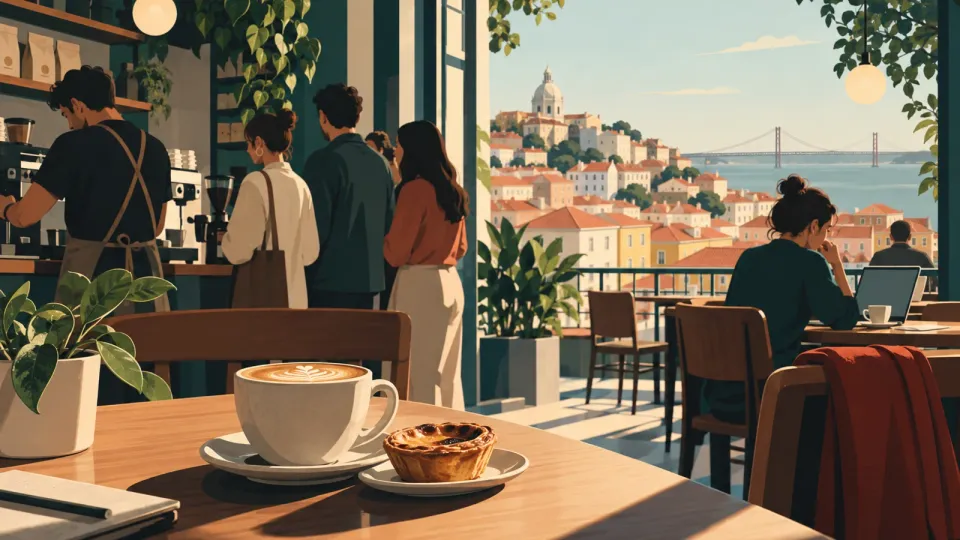
Lisbon coffee gets real, specialty, and worth your time
If you only do one food thing in Lisbon besides pastries, do coffee the second-wave way: skip the one-size-fits-all tourist counters and chase places that care about roast date, extraction, and how the cup changes by neighborhood.
Here is the move. Lisbon still runs on the classic bica culture, but specialty coffee has grown alongside it, with more third-wave roasters, more espresso focus, and more real filter coffee (V60, batch brew, and friends). You do not need to be a “coffee person” to enjoy this. You just need to order one cup correctly and know where to stand.
The common mistake is treating Lisbon coffee like a single flavor profile. It is not. The city’s shop style changes the drink, the pacing, and even what you should order. A place in Alfama is built for slow mornings and lingering windows. A place in Baixa is built for quick espresso between plazas. A coffee lab in Saldanha is built for filter and retail beans.
This guide is a walking plan. You will get eight specialty stops ranked by neighborhood logic, plus what each place does best, how to order espresso versus filter in Portugal without confusion, where to sit with a laptop, and where to buy beans to take home.
And yes, you can still go to A Brasileira. Just do it with eyes open, because the “historic” choice and the “best espresso” choice are not the same thing.
To keep this practical, every stop below includes a specific neighborhood frame and an order suggestion, so you leave with a cup that matches your mood, not just your map pins.
Start with Lisbon ordering basics: what to ask for
Ordering coffee in Portugal is mostly about names. The second problem is expectations. People arrive thinking “espresso” is the default and “filter” is a niche. In Lisbon, espresso drinks are the default, but filter is now common in specialty cafés.
The clean way to order is to anchor on what you actually want:
- If you want the local baseline, order a bica or ask for an espresso (in specialty places, they will still understand what you mean).
- If you want something lighter and more “origin-forward,” ask for filter coffee (often served as V60 or “passado” style in other contexts, depending on the café).
- If you want milk, say what you want the milk to do: café com leite style drinks exist, and specialty cafés will also do cortado or flat white style drinks.
Here is the misconception to avoid. “Specialty” is not only about beans and pour-over. In Lisbon specialty cafés, espresso can be the point, with clean sourness, sweet aromatics, and a controlled crema. If you only drink filter, you might miss the best part of the scene in espresso-first Lisbon shops.
Another common mistake is asking for “americano” and then being surprised the cup tastes thin. Americano is simply espresso diluted. If the café is good, it will still be flavorful. If you want a fuller taste, a longer espresso-based drink or a filter cup is usually the better call.
One more ordering tip that saves you time. If the menu is busy and your Portuguese is limited, point to the method word if they print it (V60, batch brew, filter). Specialty baristas generally speak English, but clarity speeds up the whole queue.
If you do only one “first cup” test, do this: order an espresso or bica at a specialty shop, then order a filter at a roaster or coffee lab on your next stop. You will learn what Lisbon’s specialty scene is actually doing, not what you assumed from stereotypes.
8 specialty coffee stops in Lisbon, ranked by neighborhood logic
A ranked list is only useful if the ranking matches how you walk. These eight stops are chosen because each one “fits” a neighborhood rhythm, not because they are generic Instagram picks.
The list is also built for pacing across a 1 to 5 day trip. Start with an iconic neighborhood to calibrate your expectations, then move into roastery and coffee lab spaces for the strongest specialty intensity.
1) A Brasileira (Chiado), the historic baseline you should still understand
A Brasileira is what most travelers remember, and it is also what most specialty people downplay. The honest take: it is historic, it is famous, and it is worth a visit if you treat it as a cultural coffee house, not a method lab.
Café A Brasileira opened in 1905 in Lisbon, opened by Adriano Telles as a shop for import and sale of Brazilian coffee, and it is still one of the oldest and most famous cafés in the old quarter. (en.wikipedia.org) This is the right context for it.
So what should you do? Order a bica, take a seat, and let the place do what it does best. If you want the “best espresso in your life,” do not anchor your day here. Use it as a history stop, then pivot to specialty.
2) Hello Kristof (São Bento), specialty espresso plus magazine-café vibes
Hello Kristof is explicitly built around specialty coffee, and it has multiple Lisbon locations. (hellokristof.com) The São Bento area is a smart starting point because you get easy walks, central energy, and a short hop to other neighborhoods.
What it does best: espresso quality with a comfortable, modern café environment. They also roast their own coffee in-house, which is a good sign when you care about consistency. (hellokristof.com)
Order suggestion: pick an espresso or a milk drink, then if they have filter on hand, do one filter cup later in the day at a coffee lab.
3) Fauna & Flora (Santos, Anjos, Chiado), specialty-leaning cafés with a full-food mindset
Fauna & Flora is a brand you will see in multiple Lisbon neighborhoods, and it pairs café culture with serious brunch energy. (lisbon.bychefs.com) It opened in Lisbon in December 2017. (nit.pt)
What it does best: a “stay longer” coffee stop. If your trip includes mornings that turn into brunch, Fauna & Flora works because coffee is part of the experience, not a speed bump.
Order suggestion: if you want to maximize your meal-to-coffee payoff, order your strongest coffee alongside a brunch item, not as a rushed snack.
4) Comobå (Rua da Boavista, near Cais do Sodré), coffee with a creative menu, good for a mid-route reset
Comobå presents itself as food, coffee, matcha, and bar. (comoba-lisboa.com) It also lists a Lisbon location at Rua da Boavista 90 with a postal code in central Lisbon. (comoba-lisboa.com)
What it does best: a reset stop. If you have been walking and your stomach is starting to negotiate, this is the café style that keeps you from turning “coffee break” into “snack regret.”
Order suggestion: choose espresso if you want immediate clarity, choose something matcha-adjacent if you want a different energy and the café is busy.
5) Dramático (Príncipe Real), minimal space, straight-to-good-cup approach
Dramático sits in Príncipe Real, and Time Out Lisbon describes it as a safe stop for good coffee, with a minimal décor and big windows. (timeout.pt) Time Out also lists the address as Rua da Alegria 41E and weekday-only hours (Monday to Friday, 08:00 to 14:00), so check before planning a weekend stop. (timeout.pt)
What it does best: quiet focus. This is a good place for people who want coffee without café theatre.
Order suggestion: order a specialty espresso first. If you like it, ask for whatever method they are running at the moment, not the “default pour-over” you might assume.
6) Fábrica Coffee Roasters (center), roaster-café energy that anchors the specialty scene
Fábrica Coffee Roasters has roasted specialty coffee since 2015, according to its own site, and runs several cafés in Lisbon. Filter Notes lists Avenida (Rua das Portas de Santo Antão), Chiado (Rua das Flores), Comércio, Santos and São Mamede. (static1.squarespace.com)
What it does best: espresso consistency and retail beans you can take home confidently. Their roaster-café approach means you are less likely to get a random “guest blend day.”
For your walk planning, choose a central location and keep your timeline tight. This is where you go when you want your coffee to feel serious, but still fast.
7) SoLo Brewing Coffee Lab (Saldanha), filter-friendly, V60-ready, and laptop-possible
SoLo Brewing Coffee Lab is explicitly a specialty roaster and coffee lab in Saldanha, and Kofio lists an address in that district: Rua Pinheiro Chagas 16B, 1050-172. (kofio.co) Filter Notes also describes it as a coffee lab where you will find house-roasted beans, filter coffee, and retail beans. (filternotes.com)
What it does best: filter coffee done as a main character. If you want to experience how Lisbon’s specialty scene handles origin flavors and acidity without turning it into a gimmick, SoLo is a strong choice.
Laptop note: Saldanha is built for daytime stays, and coffee labs like this tend to be better at seating, Wi-Fi expectations, and “bring a notebook” vibes.
8) Copenhagen Coffee Lab (Baixa), central, Scandinavian, and good when you want a comfortable work cup
Copenhagen Coffee Lab’s Baixa café is on Rua dos Douradores, according to the company’s own location page. (top-rated.online)
What it does best: central work-friendly coffee. It can be a little more expensive in spirit compared to “tiny and scrappy” specialty, but it is a reliable choice when you need a clean seat and a predictable experience.
Order suggestion: if you are working, pick a drink that will not collapse in flavor after 15 minutes. Espresso with milk can hold up. Filter can be good too, but it depends on how the café pours and how busy they are.
That is your eight-stop spine. Next sections explain what each place is best at, where to buy beans, and which stop is your best digital-nomad move.
Espresso vs filter in Lisbon: how to choose without guessing
Your decision point is simple: choose espresso when you want clarity and intensity, choose filter when you want nuance and origin character. Lisbon makes both easy now, but you need to pick the right kind of place.
Espresso in Lisbon specialty cafés is often the fastest way to judge quality. When a shop is serious, the espresso tastes clean, not burnt or muted, and milk drinks can still taste like coffee instead of caramel foam.
Hello Kristof is a good example of an espresso-forward specialty café. Their own site positions them as serving “best specialty coffee in Lisbon” and highlights that they roast their own coffee in-house. (hellokristof.com) That matters because it reduces the chance of stale or inconsistent beans across days.
Filter in Lisbon specialty cafés is the route to sweetness and aromatics that espresso sometimes hides. It also gives you the “third-wave feel” people come for when they want coffee beyond the bica stereotype.
SoLo Brewing Coffee Lab is explicitly framed as a coffee lab with filter coffee and a retail-beans approach. (filternotes.com) In practice, this usually means you can get methods like V60 or “batch style” filter without the café treating it as an afterthought.
Café A Brasileira, on the other hand, is not built like a filter method lab. It opened in 1905 as a shop for Brazilian coffee import and sale and is still one of Lisbon’s oldest famous cafés. (en.wikipedia.org) You go there for the atmosphere and history, then you go elsewhere if your goal is the most technical cup.
So here is the no-guess framework.
- If it is your first coffee of the day and you are walking, choose espresso.
- If you have time to sit for 20 to 40 minutes, choose filter.
- If you want to buy beans after the tasting, choose a roaster-café like Fábrica or a coffee lab like SoLo.
One more correction for travelers who “overthink” coffee. You do not need to memorize roast profiles or brewing ratios. Order the cup style, then taste it once. If the espresso tastes bright, you found a good shop. If the filter tastes clean, sweet, and structured, you found the shop’s specialty strength.
If you want to move from theory to execution, use the list above like a map. Do espresso at one place, filter at the next. Your palate will do the rest.
Digital-nomad friendly: best laptop café for fast Wi-Fi vibes
If your Lisbon plan includes working from a café, the goal is not “a chair near an outlet.” The goal is a room that stays calm long enough for a focus session and serves coffee that does not get sad halfway through.
In Lisbon’s specialty scene, the best pick for laptop work is usually a coffee lab in Saldanha or a centrally located café with predictable seating. Based on how these places position themselves, SoLo Brewing Coffee Lab is the most straightforward laptop-friendly specialty option.
Why SoLo: Filter Notes frames SoLo as a coffee lab that supports filter coffee, batch brew, and retail beans, while it sits in a neighborhood that feels more like everyday Lisbon than the tourist core. (filternotes.com) Kofio also lists SoLo’s address in Saldanha, which matters because Saldanha is where office rhythms keep the space from feeling like it is only built for weekend foot traffic. (kofio.co)
How to use it like a pro:
- Go mid-morning or early afternoon, when the lunch rush has not fully landed yet.
- Order one “work anchor” drink, espresso or a milk drink if you want a stronger immediate base, filter if you want a slower, more aromatic session.
- Sit near outlets if they have them, but do not block the flow. Specialty cafés work when people respect the bar queue.
Here is the misconception that ruins laptop days. People assume “quiet” equals “good Wi-Fi.” In practice, the best Wi-Fi is the Wi-Fi nobody has to fight for, which usually means a café that is designed for a longer stay, not a pure take-away counter.
If you prefer being closer to the center and main plazas, Copenhagen Coffee Lab in Baixa can also work as a laptop base, because it is set in a core area and is designed as a comfortable café experience. The company lists the Baixa café on Rua dos Douradores. (top-rated.online)
Still, for pure specialty method focus, SoLo is your safer bet. Do one work session there, then treat a more “brunch energy” café like Fauna & Flora as your reward for finishing your day’s work. (lisbon.bychefs.com)
If you want a simple test, do this on your first Lisbon workday: sit for 20 minutes, order one drink, and check your connection and sound. If the room feels stable and the bar flow is predictable, you found your café for the rest of the trip.
Where to buy beans to take home (so Lisbon stays in your kitchen)
Buying beans in Lisbon is where specialty turns from a trip memory into a repeatable habit. You want two things: beans that are roasted recently enough to taste alive, and a shop that will not sell you “mystery blend” in a bag.
The easiest rule is to buy from places that roast or at least sell retail from a real roaster brand. Fábrica and SoLo are strong choices because of how they present themselves.
Fábrica Coffee Roasters is described by multiple Lisbon coffee resources as a third-wave pioneer and a roaster-café style brand with multiple Lisbon locations. (static1.squarespace.com) A roaster-café structure usually means the beans on retail shelves are part of the same rotation you tasted in your cup.
SoLo Brewing Coffee Lab is even more direct. Filter Notes frames it as a coffee lab with house-roasted beans and retail beans, and it even describes methods like V60 and batch brew. (filternotes.com) So if your goal is to buy beans that match the kind of coffee you actually enjoyed, SoLo gives you the cleanest path.
Hello Kristof is also positioned as roasting their own coffee in-house. (hellokristof.com) That means if you liked your espresso there, you can buy what they served with less risk of a mismatch.
How to buy in a way that does not disappoint you later:
- Ask what they recommend for espresso versus filter, even if you think you “only drink one kind.” Taste habits change after a few weeks at home.
- Choose one bag for espresso (darker or medium profile), choose one for filter (lighter or more aromatic) if you have the equipment.
- Buy whole beans if you want the widest flavor range, grind at home when possible.
Your shopping workflow on the ground should be simple. First, pick your tasting stops, then buy beans at the roaster or lab you trust most. If you have time for only one purchase, make it the place where you had your best cup of the trip.
If you want a historic “souvenir” option, A Brasileira is a famous café with a 1905 origin story, but it is not the specialty bean retail hub you are looking for if the goal is maximum roast freshness. (en.wikipedia.org)
Bottom line: buy from Fábrica, SoLo, or another roast-forward shop you actually tasted. Your kitchen deserves the same logic your mouth did.
Neighborhood guide: where each café fits best on a walk
Lisbon coffee is not just about the cup, it is about the route. If you try to “optimize coffee” without matching neighborhoods, you end up wasting time and missing the mood that makes the coffee enjoyable.
Here is the practical neighborhood logic behind the eight stops.
Chiado and the old quarter energy (historic baseline + people-watching) A Brasileira belongs here. The café is historic, it opened in 1905, and it is a landmark for the old quarter. (en.wikipedia.org) Treat it like a cultural stop, not your specialty endpoint.
São Bento and central boutique calm (specialty espresso with an easy walking day) Hello Kristof fits because it is in the São Bento side of central Lisbon, and it is built as a specialty coffee café with in-house roasting. (hellokristof.com) If your day includes museum time and neighborhood browsing, this is a natural coffee anchor.
Santos, Anjos, and Chiado shared vibe (brunch plus coffee, not just a quick cup) Fauna & Flora works best when your “coffee plan” is actually a half-morning plan. The brand spans multiple Lisbon locations across neighborhoods like Santos and Anjos. (lisbon.bychefs.com) If you want coffee plus food plus a longer sit, it is a reliable structure.
Príncipe Real “minimal focus” (a quiet stop between viewpoints) Dramático is described by Time Out as minimal, with large windows and a straight-to-good-coffee vibe, and it lists the address as Rua da Alegria 41E. (timeout.pt) This is where you go when you want a specialty coffee cup but you do not want the café to take over your attention.
Downtown roaster anchor (central specialty intensity) Fábrica gives you roaster-café intensity in a place where you can still keep moving. Lisbon coffee resources describe it as a third-wave pioneer with a roaster-café setup. (static1.squarespace.com) If you are building a day around “tasting,” Fábrica helps you make the tasting feel coherent.
Saldanha “workday” district (coffee labs, filter methods, and laptop possibilities) SoLo Brewing Coffee Lab is set in Saldanha, and Kofio lists the address, Rua Pinheiro Chagas 16B, 1050-172. (kofio.co) Filter Notes frames it as a café lab with V60 and filter options plus retail beans. (filternotes.com) This is where you go for filter and for a productive sit.
Baixa central comfort (your rainy day anchor) Copenhagen Coffee Lab has a Baixa location and can be a good comfort anchor when you want to stay close to plazas and move between shopping and sights. (top-rated.online)
If you want one itinerary rule that almost never fails: pick one “espresso neighborhood,” one “filter neighborhood,” and only then add the historic stop. Your day will feel intentional instead of randomly caffeinated.
If you do not know your neighborhoods yet, start with Baixa and São Bento, then move toward Príncipe Real and finish in Saldanha. That route mirrors how Lisbon’s coffee spaces evolve from tourist core to coffee lab realism.
Hello Kristof, Fauna & Flora, Comobå: what each does best
These three names get recommended together because they each deliver a different kind of “specialty day.” If you treat them as interchangeable, you will waste the reason you came.
Hello Kristof: the specialty espresso baseline with in-house roasting
Hello Kristof positions itself as a specialty coffee café, and its site highlights that it roasts coffee in-house. (hellokristof.com) The São Bento and central locations make it easy to fit into a sightseeing day.
What to do there: order your espresso or milk-based drink first. Then, if you still want more, ask what filter method they have running and treat it as a second opinion.
The “don’t mess this up” tip: do not come here only for brunch if you want the specialty value. The coffee is part of the brand identity, not an afterthought. Roasting in-house is a practical reason to expect consistency. (hellokristof.com)
Fauna & Flora: the stay-long coffee, built for food too
Fauna & Flora operates across multiple Lisbon neighborhoods including Santos, Anjos, and Chiado, and it is described as a collection of neighbourhood cafés and cocktail bars with multiple locations. (lisbon.bychefs.com) It also opened in December 2017. (nit.pt)
What to do there: make it a brunch or meal pairing stop. If you are traveling and you want one café where coffee is integrated into food, this is a good choice.
The misconception to avoid: thinking it is “only a brunch place.” It is also a coffee stop. The key is that your coffee experience is designed to be part of a bigger morning.
Comobå: creative menu, coffee plus matcha plus bar framing
Comobå’s official presentation includes food, coffee, matcha, and bar, which tells you the café is built as a flexible hangout rather than a strict method-only lab. (comoba-lisboa.com) It lists a central Lisbon location at Rua da Boavista 90. (comoba-lisboa.com)
What to do there: come mid-route when you want a coffee reset and you might also want something else (matcha, a bite, or a longer sit if it fits your day).
The practical advice: if you are chasing the most technical cup, choose Comobå for the atmosphere and pairing, then do your biggest method session at SoLo or Fábrica. If you want a single “one-stop” café that can handle your whole mood arc, Comobå is one of your safer picks.
If you do these three in one day, do it in this order for the best “story” of Lisbon coffee:
- Hello Kristof for the specialty espresso baseline.
- Comobå for the flexible food and drink reset.
- Fauna & Flora when you want to sit and finish the morning.
Your palate will follow the city’s pacing. (delete)
Conclusion: the one action to do today (and get better coffee tomorrow)
Specialty Lisbon is not a scavenger hunt. It is a decision tree. If you remember one thing, remember this: espresso tells you quality fast, filter shows you character, and roaster-cafés help you buy beans that match the cup you loved.
Start today by doing a micro-audit of your next coffee order. Pick one stop from the list, then choose your cup style on purpose:
- If you are walking, order espresso (or bica) at your first specialty stop.
- If you have time to sit, order filter at your next stop.
If you want your simplest next step, use this plan: visit Hello Kristof in São Bento for your espresso baseline. Hello Kristof is positioned as a specialty coffee café, and it highlights in-house roasting. (hellokristof.com) After that, buy one bag of beans at a roaster or coffee lab, with Fábrica and SoLo as your strongest practical options for retail bean matching. (filternotes.com)
For your historical contrast stop, you can still do A Brasileira. It opened in 1905 and remains one of Lisbon’s oldest and most famous cafés, which makes it a cultural coffee house experience. (en.wikipedia.org) Just do not treat it as your specialty method yardstick.
When you do this, you stop relying on hype and you start relying on taste. That is how you get the Lisbon coffee experience that sticks.
One specific thing you can do today: pick your two neighborhoods for tomorrow, then choose one espresso stop and one filter stop from this article. Your map becomes a tasting path, not a list of places you might try.
Related guides

Best beaches Lisbon: Cascais to Caparica picks
Best beaches Lisbon, from Carcavelos to Caparica. Match surf, families, quiet time, and party vibes, plus train vs Uber vs ferry options.

Lisbon Airport to City Centre Routes: Metro, Bus, Taxi
Choose the best Lisbon airport route to the city centre: metro, airport bus, licensed taxi, and app-based rides. Compare fares, luggage, and late arrivals.
Michelin restaurants Lisbon: the actual list
Every Lisbon restaurant in the 2026 MICHELIN Guide: the three two-star tables, the 12 one-stars and the Bib Gourmand picks, plus how to book and what tasting menus cost.

Visit Lisbon: first-timer guide with a walking route and airport transfer tips
Visit Lisbon without falling for the traps: 6 real anchors, a historic-center walking route, and airport-to-center logistics.