
Things to do in Lisbon: 48-hour priority list
Things to do in Lisbon in 48 hours, with 6 ranked stops, 3 smart skips, honest Tram 28 timing, best sunset spots, and a first dinner plan.

Things to do in Lisbon: pick 6 anchors, then stop
If you only have 48 hours, the best move is not “see more”, it is see less, but better.
Lisbon rewards sequence. You want your days to flow by neighborhood, not by wish list. That means picking a Belém block for day one, an old-town block for day two, and using your transit time for views, not transfers. The mistake first-timers make is spreading across the city like a spreadsheet, then losing the reason they came, the walking and the light.
Here is the ranked shortlist of 48-hour priorities I would actually stand behind in Lisbon, as a resident:
- Must: Belém pastries plus Torre or Jerónimos (Day 1)
- Must: Alfama walk with one “proper” viewpoint (Day 1 late)
- Must: São Jorge Castle for the skyline (Day 2 morning)
- Must: Chiado and Baixa loop for Lisbon’s core (Day 2 late)
- Highly worth: a Lisbon waterfront evening (Cais do Sodré to Belém side)
- Highly worth: one rooftop or terrace sunset rotation
And here are the 3 things to skip if you are optimizing for your two days:
- Skip the “do everything” version of Time Out Market. It is good for variety, but it is also where you go when you ran out of plan. If you have a short trip, you should reserve your appetite for restaurants with neighborhoods attached to them.
- Skip a second major “ticket monument” in Belém on the same day. If you do Jerónimos and Torre and a museum, you will spend most of your time queueing and crossing. Pick one major monument plus one food stop.
- Skip Tram 28 as your main transport plan. Tram 28 is iconic, but it is not a reliable schedule strategy. Treat it as a ride, not a backbone.
You can do all of this with a basic Lisbon walking plan plus short metro or bus hops, or with the single best “mental shortcut”: your morning in the historic core, your afternoon by the river, your evening from a viewpoint.
One more thing before you move on: sunrise, sunset, and weather matter in Lisbon. If you are here near late spring, you get long evenings, but the city still turns into a crowd magnet at the exact same hours. That is when you want your sunset planned, not improvised.
Belém basics in 90 minutes: choose your pastry and monument
Belém is where Lisbon feels like a story, but your time is limited. For a 48-hour trip, you should do one pastry stop and one major monument, then move on.
Start with the pastries. If you want the classic, go to Pastéis de Belém at Rua de Belém (the original shop). They are the pastry that turned into the national baseline for pastéis de nata, so it is a taste benchmark, even if you end up preferring other versions later. The shop’s contact page confirms the Belém address, so you can anchor your navigation to it. Pastéis de Belém official contact page.
Now pick one monument, based on what you want to feel:
-
Jerónimos Monastery (art and history) If you want Manueline architecture and a “Portugal at sea” vibe, Jerónimos is the choice. It is also physically close to the area where most people are already walking, which keeps your day efficient.
-
Torre de Belém (the river icon) Torre de Belém is the photogenic postcard moment. Do it if you want your Belém stop to end with the river horizon. Be aware that it has had operational changes due to restoration work. If you arrive to an unexpected closure, your plan should still hold, because Belém has enough “walk time” to recover.
-
Skipping logic if you only have 48 hours The misconception: “You must do all three, pastéis plus Jerónimos plus Torre.” If you do that, you turn a gentle riverside day into a queue schedule. In Lisbon, queue time is the silent budget killer.
Belém also gives you your first realistic transit hack. Instead of spending energy figuring out every bus step, think in blocks: Belém is reachable, and once you are there, you walk between your stops. Your job is to choose a route that reduces backtracking.
Concrete planning tip: choose a “start window” and treat the rest as a sequence, not independent events.
- Pastry first, monument second. You do not want to fight a hunger mood while you are waiting in line for a paid entry.
- If your monument has tickets, pre-plan the entry option. Queue pain is the single biggest failure mode of Belém. (This is why your “choose one monument” rule matters.)
Weather tip tied to reality: Lisbon sunsets are late. In June, sunset is roughly around 9:02 pm in Lisbon, so your Belém day can end with a long, comfortable evening walk if you do not waste it. (Sunrise and sunset reference for Lisbon, June 2026, from timeanddate.com.) Sunrise and sunset times in Lisbon, June 2026.
By the time you finish this Belém block, you should have two things locked: your food memory and your Lisbon “big architecture” memory. Everything else is flexibility.
Alfama walk that feels local, not crowded
Alfama is not “a view with a street attached”. It is a vertical neighborhood, stairs to nowhere, turns that hide courtyards, and doors that open into someone’s everyday life.
Your direct aim for 48 hours is simple: walk Alfama with one viewpoint stop that you actually wait for, then move on. If you do Alfama as a checklist, you lose the best part, the slow reveal.
Start in the early evening, when the light cools and people shift from day tourists to night diners. Your walking route does not need to be perfect. It needs to be anchored by two things:
- A direction: toward the river-facing viewpoints.
- A destination: one viewpoint that earns your wait.
For viewpoints, Lisbon has an over-recommended problem: everyone goes to the same exact spot at the same exact time. Your fix is a rotation. I am not saying “avoid crowds” (you will still see people), I am saying “avoid the worst crowd math”.
Choose one from this sunset rotation for Alfama night energy:
- Miradouro das Portas do Sol: classic river view, best for that “Lisbon postcard” moment.
- Miradouro de Santa Luzia: more intimate, often calmer, still perfect for photos.
- Miradouro de São Pedro de Alcântara: big skyline energy, easy to pair with Chiado.
- Graça viewpoints (Graça area): a slightly more local feel, usually better if you want space.
You can use the Portas do Sol spot as your mental model. It sits in Alfama and gives a layered view over red roofs and toward the Tagus, and it is commonly described as a top Lisbon viewpoint for sunset. Miradouro das Portas do Sol overview.
Now add the “locals do this” move: dinner, not sightseeing, is where Alfama becomes real. After your viewpoint, do not jump back to your hotel or hotel zone. Instead, walk down into the neighborhood rhythm until you find a place that looks like it has regulars.
If you want one practical decision rule: pick the restaurant where you can see a mix of locals and couples. Avoid the ones where every table looks like it was staged for Instagram. That does not mean “no photos”, it means you want food that has a life outside of your camera.
One misconception: “Alfama is all narrow lanes, you should just get lost.” Getting lost is fine for 20 minutes. For 48 hours, you still need a finish line. That is why the viewpoint stop matters. It gives you an end point to aim for.
Also: Lisbon hills punish tired legs. So build Alfama into a day where you can afford stairs, not into a day where you also plan castle plus a long river detour plus a second museum. Stack your effort, do it once, and then eat.
Tram 28 honest call: when it is worth it, when it is miserable
Tram 28 is worth it only when you ride it like a ride, not like a timetable.
The honest call: if your plan depends on Tram 28 to solve transportation, you will get frustrated. If your plan uses Tram 28 as a scenic slice, you will feel like Lisbon gave you something.
Tram 28 queues are part of the experience, but so is the packed carriage problem. Modern advice is consistent on one thing: there is no reliable printed schedule that will rescue you from crowd effects, and real departures vary by time of day and conditions. For example, a Tram 28 planning guide notes that there is no reliable printed schedule and recommends trusting digital next-tram displays at major stops. Tram 28 schedule and tips guide.
So here is the rule set for your 48 hours:
-
Ride early or late, not mid-morning on a sunny day The mid-morning window is when you get the worst mix of tourists plus “people trying to be efficient”.
-
Board smart, not just first When the tram stops, do not assume the first opening is the best. Wait for a moment when you can board without a 10-minute crowd battle.
-
Use it as a connector across a scenic chunk, then walk Tram 28 is good at moving you through recognizable Lisbon scenes. It is not good at solving your entire itinerary.
-
Mind pickpocket risk Crowded transport increases risk, especially around bottlenecks. The same Tram 28 planning guidance that calls out queues also mentions real pickpocket risk. Tram 28 schedule and tips guide.
Ticket logic tip: Lisbon transit passes work best when you already know you will use multiple modes. If you think you will ride tram plus metro plus bus, a pass can simplify your day.
For official card logistics, Carris explains the Frequent Travellers cards and how to request or obtain cards and pricing categories on their site. CARRIS Frequent Travellers (Lisbon).
Now, here is how to integrate Tram 28 into your priority list without breaking your 48 hours:
- Put Tram 28 near a viewpoint or an Alfama segment, where it feels like an extension of the walk.
- Do not put it between major ticket monuments unless you have a buffer.
- If you miss your window, accept it. Lisbon has enough other scenic routes that missing Tram 28 should not ruin your day.
And if you only do one thing: do Tram 28 once. That is the difference between an iconic Lisbon memory and a daily regret.
Belém to castle: São Jorge and the skyline you earn
São Jorge Castle is where you stop thinking like a tourist and start thinking like a person who understands terrain.
If you are doing two days, you want your “big views” early. That means putting São Jorge Castle on Day 2 morning so you get a clear skyline before the afternoon crowds compress everything.
Here is the direct payoff: you get the best sense of Lisbon’s hills, river orientation, and neighborhood layout. That makes every later walk make more sense.
How to do it efficiently:
-
Pick a start time and commit Go early enough that you are not arriving at the first wave.
-
Walk one line, not a circuit People over-plan castle visits and then feel like they did not “see everything”. For your short trip, your win condition is a skyline moment and one or two ramparts.
-
Pair it with a neighborhood finish, not just a monument Castle does not end in a vacuum. It should funnel you into Alfama streets or toward Baixa and Chiado depending on your mood.
Common misconception: “Castle is just for photos.” Photos matter, but the deeper value is orientation. When you understand how Lisbon stacks, you walk faster and enjoy the surprises more.
If you want a concrete time anchor for the day: sunset in Lisbon in early summer is around 9 pm. So your late afternoon can still be dinner-friendly and viewpoint-friendly, even after a morning castle block. June sunset timing for Lisbon can be checked with a reference like timeanddate.com. Sunrise and sunset times in Lisbon, June 2026.
This also connects to your “avoid queue traps” strategy. Castle morning is often easier than monument peaks later in the day. You are selecting your friction points.
One more Lisbon-resident truth: the castle area is only “hard” if you go in with tired legs. If you place castle in the morning, you get to spend the afternoon with momentum.
After São Jorge, you should do one of two next moves:
- Move into Alfama for a second walk segment, using the viewpoint rotation.
- Or go straight toward Baixa and Chiado if you want shopping streets and cafes instead of hills.
The point is that São Jorge should not become the start of a third big ticket item. It is your skyline anchor. Your two-day trip stays sharp when each big stop has a clear role.
Chiado and Baixa loop: the Lisbon core you will remember
Chiado and Baixa is Lisbon at human scale: cafés, stone sidewalks, small bridges, and streets that always seem to lead somewhere even when you are just walking.
If you only have 48 hours, this is your “core loop”. It is also the place where you can make the trip feel like yours, not a guided bus route.
Here is the direct plan for the loop:
- Start in Baixa for the broad, easy-to-walk grid.
- Move into Chiado for the more refined street energy.
- Use a dramatic vertical shortcut for a viewpoint moment if you want it.
A classic vertical shortcut is the Santa Justa Elevator, which connects Baixa to the Chiado side. It is a destination in itself, and it is also a practical bridge across the elevation difference. You can find reference information about the elevator, including general details and how it connects those areas, in guides describing its role in the city. Elevador de Santa Justa guide (general info and visit details).
You do not need to ride it to enjoy the views, but if your legs are good and you want a “Lisbon moment” that feels engineered, it works.
Now add a misconception correction.
People treat Chiado as “shopping time”. That is true, but only if you decide it is. If you instead treat it as “walk time plus one good coffee plus one good pastry”, it becomes a memory.
What to do inside the loop, no overthinking:
- Pick one pastry stop and one coffee stop, and treat them as your pacing tools.
- Do a slow street scan for tile details, church facades, and small courtyards. Chiado rewards attention.
- End near a dinner neighborhood instead of wandering until you are hungry. Hungry wandering makes tourist-trap choices more likely.
Best neighborhood for your first dinner (48-hour logic): Baixa to Chiado edge, where you have access to options without having to climb deep into hills after a long day.
Why this works: it reduces transit friction. Lisbon is wonderful at night, but a first dinner should not be your “navigation stress test”. If you want your first dinner to feel confident, choose the edge of the core and then you can spend day two taking the more adventurous turns.
If you are planning transport: Lisbon’s urban transport is built around metro plus Carris plus tram. Carris provides official information for card purchasing and frequent traveller cards on its site. CARRIS Frequent Travellers.
Finally, a sunset tie-in.
If you did Alfama viewpoint already, your Chiado and Baixa evening can be the calm counterpart. If you skipped Alfama viewpoint, this loop sets you up for one of the skyline rooftops later.
The whole point of this section is not “see more”. It is “make the city feel walkable”. Chiado and Baixa do that better than any single monument.
3 things to skip in Lisbon (and what to do instead)
Skip lists sound arrogant until you have a short trip. In Lisbon, skipping is often the highest-signal decision you can make.
Here are the three specific skips that protect your 48 hours.
1) Skip “Time Out Market as your whole food plan”
Time Out Market Lisboa is a food hall with a curated range of restaurants and venues, located at Mercado da Ribeira near Cais do Sodré. It has hours listed on Time Out’s site, including late-night options. Time Out Market Lisboa opening hours.
The reason to skip it as your core plan: you already have limited time, and a food hall can become a substitute for actually eating inside a neighborhood. If you want variety, do it once, but do not let it replace a real dinner.
Instead: Use your neighborhood dinner rule. Eat at one place in one neighborhood, then use Time Out Market only if you want one easy late snack.
2) Skip “Belém all-in day” (Jerónimos plus Torre plus extra museums)
Belém is designed for the full itinerary. But your problem is not content, it is time. When you stack too many paid stops, you shift your day from “walk and absorb” into “queue and cross the map.”
Instead: Pick one major monument in Belém, then build the rest around the river atmosphere and pastries.
3) Skip Tram 28 as a transport system
Tram 28 is famous for a reason. It is also famous for queues and crowding. Guidance on planning Tram 28 emphasizes that there is no reliable printed schedule and suggests using digital next-tram info instead. Tram 28 schedule and tips guide.
Instead: Ride Tram 28 once, treat it as scenic, then switch to walking plus metro or bus as your reliable engine.
One misconception: “If I skip one thing, I will regret it forever.” In Lisbon, you will not regret skipping a crowded plan if you replace it with a neighborhood meal and a viewpoint.
A practical replacement framework for any skipped item:
- Remove the skipped thing.
- Add a neighborhood walk segment adjacent to a viewpoint.
- Add one food decision that is tied to where you end up.
Do that, and your two days get better, not worse.
Sunset spot rotation: 4 picks for different vibes
Lisbon sunsets are not one product. They are four different products, depending on where you stand and what you want to feel.
Because you only have 48 hours, you need a rotation, not an improv habit. In June, sunset in Lisbon is around 9:02 pm, which gives you plenty of time, but also means you have a predictable crowd window. Sunrise and sunset times in Lisbon, June 2026.
Here are four sunset options, each with a distinct vibe:
-
Miradouro das Portas do Sol (Alfama, classic postcard) This is your “Lisbon looks like Lisbon” viewpoint. It gives you the layered rooftops and river direction you came for. It is commonly described as a top Alfama viewpoint and a strong sunset stop. Miradouro das Portas do Sol overview.
-
Miradouro de Santa Luzia (Alfama, calmer feeling) If you want the Alfama vibe with less of the chaotic crowd energy, Santa Luzia is a smart alternative. Use it when you want “romantic terrace energy” instead of “peak tourist peak.”
-
São Pedro de Alcântara (Chiado, skyline plus convenience) This is for when you want the view without needing a long stair battle. It is also easy to pair with your Chiado and Baixa evening block.
-
Graça viewpoints (Graça area, slightly more local) If you want to feel like you are watching the city from inside its neighborhoods, Graça gives you that. It tends to be a good move when you want a calmer feel without going too far.
How to choose which one to use on your two days:
- If you did Alfama earlier and legs are tired, choose São Pedro de Alcântara.
- If you want maximum “Lisbon postcard” impact and you are okay with crowds, choose Portas do Sol.
- If you want romantic calm, choose Santa Luzia.
- If you want space and neighborhood texture, choose Graça.
Now the actionable part: arrive with a window, not on the dot.
- Aim to get your viewpoint seat 25 to 40 minutes before sunset.
- Expect the last 10 minutes to be the most crowded.
- Plan your dinner timing so you are not rushing. Rush is how you miss the view.
One misconception: “Any miradouro is the same at sunset.” It is not. Some miradouros are built for “photo posture”, others are built for “time to talk”. Choose based on what you want your night to be.
Cais do Sodré to the river at night: the easy evening that saves your day
The best “I need a plan but I do not want a museum” evening in Lisbon is a river-adjacent walk.
If you have done your big stops, you still need an evening that feels like Lisbon, not like your phone battery. That is where the Cais do Sodré to waterfront energy works. You are close to nightlife, but you can keep it simple and still feel the city’s rhythm.
What you do, step-by-step:
- Start with dinner in your chosen core neighborhood, then head toward the river.
- Walk along the waterfront for one loop, then stop when you feel “done”.
- If you want dessert, pick one place near where you end the walk.
This works because Lisbon evenings are long in summer. In June, sunset timing is roughly around 9 pm in Lisbon, which gives you time to do a relaxed walk after dinner without feeling like you are racing daylight. Sunrise and sunset times in Lisbon, June 2026.
How to connect it to the rest of your 48-hour plan:
- If Day 1 ended in Alfama and you want a calmer night, do the waterfront walk.
- If Day 2 ended in the city core and you want a different feeling, do the river walk as your “final chapter”.
Common mistake to avoid: treating the river walk like a second sightseeing marathon. It is not. It is an atmosphere tool.
Transit sanity check: if you want to use public transport, you can simplify by using Lisbon’s transit cards. Carris provides official information for getting frequent traveller cards and understanding pricing categories for cards. CARRIS Frequent Travellers.
One realistic advantage of this evening plan is recovery. If your day had a delay, if you waited in line longer than expected, if it rained for 20 minutes, the river walk is still a win. It is not a single ticket event. It is flexible.
If you want one short list maximum rule for the evening: walk, talk, and eat once. Everything else is optional.
By the end of this block, your 48 hours feel complete. You have architecture in daylight, neighborhoods at golden hour, and city energy at night.
Your exact 48-hour schedule (with buffer rules that prevent regret)
You do not need a 20-item plan. You need a schedule that protects you from two problems: walking fatigue and queue time.
Here is a practical 48-hour schedule built from the ranked anchors and the skip rules.
Day 1, morning to early afternoon: Belém block
- Start at Pastéis de Belém for the original pastry benchmark. Use the official address as your anchor when navigating. Pastéis de Belém official contact page.
- Immediately after, choose one major monument in Belém, either Jerónimos or Torre.
- Treat the rest as walking time, not checklist time.
Buffer rule: if you feel rushed, do not add more monuments. Stop where the day still feels good.
Day 1, late afternoon to evening: Alfama walk and one viewpoint
- Walk Alfama with one viewpoint destination.
- Use the sunset rotation to pick your spot based on crowd tolerance and leg energy.
Day 2, morning: São Jorge Castle
- Go early enough to avoid the heaviest crush.
- Walk one skyline line and then leave while you still have energy.
Day 2, afternoon to late: Chiado and Baixa loop
- Walk the Lisbon core.
- Add Santa Justa Elevator only if you want the vertical “Lisbon engineering” moment, not as a must. Background info about the elevator and its connection between Baixa and Chiado is available in local guides. Elevador de Santa Justa guide.
Day 2 night: waterfront walk for the final chapter
- End your trip with a Cais do Sodré to river walk, then pick a neighborhood dessert.
Now the two buffer rules that make this schedule actually work:
-
One ticket stop per day maximum (in your core plan) Belém is your exception only if you treat it as pastry plus one monument.
-
No backtracking loops Your day is built as a direction, not a zigzag. If you realize you are zigzagging, cut something, do not “push through”.
Also, keep the Tram 28 honesty rule.
- If you do it, do it once, in the time window where it feels like scenic transport, not crowded punishment.
- Guidance that Tram 28 lacks a reliable printed schedule is a reminder to trust real-time info over rigid planning. Tram 28 schedule and tips guide.
If you follow this schedule and you still feel like you missed something, that is not failure. That is Lisbon giving you a reason to come back.
Written by Andre Ginja — Founder, andginja.
FAQ: Lisbon priorities for 48 hours
What are the 6 best things to do in Lisbon in 48 hours?
The highest signal priorities are Belém pastries plus one major monument, an Alfama walk with one viewpoint, São Jorge Castle for skyline, a Chiado and Baixa core loop (optionally Santa Justa Elevator), one waterfront evening, and one rooftop or terrace sunset rotation. This keeps queues and backtracking low, and it matches how Lisbon neighborhoods actually connect.
Should I buy a Lisbon transit pass for 48 hours?
It depends on how many rides you plan to take. Lisbon’s transit cards are organized by type, and Carris publishes official information about getting frequent traveller cards and price categories. CARRIS Frequent Travellers. If your plan is mostly walking plus a metro hop or two, pay-as-you-go can be enough.
Is Tram 28 worth it on a short trip?
Yes, but only if you treat it like a scenic ride. If you rely on it as a schedule backbone, it becomes miserable due to queues and crowding. A Tram 28 planning guide notes there is no reliable printed schedule and recommends trusting digital next-tram info. Tram 28 schedule and tips guide.
What should I do in Belém if I cannot do everything?
Choose one major monument and pair it with Pastéis de Belém as your pastry anchor. The official shop location is listed on Pastéis de Belém’s contact page. Pastéis de Belém official contact page. The “do everything” approach often wastes your short day on queue time.
Where should I watch sunset in Lisbon?
Use a rotation based on vibe: Miradouro das Portas do Sol for classic postcard impact, Miradouro de Santa Luzia for a calmer Alfama feel, São Pedro de Alcântara for convenience plus skyline, and Graça viewpoints for more neighborhood texture. For context, a June sunset reference for Lisbon is about 9:02 pm, which helps you plan arrival time. Sunrise and sunset times in Lisbon, June 2026.
Is Time Out Market a must in Lisbon?
No. It is useful when you want variety in one place, but it is also where you end up when your day has no plan. Time Out Market Lisboa lists its opening hours and is a well-known food hall near Cais do Sodré. Time Out Market Lisboa opening hours. On a 48-hour trip, you usually get more value from one neighborhood dinner plus one viewpoint.
What is a good first-dinner neighborhood for visitors?
For your first dinner, pick the Baixa to Chiado edge. It keeps you close to options without making night navigation a hill climb. Then, use the next evening to go deeper into Alfama or the river side once you understand the city’s rhythm.
Lisbon priority map download (6 things + 3 skip)
You do not need another long checklist. You need a map-like mental model you can use in the street.
Download the Lisbon priority map (6 things that earn their place + 3 skip) and use it like this:
- Circle your day 1 Belém choice (Jerónimos or Torre).
- Pick one Alfama viewpoint from the rotation.
- Choose one sunset stop, then schedule dinner 60 to 90 minutes before it.
Then walk it like a resident would: move by neighborhood blocks, not by “must see” guilt.
This is also the fastest way to avoid the two classic Lisbon failure modes: queue time and backtracking.
CTA details:
- Download: Lisbon priority map (6 things that earn their place + 3 skip)
- No email required.
Sources (primary and planning references)
- Pastéis de Belém official contact page
- Time Out Market Lisboa opening hours
- Tram 28 schedule and tips guide (planning notes)
- CARRIS Frequent Travellers (official card info)
- Sunrise and sunset times in Lisbon, June 2026 (reference)
- Elevador de Santa Justa visit details and connection info
External sources are included for operational details (hours, transport info) and time references (sunset planning).
Related guides
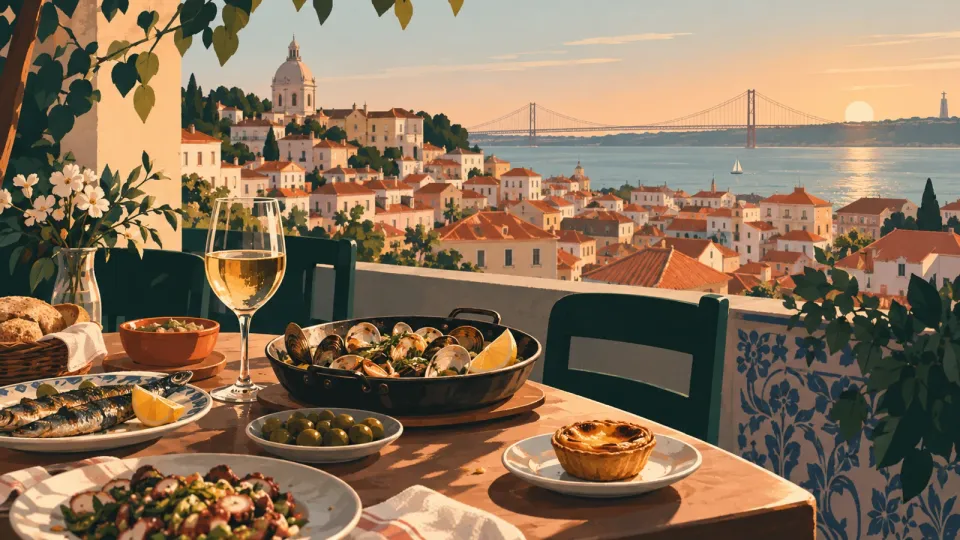
Best restaurants in Lisbon, a local’s working list
Best restaurants in Lisbon, by occasion, with overrated picks called out, tasca value meals under €25, and pastelaria stops. Download list.

Michelin restaurants Lisbon: the actual list
michelin restaurants lisbon, ranked by value. Book the right star first, spot the Bib Gourmand, and expect realistic tasting menu prices.
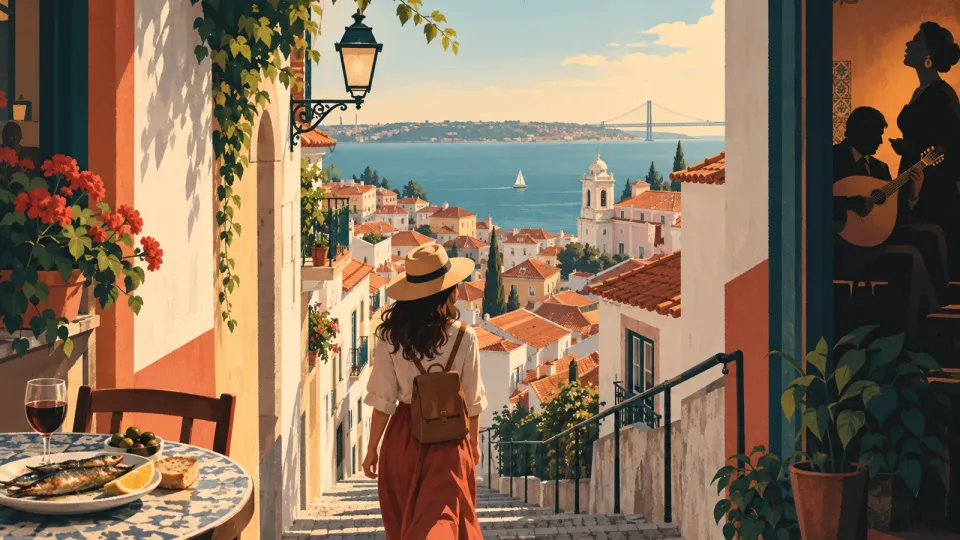
Alfama Lisbon walking guide beyond the postcards
alfama lisbon walk route with real food stops, viewpoints, and fado. Walk most of it, skip the tourist traps, and move with confidence.
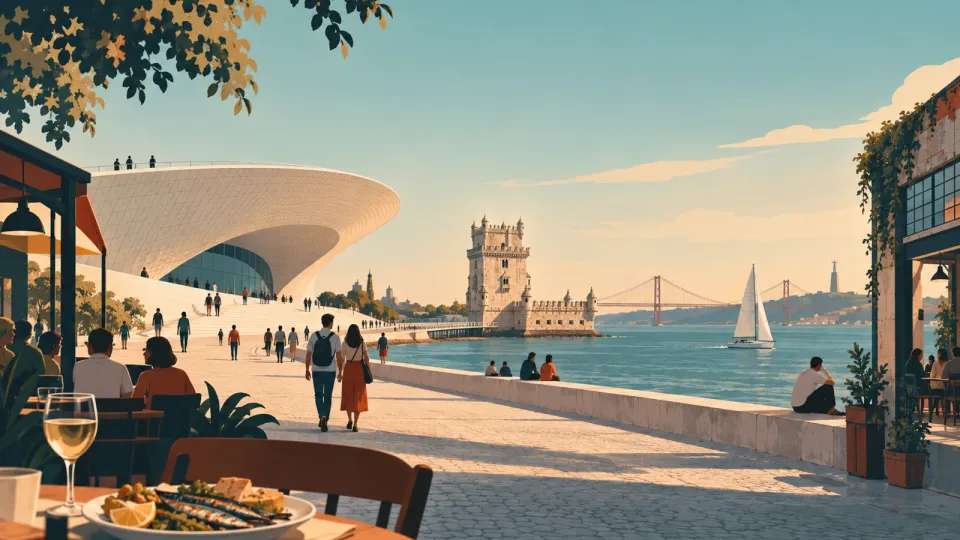
Belém Lisbon: Beyond Pastéis de Belém
belem lisbon goes far beyond Pastéis and the Tower. Use this half-day order, MAAT + riverside walk, plus tasca lunch and LX Factory pairing.