
Pico Island: vineyards, coast and a three-day itinerary
Pico Island: vineyards, coast and a three-day itinerary for Madalena, São Roque and Lajes, with UNESCO scenery, optional climbs and whale watching planning.
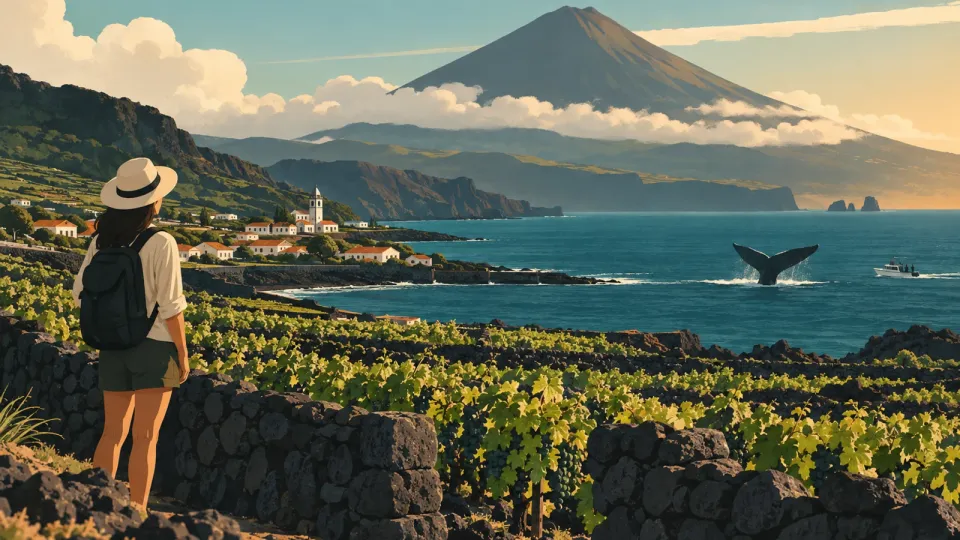
Start here: build a 3-day Pico plan around vineyards first, then coast
If you want Pico without getting stuck in logistics, anchor the trip in the UNESCO vineyard landscape and then move to the island’s north coast, where views, trails and whale watching planning fit naturally.
Pico’s trip pattern is simple: sleep in one base town, then do day drives to vineyard areas, coastal viewpoints, and (optionally) the Pico Mountain access system.
A common mistake is treating Pico like a “do it all” island where you must climb the summit. That is not the case. Pico’s identity is not only the mountain. The Landscape of the Pico Island Vineyard Culture is a UNESCO World Heritage Site, built around volcanic walls, vineyards, and wine cellars on the coast. (whc.unesco.org)
Because you are planning for three days with no required summit climb, choose one base town based on the coast style you want:
- Madalena: best if vineyards and easy town services are the priority.
- São Roque do Pico: best if you want a stronger northern-coast feel (and often great for pairing with whale watching planning).
- Lajes do Pico: best if you want variety on the east side of the island and a slower pace.
Finally, remember this planning rule: official reservations may apply for Pico Mountain access, and whale watching depends on seasonal and operator choices. Do not assume walk-in availability. Use the official climb access site for summit planning, and use an up-to-date operator or season guide for whales. (montanhapico.azores.gov.pt)
Related reading for island choice and whale season planning is available here: Which Azores Island to Visit for a First Trip and Azores Whale Watching: Island and Season Choice.
Vineyards on UNESCO walls, what to see in Madalena and São Roque
Pico’s vineyards are not a backdrop, they are the landscape. UNESCO highlights the coastal setting of the viniculture landscape at the foothills of Pico Mountain, where vineyard growing patterns and stone wall systems shape how the island looks from road and sea. (whc.unesco.org)
For a three-day rhythm, you want at least one “vineyard block” day in each base area. Start with the idea of walking or driving the coastline edge, then follow the stone wall lines inland to get the full sense of how the vineyards were carved out of volcanic terrain.
A practical way to plan vineyard time:
- Pick one town as the hub (for most travellers, that is Madalena, São Roque or Lajes).
- Choose one vineyard-focused area per day, not three. The landscape is easier to understand when your time is concentrated.
- Pair wine culture with a coast stop. UNESCO’s story is coastal and volcanic, so your eyes should move between vineyards and the Atlantic.
What to expect in the major municipalities:
- Madalena and the western coast: often used as a starting point for exploring UNESCO vineyard areas linked to classic vine plots and cellars. (whc.unesco.org)
- São Roque do Pico and Santa Luzia areas: planning tools and UNESCO framing connect cultivation controls to local authorities, which is one reason vineyard landscapes feel “lived in,” not staged. (whc.unesco.org)
Common mistake: thinking UNESCO means a single viewpoint. On Pico, UNESCO means a patterned system. If you only see one photo spot, the “why” feels missing.
Tip for a smoother day: schedule vineyard exploration for the morning when driving and outdoor walking feel easier to pace. Then reserve late afternoon for the coast, where light changes quickly and the volcanic contours look sharper.
Coast day: drive the north or the east for views and walkable stops
On Pico, the coast is where you understand the island’s scale, from black volcanic rock edges to the shapes of bays and coastal farms. For a three-day itinerary, plan one coast day that is mostly driving with short walks.
Two coastal styles work well without complicated routing:
- North coast mood (often tied to São Roque do Pico): cliffs, open ocean lines, and the feeling of being exposed to the Atlantic.
- East side variety (often tied to Lajes do Pico): a mix of coastal viewpoints and calmer pacing.
You can also use official trail resources to add a short guided walk feel. Visit Azores provides trail listings for Pico, including routes connected to the island’s coastal and vineyard areas. (trails.visitazores.com)
A simple coast-day framework that fits independent travellers:
- Start with one viewpoint, then choose either a short trail segment or a second viewpoint. Keep the walking light enough that you still have time for the vineyard-and-coast transitions.
- Build in a rest stop in town before a second wave of coastal driving.
- Keep the timing flexible if weather changes, because Pico’s coast can switch from clear to windy fast.
Practical misconception to avoid: “Swimming beaches” are not the main promise of Pico’s coast. Natural seawater pools and rocky coves can exist, but the reliable experience is the landscape itself, not guaranteed sea time.
If you want a coast plan that also supports whale watching planning, place your coast day on the day you are less likely to commit to a fixed-hour tour. That way, you can shift the order based on what the day allows.
Whale watching planning that does not hijack the itinerary
Whale watching is one of Pico’s big draws, but it is also the part that can reshape schedules. Treat it as a planning block, not the entire trip.
A reliable way to decide whether Pico fits your season and priorities is to use an island and season guide for whale watching. The linked guide on which Azores island to pick and when to plan for whales can help you avoid the classic error of arriving in a low-likelihood window: Azores Whale Watching: Island and Season Choice.
How to keep whale watching compatible with vineyards and coast:
- Book it for day 2, after you have already locked in your vineyard focus (day 1) and before your last coast and culture pacing (day 3).
- Use operator rules as the source of truth, not assumptions. If an operator requests specific timing or conditions, follow that instead of building a tight “must be here at X o’clock” schedule.
- Avoid back-to-back tours. Pico weather and sea conditions can change, and you want buffer time.
A concrete decision rule: if your plan includes a possible summit climb day, do not stack whale watching and climb scheduling on the same day. The official mountain access system and the physical demands of hiking can conflict with the calm planning you want for sea time.
Important planning mindset: whale watching on the Azores is not guaranteed in the way a museum visit is. Your best strategy is to choose a season window, select a reputable operator, and build itinerary flexibility around that.
Optional Pico Mountain access, how to plan without surprises
For a three-day trip, the Pico Mountain summit is optional. Still, it can be part of your plan if you treat it as an officially managed access activity.
The official access page for climbing Pico Mountain is run through the regional system at Montanha do Pico, with language options and clear trip rules. (montanhapico.azores.gov.pt)
Two planning facts matter most for visitors:
- Overnight crater stays and some climb timing are tied to reservation rules and a daily maximum. The access framework describes conditions including a maximum of 32 visitors per day for crater overnight stays and reservation requirements with advance timing. (montanhapico.azores.gov.pt)
- The climb description explains the trail structure and that the route begins and ends at the Mountain’s House (Casa da Montanha do Pico), with access planning through the official system. (montanhapico.azores.gov.pt)
A common misconception: “Climbing is always open, just show up.” That is risky on Pico because access can be managed. For a summit-optional itinerary, the best practice is to:
- Check the Montanha do Pico official site for current reservation requirements.
- Decide whether you want the harder climb option or a lower-intensity alternative.
- Keep your itinerary flexible in case access is limited or you do not want to match exact start times.
If you are not ready for summit logistics, you can still get mountain presence through nearby landscapes, coastal viewpoints, and vineyard sight lines from the UNESCO landscape edges.
Tip for choosing your “climb day”: pick it on day 3 if you want the trip to start easy and end with a big moment, or pick it on day 2 if you want to replace a missed climb with a coast fallback.
Where to base yourself: Madalena vs São Roque vs Lajes (quick comparison)
Choosing your base town can remove half the stress from a Pico trip. Here is a practical comparison designed for vineyards, coast, and a three-day itinerary.
| Base town | Best fit for | Day 1 focus | Day 2 focus | Day 3 focus |
|---|---|---|---|---|
| Madalena | First-time Pico, vineyard immersion and convenient town pacing | UNESCO vineyard landscape exploring | Coast viewpoints plus flexible whale watching planning | Optional mountain access planning (if desired) or trails |
| São Roque do Pico | North-coast energy, strong Atlantic views | Vineyard blocks and wine culture rhythm | Coast day with north-facing viewpoints and trails | Optional mountain access planning or a second coast segment |
| Lajes do Pico | East-side variety, slower pace with range | UNESCO vineyard landscape connections | Coast day with varied stops | Optional climb planning or local museum and vineyard culture time |
This table reflects the broad planning logic implied by how Pico is divided by districts and how UNESCO frames cultivation at the foothills of Pico Mountain along the island’s coast. (visitportugal.com)
One more mistake to avoid: basing your plan on where the ferry docks. Pico’s ferry access points are real, but your daily experience is shaped more by where you sleep and how your vineyard and coast driving lines feel.
If you are unsure which base fits your priorities, start with your preferred “first day mood”:
- Want to feel surrounded by vineyard patterns early? Choose Madalena.
- Want immediate ocean drama? Choose São Roque do Pico.
- Want a balanced, calmer feel with easy transitions? Choose Lajes do Pico.
A realistic 3-day example route (no summit required)
Below is a workable sample route built for the scope you want: Madalena, São Roque do Pico, Lajes do Pico, vineyards, coast, and optional summit planning only if it fits.
Day 1, vineyards and arrival pacing (Madalena base example)
- Morning: start with a UNESCO vineyard landscape exploration, focus on how stone walls and vine plots run toward the coast. (whc.unesco.org)
- Midday: take a town break, then do a short coastal viewpoint stop to connect wine culture to ocean backdrop.
- Late afternoon: choose one light trail segment listed for Pico, or simply walk the nearest coastal edge.
Day 2, coast and whale watching planning (São Roque day)
- Morning: coast drive with a viewpoint focus, add a short walk if conditions allow.
- Early afternoon: schedule whale watching as your main “fixed block” for the day, only if your operator and season match your timing. Use season planning guidance as your filter. (turismo.azores.gov.pt)
- Evening: return to base, keep dinner flexible, do not plan a second big timed activity.
Day 3, optional mountain access or second coast loop
Choose one track:
- Track A, optional mountain access: check the Montanha do Pico official access system and only commit if reservation and timing fit your fitness and comfort level. (montanhapico.azores.gov.pt)
- Track B, summit-free: do a second vineyard-and-coast pairing. Use Pico trail listings to find a short route, or repeat a viewpoint you enjoyed with different light.
Common mistake: “One day will fit everything.” Pico days feel long when there are multiple driving loops. Better approach: one main theme per day, then one small extra.
Checklist that works for most independent travellers:
- Your base town locked.
- One vineyard block day.
- One coast day with short walks.
- Whale watching planned as day 2 (or skipped entirely).
- Mountain access checked only if it fits your schedule and comfort.
Optional ferry note: if you are combining islands, use the Atlanticoline timetable for the day you travel, since schedules and routes can change. (atlanticoline.net)
Before you go: a compact checklist for calm, fit-for-purpose planning
A Pico trip succeeds when planning matches the island’s reality: official access for some activities, weather and sea variability for whale watching, and a landscape that rewards steady pacing.
Use this compact checklist before leaving home:
- Pick your base town (Madalena, São Roque, or Lajes) and commit to one daily rhythm.
- Vineyard day plan: decide on one UNESCO vineyard landscape exploration block. UNESCO frames the cultural landscape as coastal, volcanic, and vineyard patterned, so aim for both vineyards and sea views. (whc.unesco.org)
- Coast day plan: choose viewpoints plus one short walk. Use trail listings for Pico so your walking time feels intentional. (trails.visitazores.com)
- Whale watching plan:
- Confirm season fit using an island and season guide. (turismo.azores.gov.pt)
- Keep itinerary buffer time, avoid stacking multiple time-critical activities.
- Mountain access plan (optional):
- Check the official Montanha do Pico site for any reservation or timing rules before committing. (montanhapico.azores.gov.pt)
- Ferry day planning (if applicable):
- Use the official Atlanticoline timetable for the exact travel day you book. (atlanticoline.net)
Small but important mindset shifts:
- Do not plan as if all activities are guaranteed on the same day.
- Do not assume “no reservations required” for optional climbs.
- Do not try to turn Pico into a checklist of unrelated stops. The vineyards and coast connect, and your schedule should reflect that.
If you want a quick next research step, start with: UNESCO vineyard culture basics from Visit Azores or UNESCO, then check Montanha do Pico access if a climb is even a remote possibility. (visitazores.com)
Wrap-up: turn this into a booked, ready-to-go three-day plan
A great Pico Island trip is less about chasing every activity and more about matching your days to the island’s strongest stories: UNESCO vineyards on volcanic walls, and a coast that keeps the Atlantic present.
Use these final takeaways to make your plan actionable:
- Day 1, vineyards: choose one UNESCO vineyard landscape block and connect it to a coast viewpoint. (whc.unesco.org)
- Day 2, coast plus whale planning: schedule whale watching as the main fixed block only if your season and operator fit. Use the whale season guide to avoid low-probability expectations. (turismo.azores.gov.pt)
- Day 3, summit optional: if you might climb, confirm requirements on Montanha do Pico. If not, keep it summit-free with a second vineyard-and-coast pairing. (montanhapico.azores.gov.pt)
One specific thing to do today:
- Decide your base town (Madalena, São Roque do Pico, or Lajes do Pico).
- Pick which activity, if any, will be day 3: climb Pico Mountain (only after checking official reservation rules) or summit-free trail and coast loop. (montanhapico.azores.gov.pt)
- If your plan includes whale watching, open the seasonal choice guide and compare your trip dates to the island and season guidance. (turismo.azores.gov.pt)
Keep the schedule simple, and Pico will feel complete even without a summit climb.
Related guides

Terceira itinerary: Angra, coast and a flexible 3-day stay
Plan a Terceira itinerary: Angra, coast and a flexible three-day stay with weather-smart swaps, practical routing, and a coast-to-viewpoint checklist.

Portugal packing list: city, coast and island checklists
Portugal packing list: city, coast and island trip checklists. Build one capsule plus weather add-ons for Lisbon, Porto, Algarve, Madeira, and beyond.

48 hours in Porto: a Lisbon resident’s working itinerary
48 hours in Porto itinerary that skips tourist theatre. Plan Ribeira, wine cellars, Foz, Matosinhos, and one best day trip. Use this today.

Madeira itinerary for 4 days the right way
madeira itinerary for 4 days, split by north vs south climates. Do Funchal, Porto Moniz, the right levada, and Pico do Areeiro sunrise.