
Azores Whale Watching: Island and Season Choice
Azores whale watching by island and season. Learn what you can realistically see, how to pick a responsible operator, and how to plan logistics.
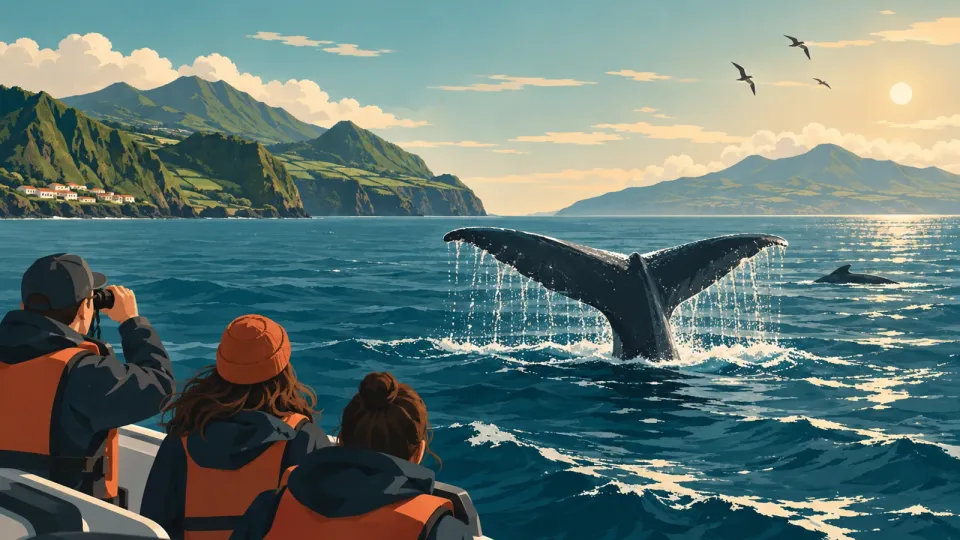
Start with the one fact that changes your whole trip: you cannot guarantee species
If anyone tells you they can guarantee whales, walk away. Azores cetaceans use a wide ocean area, and sightings depend on where animals are at sea that day, plus real weather and sea state.
That uncertainty is why responsible Azores operators plan differently. They use wildlife observation rules that limit how close boats can go, how they approach, and how long they stay with the same animal or group. For example, Azores law defines an approach zone from the moment vessels are within 500 meters of the nearest animal (with exceptions when whales move toward the platform). (diariodarepublica.pt)
So your best trip strategy is not “choose the best month and best operator.” It is a decision framework:
- Choose an island based on your target balance (more dolphins versus more chance of large whales).
- Choose a season based on migration timing and water conditions, but accept that the ocean can still surprise you.
- Choose an operator based on compliance and process, not glossy promises.
- Plan logistics for waves. Bad sea days can reduce departures or lower encounter frequency for everyone.
The most common mistake is booking one whale watching day, then treating that boat trip as the only “real” wildlife chance. In the Azores, you get more confidence by building redundancy: either multiple departures on different days, or pairing a boat trip with an on-shore watching plan (where available).
A second misconception is that “winter equals whales if you wait.” In practice, winter can mean rougher seas for small boats and fewer comfortable viewing opportunities. One operator notes that bad weather frequency increases from November on Pico, which affects how often you can go out. (cwazores.com)
Your goal is a higher probability trip, not a certainty contract. Use the Azores rules as a baseline, then design your itinerary around variability.
Choose your island for the species mix, then adapt your day plan
You will get the best results by choosing an island for the kind of encounters you want, then planning your timing and movement on that island.
The Azores pattern: sperm whales and dolphins are year-round, large whale sightings change
Across the Azores, sperm whales are described by Azores operators as resident year-round, and several dolphin species are also present in all months. (picoisland.pt)
That does not mean every trip shows large whales. Seasonal patterns matter most for baleen whales like blue whales and other migratory species.
Pico (São Jorge to Triângulo core): strong match for sperm whale focus
Pico is often treated as a central choice for sperm whale viewing, and some operators run programs that focus on that species. One example is CW Azores describing a “Realm of the Sperm Whale” programme that is scheduled from beginning of June to mid-July. (cwazores.com)
If you want a trip where the “core animal” is likely to be available, Pico can fit because the broader sperm whale presence is described as year-round. (picoisland.pt)
São Miguel: good base if you want flexibility and broader logistics
São Miguel is the island most travelers use as a hub for transport connections. Visit Portugal notes whale watching opportunities on São Miguel and also mentions that the Azores has “nine islands,” with whale watching framed as a year-round discovery idea (still, it is not a guarantee). (visitportugal.com)
Terceira: add an inland itinerary, then keep sea day as your wildlife anchor
Visit Portugal also calls out whale watching opportunities on Terceira, including in Angra do Heroísmo and Praia da Vitória, often paired with accommodation and sea activities. (visitportugal.com)
That structure matters for planning. If you build a full day around the boat, you lose flexibility when the sea is too rough. If you anchor the wildlife trip as a half-day or a planned window, you can shift your land itinerary if weather changes.
Faial: central for the classic whale watching logistics
Visit Azores positions whale and cetacean watching across the islands and includes Pico and Faial in its whale watching experiences framing. (visitazores.com)
A practical island decision checklist (use this before you book)
Use these questions to pick the island that best fits your goals.
- Do you want to prioritize sperm whales versus “a chance at many baleens”? If sperm is the priority, Pico often fits the planning logic. (picoisland.pt)
- Do you need easier air connections and spare days? São Miguel tends to help with that kind of itinerary design. (visitportugal.com)
- Do you want a calmer land rhythm with a single sea anchor? Terceira can work well for mixing city time and sea excursions. (visitportugal.com)
Finally, accept that “best island” is not one universal answer. It is an island plus your realistic schedule.
Season choice that is realistic: plan for baleen whale timing, not perfect weather
When you choose your season, the winning move is to plan for ecology timing first, then treat weather as the variable.
What stays available across seasons
A baseline you can use: operators describe sperm whales and multiple dolphin species as present year-round, so any month can still produce meaningful wildlife encounters. (picoisland.pt)
That means you are not “wasting” a trip just because you are not booking spring.
What changes by season: baleen whale expectations
Baleen whale sightings are more seasonal. A Whale Watching Handbook case study discussing the Azores also emphasizes that whale watching is shaped by region use and management rules rather than simple “always see the giant species” marketing. (wwhandbook.iwc.int)
Some operator and program pages also highlight special seasonal windows for particular large whale experiences. For example, CW Azores describes the “Blue Whale Migration” as part of a whale watching and research program that starts mid-March on Pico. (cwazores.com)
Important: mid-March to migration timing is not the same as guaranteed sightings on each departure.
Weather matters more than people expect
Even if you pick the right season, you still need to respect sea conditions. One Pico season calendar page explains that “operators do not go out in every sea state,” and a bad-weather week can reduce the overall count for everyone. (picoisland.pt)
Another operator also notes that frequency of bad weather increases from November on Pico. (cwazores.com)
So the “best season” for you depends on what you are willing to trade.
A season selection framework you can apply in 10 minutes
- Pick your month based on which whale you want the highest chance of. Use operator season windows as hints, not guarantees. (cwazores.com)
- Add at least one buffer sea day if your schedule allows. One or two extra attempts can help because encounters depend on where animals are.
- Design a land itinerary that stays valuable even if you cancel or delay the sea trip. That is not pessimism. It is logistics intelligence.
- Choose earlier departures when operators follow calmer sea practices. Some guides mention daily windows that tend to be calmer, but you should confirm the timing with your operator at booking time. (Use these as planning clues, not commitments.) (picoislandwhalewatching.com)
Common mistake: “I chose spring, so I will see the big baleen whale”
Spring can be a strong time for migratory baleen whales around the Atlantic, but the Azores experience is still wildlife-dependent.
Instead, plan your expectations like a cinematographer: you can set a target shot, but you still wait for the animal to enter your frame.
Your final decision should feel like this: “I picked a season that improves my odds for baleen whales, and I am building flexibility for rough seas.”
How responsible Azores operators protect whales: the rules you should look for
If you want a better trip and better chances of seeing animals calmly, verify that your operator follows the Azores observation framework.
The Azores regulates cetacean observation through regional rules and a code of conduct approach. The Regional Directorate for Maritime Policies describes whale watching activities as an economic activity balanced with protection, conservation, and management goals. (portal.azores.gov.pt)
The distance and approach concept: 500 meters is a legal reality
A key rule in the Azores framework is the 500 meter approach zone. Azores legislation defines that platforms or people are considered to be in approach to cetaceans when they are within less than 500 m of the nearest animal, with certain exceptions. (diariodarepublica.pt)
Why this matters for you: operators who understand the rule tend to run a calmer process. They do not “rush in” as animals surface.
Speed and course changes: smoother is safer for animals
Responsible guideline summaries used in Azores context stress avoiding abrupt changes. For example, a whale watching rules document and operator guideline material state that you should avoid sudden direction or speed changes as part of a respectful approach. (whalewatchingazores.com)
Time with animals: short, controlled encounters
Rules and scientific discussion also point out limits on time interacting with the same group, because repeated disturbances can change whale behavior. A ScienceDirect paper summarizing motivations and specialization notes that whale watching management defines rules for approach and time. (sciencedirect.com)
Multiple boats in the area: precedence and coordination
The Azores approach also includes ideas like precedence for observation and managing multiple vessels in the same area, which you can interpret as a reduction in chaotic “chasing.” Operator guideline text describes precedence based on arrival order or proximity. (whalewatchingazores.com)
Audio-visual crews and communication
Some guideline material notes that platforms conducting audio-visual operations should communicate objectives to other whale watching vessels operating in the same area. (whalewatchingazores.com)
Swimming with dolphins: extra constraints if you choose that option
If you are considering swimming, the rules become more specific. Operator guideline text includes requirements such as a second crew member responsible for watch, limits on swimmers, and strict “no intentional physical contact” principles. (whalewatchingazores.com)
What to ask your operator before you buy a ticket
Use these questions to evaluate process, not promises.
- How do you manage the 500 meter approach area in practice? (You want a procedural answer, not a slogan.) (diariodarepublica.pt)
- Do you avoid abrupt speed and heading changes when whales surface? (whalewatchingazores.com)
- How do you handle multiple vessels in the same area? (whalewatchingazores.com)
- What is your typical encounter duration policy? (sciencedirect.com)
A misconception to avoid: “responsible operator means fewer chances to see whales”
Responsible does not mean passive. It means they run encounters in a way that reduces disturbance, and that can help whales stay in your viewing window.
In wildlife terms, you are not forcing the animal. You are meeting it where it is, within rules.
Trip logistics that prevent disappointment: where to depart, how long to book, and how to handle sea changes
A great whale watching day is mostly logistics. The animal is the star, but your plan determines whether you enjoy the day.
Start with a realistic time budget
Most whale watching in the Azores is run as short excursions. Some whale watching references describe main offerings as half-day trips, and they also note “platform” options like land lookouts in some areas. (iwc.int)
Practical takeaway: plan your day so you can still enjoy the island if the sea trip finishes early or runs slightly behind schedule.
Pick your base like a producer: reduce travel friction to the marina
Logistics success means keeping buffer around the departure point. If you are staying away from the marina, add time for parking, getting equipment, and checking the departure counter.
If you want help thinking about where marinas support whale watching trips, Visit Azores pages for regional marinas can be a clue to what is available in port areas used for marine activities and organized excursions. (marinas.visitazores.com)
Build a redundancy plan: one bad sea day does not end the trip
Operators may not go out in every sea state. That matters because it can lower encounter frequency across the week. (picoisland.pt)
So do not schedule only one trip unless your total travel time is short.
Use this simple decision rule:
- If you can stay 3 to 5 days on your chosen island, book 2 possible whale watching attempts across different dates.
- If you can stay 1 to 2 days, choose the earliest calm-weather window and make your land plan flexible.
What to pack for comfort and filming stability
You are not guaranteed sunshine. Azores sea trips can involve wind, spray, and rapid cloud changes.
Pack like you are protecting both yourself and your gear.
- Waterproof jacket and warm layer (even if it is not “winter,” the sea air hits differently).
- Non-slip shoes for wet decks.
- Lens cloth and a small dry bag for your camera or phone.
- If you film, consider a secure mount and plan for motion. You cannot control the waves, you can control your stability.
Use the local rule of “plan for the animal, not the schedule”
The Azores wildlife process is not a theme-park show. Your operator should follow distance and approach rules, and they should not attempt to force contact.
That means the day can be “shorter and smoother” instead of “long and hectic.” Short encounters can still produce great footage if the approach stays calm.
Confirmation step: message the day before, then again on departure day
You should confirm:
- Departure time and meeting point.
- Clothing or weather guidance from that operator.
- Whether they adjust for sea state.
Do not accept hand-wavy answers. Ask for the practical version.
A responsible operator will be clear about what they do when conditions are not safe for going out.
A misconception that causes common failures: assuming “any island means the same trip”
In practice, port logistics and vessel options differ by island. Even if “whale watching” is a common activity label, the exact departure experience can be different.
Your best move is to choose the island first, then treat departure logistics as a separate step.
What you can realistically see by island and month: a probability mindset
The best way to choose your plan is to think in probabilities, not guarantees.
A year-round anchor you can rely on: sperm whales and dolphins
Operators and experience pages consistently describe sperm whales and several dolphin species as resident year-round, which means you are not locked out in any month. (picoisland.pt)
This is the planning baseline. It supports a flexible itinerary.
Spring to early summer: improved odds for migratory baleen whales on some routes
Some programs highlight migratory windows. CW Azores, for example, describes a “Blue Whale Migration” program that starts mid-March on Pico. (cwazores.com)
In other words, you should treat spring as “better chance for large baleen species,” not “guaranteed whales.”
Early summer special programs: example windows you can target
If your dream is to align your trip with a focused education or observation program, use the published window.
CW Azores describes a sperm whale focused “Realm of the Sperm Whale” programme that runs from beginning of June to mid-July. (cwazores.com)
This can help your expectations and your planning, because the operator is building a specific narrative for that period.
A caution about “best months” lists from any single operator
Even when seasonality is real, results depend on animal distribution and sea conditions. Some published operator season calendar content explicitly notes that operators do not go out in every sea state, so a week’s weather affects what gets logged and counted. (picoisland.pt)
So use “month guidance” as one input, then build redundancy and choose responsible process.
How to convert animal information into your itinerary
Use this step-by-step method:
- Pick your island. Use the year-round anchor species for confidence.
- Pick a month based on your “top two” species goals. For example, sperm whales as one, and a baleen whale category as the second.
- Book two sea days if possible. That increases your chances of animals being in your area.
- Avoid stacking high-stress activities the same day. Leave time buffers.
Filming and photography tip that also improves your odds
If you are shooting stills or video, you will get more usable material if you do not chase motion. Let the operator run a calm approach within rules.
Because the animal decides when it surfaces, stable long-lens readiness matters more than sprinting to the side.
Common misconception: “Large whales are only in one island”
Large whales can show up across the Azores region. Visit Portugal frames Azores as a whale sanctuary region and notes whale watching opportunities across multiple islands, including Terceira and São Miguel. (visitportugal.com)
The responsible takeaway is different: your island choice affects the mix and logistics, but the ocean still drives what you see.
Your plan should be like an editorial calendar, not a single shot expectation. Build for the most likely anchor species, then chase your “maybe” whale with season timing and extra days.
How to choose an operator without fake rankings: check compliance, capacity, and clarity
You do not need a “best operator” list. You need an operator with clear compliance culture, transparent process, and practical capacity.
Compliance is the strongest signal you can verify
Start with the Azores whale watching rules framework.
Azores legislation defines approach proximity and sets enforcement and penalties for violations, including penalties for operating without licenses or violating observation norms. (diariodarepublica.pt)
You can also look for publicly described guidelines aligned with the Azores code. Operator guideline text describes 500 meter approach concepts, avoiding sudden direction or speed changes, and how precedence works when multiple boats are present. (whalewatchingazores.com)
Operator clarity about “what happens if conditions are bad”
Season calendar guidance emphasizes that operators do not go out in every sea state. (picoisland.pt)
So your best operator answer to sea state should be procedural:
- what triggers cancellation or adjustment,
- whether you get options like rescheduling,
- and how they communicate that decision.
If the operator cannot explain that, you are taking a bigger planning risk.
Operator capacity and how it affects your viewing experience
More people can mean more noise, less stable filming, and more clutter during approach. Many operators advertise vessel size or guest limits. Even when you do not see guest numbers on the first page, you can ask.
Your question should be simple:
- “How many guests are on board for your whale watching tours?”
Look for operator material that shows a professional relationship with wildlife rules
Some programs explicitly describe their specialization and scheduling windows. CW Azores, for example, details an official whale watching programme approach focused on sperm whale biology and runs on a specific schedule. (cwazores.com)
This does not guarantee sightings, but it signals that they have internal structure.
Swimming add-ons: verify separate rules before you commit
Swimming with dolphins is not “just another option.” The guideline material includes extra safety and welfare rules, such as extra crew watch responsibility, swimmer limits, time limits, and strict no physical contact expectations. (whalewatchingazores.com)
If the operator cannot explain how they comply with these constraints, skip the water entry.
A practical operator screening checklist (copy this)
Send these questions by email or ask them during booking.
- License and local authorization: “Are your whale watching trips authorized under Azores cetacean observation regulations?” (portal.azores.gov.pt)
- Approach practices: “How do you follow approach limits around whales, especially within the 500 meter framework?” (diariodarepublica.pt)
- Speed and course: “Do you avoid sudden speed and direction changes during approach?” (whalewatchingazores.com)
- Time and repeat encounters: “Do you limit time with a group, and how?” (sciencedirect.com)
- Sea state policy: “What happens if conditions are too rough to operate?” (picoisland.pt)
Common mistake: treating sustainability pages as marketing only
Some sustainability or guideline pages are written for the public, but they still reflect operational behavior. When they include specific rules like the 500 meter concept, you can treat them as verifiable structure, not just branding. (whalewatchingazores.com)
Your aim is not to find the “coolest” story. Your aim is to find the operator whose day-to-day decisions match the legal and ethical framework.
Plan your itinerary like a local: pair one sea day with a strong on-island photo and film routine
You will enjoy Azores whale watching more if you treat the sea day as part of a wider production plan.
Pairing strategy: anchor your day, then build the rest around it
Because sea state can change departure schedules, design your itinerary around “one wildlife anchor day.” Then fill the rest with activities that do not depend on whale sightings.
A Visit Portugal overview frames whale watching as part of broader island experiences and references on-shore information options and museums, especially on Pico and Faial. (visitportugal.com)
Even without naming every exhibit, this logic matters: when the sea trip is limited, you still have context and time.
Use wildlife viewing rules to improve footage consistency
When operators follow a calm approach within distance and speed rules, your footage tends to be steadier. Guideline material emphasizes avoiding abrupt speed and direction changes. (whalewatchingazores.com)
Treat that as a cinematography constraint you can benefit from.
Bring a shot list that matches how whales appear
Whales do not show up on a timer. Build a shot list that expects variable behavior:
- surface event (spout or blow if visible),
- travel behavior (direction and distance),
- dolphin interactions (if encountered),
- environment cutaways (water texture, cliffs if you film from shore).
Don’t force “swimming with dolphins” to be your main goal
Swimming can be exciting, but it adds risk and stricter constraints. The guideline text includes swimmer welfare, limits on number and time, and a no-contact standard. (whalewatchingazores.com)
If your main purpose is film and photography, you can often get stronger wildlife behavior observation from a standard boat viewing approach.
Build a two-mode day plan
Use two modes:
- If the boat trip runs: focus on whale and dolphin behavior.
- If it cancels or is delayed: switch to shore-based nature, landscapes, and museums or visitor centers.
This is how you protect your trip even when the ocean says “not today.”
Cultural and municipal planning mindset (without overcommitting)
On islands like Terceira, Visit Portugal specifically mentions whale watching opportunities in areas including Angra do Heroísmo and Praia da Vitória. (visitportugal.com)
That means your land plan should match where the activity is offered. Choose your base so you can reach the departure area without late-day stress.
One more misconception to avoid: “More tours equals better results, always”
More sea days can help, but you can also create fatigue that hurts your filming and your comfort. Balance repetition with quality.
If you can do two sea days, that is usually a strong structure. If you can do three, only do it if your itinerary includes recovery time.
For andginja, the key is repeatable workflow: camera readiness, stable support, and calm decision-making when animals appear.
Your best final plan is a stable rhythm with flexibility, not a calendar full of “must-happen” moments.
Frequently asked questions about Azores whale watching, island choice, and responsible operators
Can I guarantee whales on an Azores whale watching trip?
No. Azores cetacean sightings depend on where animals are in the ocean that day and on sea state. Even responsible operators do not go out in every sea condition, which can reduce encounter opportunities. (picoisland.pt)
Are sperm whales and dolphins only in certain months?
No. Multiple Azores operator materials describe sperm whales and several dolphin species as resident year-round, so you can still see whales and dolphins in any month. (picoisland.pt)
What is the 500 meter rule, and why should I care?
Azores legislation defines an approach zone when vessels or people are within less than 500 meters of the nearest animal. (diariodarepublica.pt) This matters because it is a sign of how an operator manages proximity and animal welfare during the encounter.
What should I look for to judge whether an operator is responsible?
Look for evidence they follow the observation framework in practice. Guideline material used in Azores context stresses avoiding sudden speed and direction changes, managing approaches near animals, and coordinating when more than one boat is present. (whalewatchingazores.com)
If I want a more focused “big whale” chance, which season should I choose?
Use seasonal windows as planning hints, not guarantees. For example, CW Azores describes a “Blue Whale Migration” programme starting mid-March on Pico. (cwazores.com) If you want a sperm whale-focused programme window, it also describes a schedule from beginning of June to mid-July. (cwazores.com)
How many trips should I book so one bad sea day does not ruin the plan?
If your schedule allows, book at least two possible sea days across different dates. Sea state can affect whether operators go out, and weather can reduce overall opportunity during a week. (picoisland.pt)
Does choosing the “best island” solve everything?
It improves odds, but it does not remove uncertainty. Your island choice affects the species mix you are more likely to encounter and the logistics of departures, while wildlife distribution and weather still decide what happens on the water. Visit Portugal notes whale watching opportunities across multiple islands such as Terceira and São Miguel. (visitportugal.com)
What is a good first action I can take today?
Shortlist one island and two candidate departure windows, then send your operator questions about approach behavior near animals (including the 500 meter framework), and their sea state cancellation or reschedule policy. (diariodarepublica.pt)
Conclusion: lock in your island, then build a flexible sea day plan you can trust
Your Azores whale watching plan should maximize probability, not promises.
Here are the actionable takeaways you can use immediately:
-
Choose your island with a purpose. Use the “year-round anchor” mindset: sperm whales and multiple dolphin species are described as present year-round in operator materials. (picoisland.pt)
-
Match your month to your top targets, then accept variability. Seasonal programmes like a mid-March blue whale migration window on Pico exist, but sightings still depend on the ocean. (cwazores.com)
-
Select responsible operators using verifiable rules. Start with the Azores approach framework, especially the 500 meter concept used in legislation. (diariodarepublica.pt)
-
Protect your trip against sea state. Operator guidance emphasizes that sea conditions affect whether they go out, and bad weather can reduce overall encounter opportunity. (picoisland.pt)
-
Build redundancy. If you can, plan at least two possible sea days on your island so one rough day does not end your wildlife chance.
One specific thing you can do today
Write and send a short message to two operators you are considering, asking:
- “How do you follow the approach framework when boats are within 500 meters of the nearest animal?” (diariodarepublica.pt)
- “What is your policy for sea state when you cannot operate, and what options do you offer (reschedule, alternate date)?” (picoisland.pt)
Then compare the answers for process clarity, not guarantees. That single step will improve both your ethics alignment and your practical odds of a satisfying Azores whale watching trip.
Related guides

Azores Beaches by Island: Pick Your Coastal Style
Azores beaches are volcanic, changeable, and island-specific. Compare São Miguel, Terceira, Faial, Pico, and Santa Maria, then plan safer swim windows.

Which Azores Island to Visit for a First Trip
Which Azores island to visit? Compare all nine islands fast, match them to your interests, and build a realistic 5 to 10 day plan using real transport options.

Flores Azores: waterfalls, viewpoints and weather buffers
Plan a resilient Flores trip focused on waterfalls and viewpoints, with smart weather buffers, swapping day options, and official trail and ferry checks.

Sao Miguel Azores itinerary, 5 days the right way
sao miguel azores itinerary for 5 days: Sete Cidades, Furnas cozido, east side, and whale watching. Save time, drive smarter, book right.