
Tavira Island Day Trip: Boats, Beaches, and a Plan
Plan a Tavira Island day trip with the right boat access points, what to expect in season, and a realistic beach schedule for your trip.
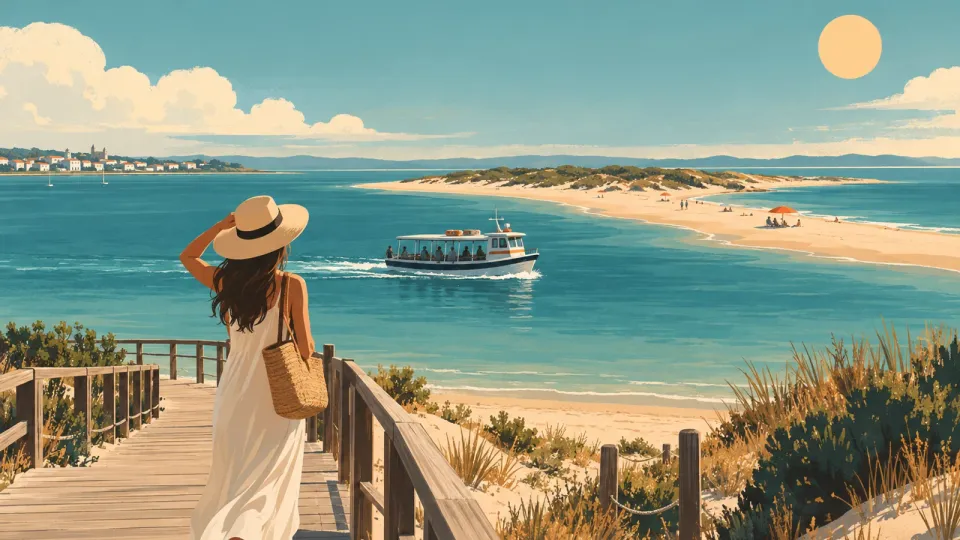
Tavira Island is not one beach, it is a whole island stretch with multiple access points
If your mental picture is “one ferry ride, one beach, done”, Tavira Island (Ilha de Tavira) will surprise you. It is a sandy barrier island inside the Ria Formosa Natural Park, and the island has several beach zones you can reach by boat from the mainland or by short walks depending on where you land. That matters because the island experience changes by beach, shade, services, and how crowded the approach feels.
The core geography is simple but important. The Ria Formosa is a protected coastal lagoon system with barrier islands, channels, and inlets. Tavira’s coastline includes more than 18 km of shore inside the natural park, and it is where Ilha de Tavira and Ilhas de Cabanas sit as barrier islands. (cm-tavira.pt)
This is also why “just go at any time” fails. Boat access is the practical gatekeeper. Tavira Island beach access depends on scheduled ferry or shuttle connections (often via Quatro Águas and sometimes from the city), and service patterns can change by season. A common mistake is planning a beach day from a timetable in one month, then showing up in another.
A second misconception is that Tavira Island is only for beach loungers. In reality, the protected-area rules shape where and how people can be on the island. The island is part of the Ria Formosa protected area framework, which exists to manage conservation, habitat, and seasonal conditions. (icnf.pt)
Finally, consider your photo and storytelling angle. If you are a filmmaker or photographer, you get more variety by choosing your landing point with intent. You can build a day that starts with golden-hour calm water, then moves to sand and dune textures for stills, then ends with a longer walking segment for layered compositions.
Your goal for a realistic day is not “maximize hours on sand”. It is “choose the right beach stretch for the hours your boats actually run”.
Mainland vs island plans: when it makes sense to stay, and when it does not
Here is the decision rule: if your main goal is Ilha de Tavira beach time, you should plan a dedicated island landing, not a mainland-only base. The mainland around Tavira is great for coffee, viewpoints, and walking, but it does not replace the island’s barrier-island coastline.
Ilha de Tavira is a sandy island inside the Ria Formosa system. It is typically reached by boat from Tavira’s coastal side (often via a central pier) or from Quatro Águas (Cais de Quatro Águas). Multiple sources describe the island access as happening via boats departing from Tavira or Quatro Águas. (pt.wikipedia.org)
So when should you keep your plan focused on the island? Use this checklist.
- You want quiet, sheltered water areas and long sand sections with a “walk for minutes, then spread out” feel.
- You want your photos to include dune line, tidal flats, and the island shoreline in one day.
- You are traveling as a small crew (you can carry bags, water, and gear without a big logistics burden).
When should you reconsider and keep more time on the mainland? If you are visiting in a period where boat departures are less frequent or more variable, your island time can shrink quickly. Even general guides note that off-season services can drop, so confirming schedules before you go protects your plan. (boa.pt)
A practical way to split the day without turning it into a “comparison” trip is to do this:
- Base your island access on one departure point only (either Quatro Águas or Tavira city piers).
- Plan one “island anchor” beach zone near your landing.
- Only add a second beach zone if you can do it with either short movement or a boat hop that fits the service window.
This also helps your filming workflow. You avoid the common mistake of trying to cross the entire island on foot when boat returns and heat can force a rushed exit.
If you want a concrete geography idea for planning, Ilha de Tavira stretches for many kilometers, and it includes multiple beaches in sequence from east to west. (pt.wikipedia.org)
So your mainland vs island choice is not “better or worse”. It is about whether you are protecting your beach hours by building around boat reality.
Where to board: Quatro Águas vs Tavira city piers (and why the landing point changes your day)
Your boarding point shapes your time on sand. In Tavira’s case, the most useful practical alternatives are usually Quatro Águas (Quatro-Águas) and the Tavira city pier side (often described as a central Tavira departure point). Both are mentioned as access routes to Ilha de Tavira. (taviraportugaltourism.com)
Quatro Águas, the “early beach” option
Quatro Águas is closely linked to ferry access to the island, and it is commonly described as a nearby place where the pier enables boat access to Ilha de Tavira. (pt.wikipedia.org)
One practical planning advantage is proximity. A tourism resource specific to Tavira notes that Cais das Quatro Águas is about a 20 minute walk from Tavira center, following Estrada das 4 Águas. (taviraportugaltourism.com)
What this means for you on the ground:
- If you want to shoot sand textures and softer light before the busiest mid-morning window, Quatro Águas is often the simplest “go early, arrive early” approach.
- If you are carrying water, towels, or camera bags, walking from central Tavira works, but you should plan your load. Quatro Águas is not “next door” if you are loaded.
Tavira city piers, the “no extra movement” option
The island is also accessible via boats from Tavira’s side, with descriptions noting that access can be made from Tavira’s city pier side as well as from Quatro Águas. (pt.wikipedia.org)
A helpful planning insight from a Tavira-specific transport guide is that the boat time to reach the island is about 10 minutes, and ferries depart from the center pier or from Cais das Quatro Águas with enough capacity for a small group. (taviraportugaltourism.com)
So if your crew is film gear heavy, you may choose the pier that minimizes pre-boat walking.
The misconception to avoid: “boarding point does not matter”
It matters because different landing moments change:
- how much time you have after arrival to get to your chosen sand zone
- how likely you are to be there during the boat return peak
- how easy it is to move between beach segments
For example, the island includes well-known beach zones such as Praia da Terra Estreita (also described as part of Ilha de Tavira) and Praia do Barril in the broader Ilha de Tavira context. (pt.wikipedia.org)
If you land farther from your target sand, your day becomes navigation-heavy.
A practical tip you can use today
Decide your landing plan before you book. Then build your day around it, not around “the island in general”. That one shift prevents half your day from becoming “how do we get to the next beach zone” time.
Seasonality reality check: how to confirm boat service without gambling your beach day
The easiest way to ruin a Tavira Island day trip is to assume that boat service runs the same way in every month. Boat timetables can be seasonal, and multiple sources explicitly warn that off-season frequency can drop, so you should confirm before you go. (boa.pt)
Use a two-layer confirmation method
Do not rely on one random blog page. Instead, use this layered approach.
- Start with a timetable PDF or official operator schedule page.
- Cross-check with a current page that lists route or timetable information, ideally from the same operator.
For example, the ferry operator Silnido provides route timetable documents for Quatro-Águas to Ilha de Tavira. (silnido.com)
You can use this practical method when you plan your day:
- Identify the exact route you will use (Tavira side to island, or Quatro Águas to island).
- Confirm the departure window for the day of week you will travel.
- Look for any notes about reduced service periods.
The “wrong month” mistake to avoid
A common mistake is reading about a summer style day, then planning for a different month without re-checking. Some guides note that in low season the routes can be limited, and services can be sporadic, so confirmation becomes mandatory if you want a reliable day. (algarve-south-portugal.com)
Protect your plan with buffer time
Even with correct schedules, remember that weather, tidal conditions, and passenger demand can affect the practical flow of a trip. You should plan buffer time for:
- arrival to the pier
- buying or validating tickets (if needed)
- moving from landing point to your target sand zone
A simple framework that works for a beach day:
- Arrive at the departure pier 30 to 45 minutes before your chosen departure.
- Plan 60 to 120 minutes of beach time for your first “anchor” zone.
- Plan your return boat before you feel hungry or overheated.
Why protected-area context matters
Ilha de Tavira sits inside Ria Formosa protected frameworks. Protected-area management supports conservation, and related policy documents exist at the park level. (icnf.pt)
You do not need to become a policy reader. What you need is the practical expectation that access and permitted activities can be structured by season and location.
A short checklist to do right now
Before you leave for Tavira, do these three checks:
- Which departure pier are you using, Quatro Águas or the Tavira city pier side?
- What is the return time, not just the outbound time?
- Are there notes about low season or reduced schedules?
If you do those checks, you turn “maybe” into “planned”. That is the difference between an island day that feels easy and one that feels like logistics.
A realistic beach day plan on Ilha de Tavira (time blocks, not wishful hours)
A realistic Ilha de Tavira day is about time blocks. You want enough beach time to forget you are on a schedule, but not so much that you miss your return boat.
Below is a practical framework that works for many travelers. Then you adapt it after you confirm your exact departure and return times.
Time block plan (adjust to your confirmed boats)
08:30 to 09:15, pier arrival and setup Arrive early. Your goal is to avoid stress and keep your gear ready. If you are going from Tavira center toward Cais das Quatro Águas, remember it is about a 20 minute walk based on a Tavira tourism navigation note. (taviraportugaltourism.com)
09:15 to 10:00, boat transfer and first sand access Boat transfer is described as about 10 minutes to reach the island. (taviraportugaltourism.com)
10:00 to 11:30, first beach anchor zone (shoot and settle) Pick one area first. If you land near Praia das Quatro Águas context, you can treat it as your main “settle here” sand segment. Beach guides commonly describe Praia da Ilha de Tavira as being associated with the Quatro Águas access context. (pt.wikipedia.org)
11:30 to 12:30, short exploration walk (do not overextend) Walk far enough to get a new composition, then stop. Save your energy for your photo or swim window.
12:30 to 14:00, lunch and shade rotation On barrier islands, services are typically clustered. Do not assume you can walk for 40 minutes and still find amenities. Plan lunch around where you can realistically rest.
14:00 to 15:30, second sand texture phase If you want variety, focus on a second beach segment only if your return boat times allow. Ilha de Tavira includes multiple named beaches and zones such as Praia da Terra Estreita and Praia do Barril, which appear in the Ilha de Tavira context. (pt.wikipedia.org)
15:30 to 16:45, return buffer Head back with buffer. If your group is carrying cameras or if you need to rinse gear, you want time to do it without sprinting.
What to pack, to avoid the classic “too late, too hot” problem
Even though you are going to a beach, you are also going to a protected coastal system with boat logistics. That means fewer easy options.
Pack:
- Water (one bottle per person is the minimum baseline)
- Sunscreen and a hat (wind can change how hot sand feels)
- Small towel or a light mat
- Wet wipes (fast rinse for feet and gear)
- A light layer (even in summer, breeze and shade swaps matter)
One insight for photographers and filmmakers
Choose your shooting rhythm around boat arrival. The hour after landing often gives you calm water and a clean approach line. Then midday crowds can change your background.
If your story needs “quiet beach” shots, plan them early, then switch to textures later.
The temperature and water expectation you can use
A Tavira municipality page notes that beaches on its coastline inside the Ria Formosa area offer sand and tranquil waters, and it gives a typical sea temperature around 22 degrees Celsius. (cm-tavira.pt)
Do not treat that as a guarantee for every day, but it helps you choose the right swimsuit plan and whether you need a rashguard for long water sessions.
Final reality check
Your day plan should always end with your confirmed return boat time, not with “sunset goals”. Sunset may happen, but you should not plan your logistics around it.
If you want the easiest version of this day, start with one beach anchor, then add a short walk. Keep the island day feeling like a beach day, not a route march.
Which Ilha de Tavira beach stretch should you pick for your first visit
Pick your first beach stretch by choosing your priority: “easy access”, “quiet feel”, or “more structure”. Ilha de Tavira is not one uniform beach experience, and that is why your landing point and your target zone matter.
If you want the simplest first beach: Praia de Tavira (Praia da Ilha de Tavira)
Praia da Ilha de Tavira is described as a beach associated with the island, and it sits in the Ilha de Tavira sequence of beaches. (pt.wikipedia.org)
What you get from a practical standpoint:
- An early landing can support calm-water shots and a smoother “arrive, settle, swim” rhythm.
- You can keep your day simple, which is usually best for a first visit.
Common mistake: trying to do a full island “tour” in your first trip. If you pick this beach stretch as your anchor, you reduce travel friction.
If you want a quieter option: Praia da Terra Estreita
Praia da Terra Estreita is described as a beach located on Ilha de Tavira, in the Santa Luzia parish context, and it is positioned between areas such as Praia das Quatro Águas and Praia do Barril. (pt.wikipedia.org)
Some guides describe it as a place with a more tranquil feel, especially suitable when you want long sand with fewer disruptions. (praiadaterraestreita.pt)
Practical move: treat Terra Estreita as your “second phase” beach if your return boat window is comfortable.
If you want a classic named zone: Praia do Barril
Praia do Barril is described as being one of the beaches of Ilha de Tavira, near Pedras d’El Rei, and its context is often included in Ilha de Tavira beach planning. (pt.wikipedia.org)
Because it is a named, recognizable zone, it can be easier for planning with your own map, especially if you like to reference place names in your own shooting plan.
How to choose in 60 seconds
Answer these questions:
- Do you want maximum beach hours with minimal moving? Choose Praia da Ilha de Tavira as your anchor. (pt.wikipedia.org)
- Do you want quieter sand textures and fewer “things happening” nearby? Consider Praia da Terra Estreita. (pt.wikipedia.org)
- Do you want a well-known reference zone for your day plan? Consider Praia do Barril as either an anchor or a second phase. (pt.wikipedia.org)
A protected-area reminder that keeps your plans respectful
These beaches are in a protected coastal park context. The Ria Formosa Natural Park management exists to coordinate conservation actions across the system. (icnf.pt)
So follow local rules, stay within accessible areas, and do not assume every path is open in every season.
One actionable tip for your gear plan
If you are carrying film or photo gear, anchor your base on the beach that best matches your patience level. If you know you dislike moving with heavy bags, do not force a “two beach” day. Your output will be better when you stay rested.
Avoid the top 5 mistakes that waste your time on Tavira Island
Most Tavira Island frustrations come from a small set of predictable errors. Fix these five, and your day will feel calmer.
Mistake 1: Planning around the wrong timetable
Boat service can change with season, and some guides explicitly mention off-season frequency drops. Confirm your schedule before you head out. (boa.pt)
Fix: confirm both outbound and return times using operator timetable materials or route schedule pages. For example, Silnido publishes route schedule documents for Quatro-Águas to Ilha de Tavira. (silnido.com)
Mistake 2: Choosing two beaches without checking whether you can return
A second beach sounds nice, but boat return windows decide everything. If you cannot safely return with buffer, pick one anchor zone.
Fix: build your day around one anchor beach, add a second only if it fits your confirmed return.
Mistake 3: Treating Quatro Águas and Tavira city piers as interchangeable
They are different boarding experiences. A tourism navigation note suggests Quatro Águas is about a 20 minute walk from Tavira center. (taviraportugaltourism.com)
Fix: when planning, treat your pier travel time as part of the schedule. If you have heavy gear, prioritize the pier that reduces your pre-boat walking.
Mistake 4: Overpacking, then underhydrating
Island days can feel slow, then suddenly busy when you reach the pier again. That is when dehydration hits and you wish you had packed water.
Fix: pack enough water for the whole day, plus a little margin. It is a small choice that improves everything else.
Mistake 5: Ignoring the protected-area context
You are in a system managed for conservation across the Ria Formosa Natural Park. (icnf.pt)
Fix: follow local signage and keep your movement within accessible areas. This prevents “we cannot do that” moments and keeps the day respectful.
A quick self-check before you go
Ask yourself:
- Do I know my departure pier, Quatro Águas or the Tavira city side?
- Do I know the return time I must catch?
- Do I have one beach anchor and a simple movement plan?
- Did I leave buffer for gear, rest, and water?
If you answer yes, you have already prevented most wasted time.
Extra filming tip, based on how people actually move
If your team needs clean background plates, shoot your establishing sand and shoreline sequences early after landing. Then switch to calmer compositions later in the day when you can control crowds by choosing your spot and direction.
FAQ: Boats, beaches, and a day trip plan you can actually execute
1) How do you reach Ilha de Tavira from Tavira?
You reach Ilha de Tavira by boat. Access is described as possible from Tavira’s city side and from Quatro Águas (Cais de Quatro Águas). (pt.wikipedia.org)
2) Which boarding point is easier for a short, stress-free beach day?
For many travelers, Quatro Águas can feel “early beach friendly” because a Tavira tourism navigation note describes Cais das Quatro Águas as about a 20 minute walk from Tavira center. (taviraportugaltourism.com)
If your crew has heavy filming or photo gear and you want to reduce walking, you may prefer the more central Tavira pier departure option. A Tavira transport resource describes boat service from the center pier or from Cais das Quatro Águas. (taviraportugaltourism.com)
3) Is the boat schedule the same in every season?
No. Multiple guides note that in off-season the frequency can drop or routes can be more limited, so you should confirm before you go. (boa.pt)
A practical way to confirm is to check operator timetable documents for your exact route, like Silnido’s route schedule materials for Quatro-Águas to Ilha de Tavira. (silnido.com)
4) How long is the boat ride to the island?
A Tavira-specific transport page describes the boat as taking about 10 minutes to reach the island. (taviraportugaltourism.com)
5) What is the sea temperature expectation on Tavira-area beaches?
A Tavira municipality page describes tranquil beach waters and gives a typical sea temperature around 22 degrees Celsius. (cm-tavira.pt)
6) Which beach should I choose for my first island visit?
For a first visit, many people choose Praia da Ilha de Tavira as an anchor beach because it is directly associated with the island beach sequence and the Quatro Águas access context. (pt.wikipedia.org)
If you want a quieter feel, consider Praia da Terra Estreita, described as located on Ilha de Tavira and positioned between Quatro Águas and Praia do Barril context. (pt.wikipedia.org)
7) Do I need to think about protected-area rules on Ilha de Tavira?
Yes, because Ilha de Tavira is inside the Ria Formosa Natural Park management framework. Park management exists to coordinate conservation across the area. (icnf.pt)
Stay within accessible areas, follow signage, and plan activities that respect how the park manages the landscape.
8) What is a simple day plan you can copy?
Use a “buffer-first” plan:
- Arrive at the pier 30 to 45 minutes early.
- Plan about 10 minutes for the boat ride.
- Spend 60 to 120 minutes on one anchor beach.
- Add only one short exploration if your return boat window allows.
This aligns with the general boat ride time described for the island crossing and helps prevent the common mistake of missing return service.
How to build your Tavira Island shot list (without planning yourself into a corner)
If you travel for film, photography, and digital storytelling, your Tavira Island day should be built like a production schedule: clear scenes, known logistics, and no unnecessary movement.
Scene list idea 1: “Approach and arrival plates”
Your earliest minutes after boarding are useful. Boat access to Ilha de Tavira is short, described as about 10 minutes, so you can plan for quick establishing shots and then move to sand. (taviraportugaltourism.com)
Shot types to capture early:
- shoreline from the island-side view
- layered water and sand textures
- wide establishing frames for orientation
Scene list idea 2: “One anchor beach, two looks”
Instead of chasing multiple named beaches, build two looks from one anchor zone. Choose one beach stretch based on your priority.
- Anchor with Praia da Ilha de Tavira for a straightforward day. (pt.wikipedia.org)
- If you want a more quiet segment for B-roll, set Praia da Terra Estreita as the second phase only if your return window allows. (pt.wikipedia.org)
This avoids the most common production mistake, which is treating your day like a multi-location shoot when you actually have limited return mobility.
Scene list idea 3: “Texture walk, not a route march”
Barrier islands reward small movements. Walk 5 to 15 minutes, change your camera angle, then return to your base for rest.
Why it works: your film language benefits more from close texture variety (dunes, footprints, waterline) than from long transitions that eat return buffer.
A practical location constraint you can plan around
Ilha de Tavira is inside the Ria Formosa protected area system, so you should treat paths and access as structured. Park management exists for conservation coordination. (icnf.pt)
You do not need to overthink it. You do need to avoid plans that require you to cross restricted or inaccessible areas.
Use named beaches to keep your story coherent
Your editor will love consistency. If you label your segments during filming, use the named beach references that match the island context:
- Praia da Ilha de Tavira
- Praia da Terra Estreita
- Praia do Barril
These place names appear in descriptions of the island’s beach geography. (pt.wikipedia.org)
Final production rule: lock your return first
Lock the return boat window before you add any extra shots. That one rule keeps your story from becoming a scramble.
If you do not want to do anything complicated, keep your day as a “single anchor beach production”. Get your wide plates early, texture mid-day, and optional quiet B-roll near your chosen return time.
That is the best balance between creativity and boat reality.
Your next steps for a smooth Tavira Island day trip
You can make Tavira Island feel easy by treating it like a logistics-first beach plan.
First, choose your boarding point and anchor beach together. Ilhas de Tavira access is described as possible via boat routes from Tavira’s side and from Quatro Águas, and Quatro Águas is described as about a 20 minute walk from central Tavira. (pt.wikipedia.org)
Second, confirm seasonal service before you go. Guides and operator materials emphasize that schedules can change, and off-season frequency can drop. (boa.pt)
Third, build a day with buffer and one anchor beach. A boat ride of about 10 minutes gives you a realistic time block to plan your beach anchor, then a short exploration only if your return boat window supports it. (taviraportugaltourism.com)
Finally, keep your plan respectful of the protected park context. Ilha de Tavira sits inside the Ria Formosa Natural Park framework with conservation management. (icnf.pt)
What you can do today (one concrete action)
Open your trip calendar and write down two times for Ilha de Tavira: your planned outbound departure and your return departure for your chosen route (Tavira side or Quatro Águas). Then compare those times against an operator timetable or route schedule page, and adjust your beach anchor plan if the return window is earlier than you expected.
If you want a simple target for your anchor choice: start with Praia da Ilha de Tavira if you want a direct, first-time friendly beach day, then add Praia da Terra Estreita only when you can protect your return buffer. (pt.wikipedia.org)
Do that, and your Tavira Island day becomes a planned beach experience, not a timetable gamble.
Related guides
Algarve road trip: 7 days, 2 bases in Tavira & Lagos
Algarve road trip: a seven-day route with two bases, Tavira and Lagos. A practical plan with day-by-day stops, backups, and a quick checklist.

Algarve Without a Car: Faro, Tavira or Lagos
Algarve without a car. Compare Faro, Tavira and Lagos for 3 to 5 nights, then follow a simple checklist for rail, buses, and island access.
Restaurantes em Tavira Quiet Algarve: Where to Eat
Discover Tavira’s Ria Formosa seafood and authentic Algarve flavours. Know where to go, where to avoid, and when to visit to beat August crowds.
Ria Formosa: Choose Faro, Olhão, or Tavira for Islands
Plan Ria Formosa trips from Faro, Olhão, or Tavira. Compare islands vs mainland walks, boat options, and responsible wildlife viewing tips.