
Azores Beaches by Island: Pick Your Coastal Style
Azores beaches are volcanic, changeable, and island-specific. Compare São Miguel, Terceira, Faial, Pico, and Santa Maria, then plan safer swim windows.
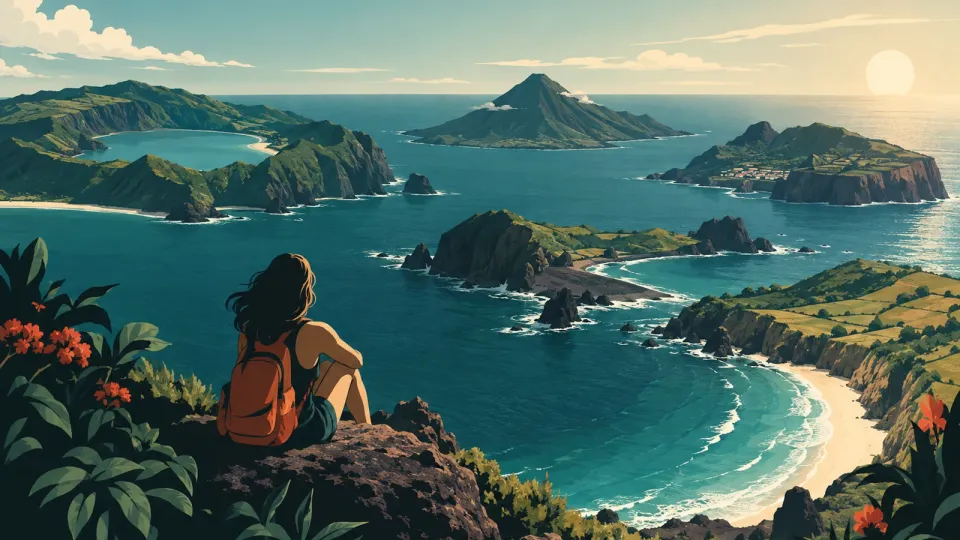
Black sand is the default, but Santa Maria flips the script
In the Azores, most “beach days” are not about warm sand and calm lagoons. They are about learning the island’s coastline, especially the volcanic black sand and rocky pools where the Atlantic sets the rules.
This is why picking the right island matters for your coastal days. One island gives you long, protected bays and swimming-friendly sea access. Another gives you basalt rock, natural pools, and a coastline that looks cinematic in any light, even when the wind rises.
Here is the key idea you can plan around: the Azores are a weather-and-swell destination. Even in summer, you can get sharp changes in wind and waves. A good swim spot on one day can feel rougher the next day, because exposed coasts face the same Atlantic low-pressure systems.
A second useful idea: not every island has “sandy beaches” in the continental sense. For example, Pico is described as having no sandy beaches, with swimming instead in natural pools formed by volcanic rock. (cdn.visitportugal.com)
So your beach strategy should start with island choice, not just “best beach” lists.
A quick mental model for choosing an island
- Want the closest thing to a classic beach? Choose Santa Maria. Praia Formosa is known for light sands, a rarity in the archipelago. (turismo.azores.gov.pt)
- Want black volcanic sand with established bathing areas? Choose São Miguel or Faial. São Miguel has many black-sand beaches suited to surfing and bathing conditions. (visitportugal.com)
- Want dramatic rock pools and sheltered natural bathing zones? Choose Terceira, Pico, or São Jorge-style coastlines. Terceira has natural pool zones like Praia das Escaleiras, which mixes sea, basalt rock, and bathing access. (pt.wikipedia.org)
If you remember these two points, you will stop chasing “guaranteed beach weather” and start choosing islands that match your coastal style.
Common misconception to avoid
Mistake: “Azores beaches are all black sand.”
Correction: Santa Maria has the standout exception. Praia Formosa is promoted as a popular beach with white sand unusual in the Azores. (turismo.azores.gov.pt)
What to do first, before you book accommodations
Write down which version of a beach day you want:
- sand underfoot and easy entry
- volcanic rock pools and controlled swimming
- surfing-style waves, plus a beach backdrop for photos
Then map that preference to an island using the comparisons below.
São Miguel: your best island for black sand beach variety
If you want the most beach variety on one island, São Miguel is the natural choice. You get multiple black sand beaches, plus options that feel more like surfing coves than sunbathing lagoons.
Tourism summaries of bathing in the Azores highlight São Miguel’s black-sand coast, naming beaches such as Praia do Fogo, Vinha da Areia, Milícias, and Areal de Santa Bárbara. (visitportugal.com) That list matters because it shows how the island’s swimming experience tends to be coastline-driven, not resort-driven.
What “volcanic beach” looks like on São Miguel
Most of the island’s signature beaches are described as dark, volcanic sand (often framed by basalt cliffs) and can be equipped with support infrastructure.
A concrete example is Praia dos Moinhos (Ribeira Grande). It is described as good, dark, volcanic sand and “completely equipped with amenities.” (visitportugal.com) This gives you a different experience than an exposed volcanic shelf where you have to rely on tide and rock access.
Another São Miguel example is the kind of contrast you will feel between calmer-looking coves and more wave-exposed surf conditions. The “Bathing in the Azores” overview explicitly links São Miguel’s black-sand beaches to excellent surfing conditions on at least some sites. (visitportugal.com)
How to plan a coastal day on São Miguel (without guessing)
Use a simple checklist, then build a flexible plan.
- Choose a bathing area with infrastructure when your plan includes swimming, not just photos. Praia dos Moinhos is presented as equipped. (visitportugal.com)
- Plan for wind shifts. Even when the sky is bright, the Azores can bring changing conditions. (You are working with the Atlantic system, not a resort lagoon.)
- Use “one exposure, one backup” logic. Pick one main swim location. Then identify a second, sheltered option on the same island so you can switch if the sea turns.
The volcanic-sand look, plus a photography advantage
Black sand makes your footage and photos feel more graphic, especially when you shoot with overcast skies. Basalt cliffs add strong lines.
But remember, black sand does not equal calm water. Your real swim variable is swell and wind, not sand color.
Common mistake to avoid on São Miguel
Mistake: Treating every black-sand beach like Praia dos Moinhos.
Correction: The São Miguel coast includes spots that are great for surfing conditions. (visitportugal.com) Pick your swim targets based on how “bathing zone” they are, not just what type of sand they have.
Best for
- travellers who want multiple beach options without leaving the island
- film and photography teams who want strong volcanic textures and variety in one base
Best “pairing” idea
Combine a black-sand swim morning with a basalt-structure viewpoint later. The point is not to chase a strict beach schedule, it is to let sea conditions dictate how long you stay in the water.
When you choose São Miguel for Azores beaches, you are choosing options.
Terceira: natural pools that trade sand for controlled sea access
Terceira is for you if you want coastal swimming that feels designed by geology. Instead of chasing wide sandy shorelines, you chase natural pool zones and basalt-framed bathing steps.
One of the best-known examples is Piscina das Escaleiras (Zona Balnear das Escaleiras). It is described as a natural pool located in the municipality of Praia da Vitória, with a mix of coarse sand and black basalt rocks surrounded by high cliffs. (pt.wikipedia.org)
That description tells you the practical truth: Terceira’s beach days often mean rock, steps, and tide awareness, not just blanket time.
What to expect at Escaleiras and similar zones
Because these are natural formations shaped by volcanic rock and wave energy, the water can range from inviting to choppy based on exposure. You are also more likely to find that:
- entry is step-based, not beach-walk-in
- the shoreline offers built-in framing for photos
- your “swim window” is shorter when the Atlantic runs higher
Even the terminology used in local descriptions helps. “Zona balnear” and “piscina natural” imply bathing areas, not continuous sandy beaches.
How to plan a Terceira coastal day (a step-by-step approach)
- Start with one named bathing area. Escaleiras is a useful anchor because it is explicitly described as a natural pool zone. (pt.wikipedia.org)
- Plan your photo and swim order. Shoot the coastline and basalt textures first, then enter the water if conditions look safe. If waves rise, you already captured the visual story.
- Use “sand comfort” as your decision trigger. If you or your group prefers sand underfoot, Escaleiras has a coarse-sand component. (pt.wikipedia.org) If you prefer purely rocky swimming, you can lean into pool zones and skip beach blankets.
Where Terceira fits among other islands
Terceira is different from São Miguel because you are less dependent on “which black sand beach do I pick.” You rely more on natural bathing pools and coastal geometry.
This is also why Terceira is easier to compare to islands like Pico, where swimming is described through pools rather than sandy beaches.
Common mistake to avoid on Terceira
Mistake: Planning Terceira as if it is a beach-resort island with long sandy promenades.
Correction: Zones like Escaleiras are framed by cliffs and basalt rock with natural pool access. (pt.wikipedia.org) Build a plan for stairs, rocks, and changing sea conditions.
Best for
- travellers who want shorter, more structured swim stops
- film and photography teams who want basalt textures and pool geometry
A practical “don’t waste time” tip
If your weather forecast suggests wind, keep your day flexible and prioritize the bathing zone first, not a long walk that only makes sense if the water is calm.
Terceira rewards calm pacing.
Faial: Porto Pim and Almoxarife for bays, black sand, and easy framing
Faial is a strong choice when you want black sand plus practical access. You also get a calmer-bay feel compared with more exposed coasts.
The national tourism guidance for bathing in the Azores names Faial beaches that are especially relevant for visitors: Praia de Porto Pim and Almoxarife Beach. (visitportugal.com) It also notes that Faial has natural pools among black basalt rocks, so you can switch formats if the sea does not match your sand plan. (visitportugal.com)
Porto Pim: a sheltered bay that starts from the city
Praia de Porto Pim is described as being in a sheltered bay with direct access through the centre of the city of Horta, and it is called the most visited on the island of Faial. (visitportugal.com)
That combination is useful for coastal-day planning:
- you can reach the beach without long rural transfers
- you can move quickly if wind increases
- it is easier to shoot establishing footage and then return for more specific angles
Almoxarife: black sand, but with “tranquillity” cues
Praia do Almoxarife is presented as a long stretch of black sand with support infrastructure and a campsite, and it is described as part of a rural parish about 5 km from Horta. (visitportugal.com) It is also described as offering a “prime view over the Island of Pico.” (visitportugal.com)
That is not just a scenic note. A clear view of Pico often helps your editing choices because you can build consistent compositions across different light.
How to choose between Porto Pim and Almoxarife
Use this simple decision rule:
- If you want closest city access and a sheltered bay, choose Porto Pim. (visitportugal.com)
- If you want black sand with a bit more separation and a campsite base, choose Almoxarife. (visitportugal.com)
Weather-sensitive bathing, without overcomplicating it
The Azores sea is shaped by Atlantic weather systems. That means you plan for changes, even on “good” days.
A practical approach is to plan your itinerary around morning-first and backup options:
- Start with Porto Pim if conditions look calm.
- If wind rises, switch to an approach that relies less on exposed sandy entry. Faial’s natural pool options among basalt rocks are specifically mentioned in bathing guidance. (visitportugal.com)
Common misconception to avoid on Faial
Mistake: “Porto Pim is always calm because it is sheltered.”
Correction: Sheltered does not mean flat. It means the site is protected relative to more exposed areas. The official description highlights shelter and access, but the Atlantic can still bring swell. (visitportugal.com)
So you should still treat Faial as a weather-aware destination.
Best for
- film and photography teams who want black-sand drama with practical logistics
- travellers who prefer short transfers and multiple coastal angles in one base
Faial works when you want coast without complicated inter-island moves.
Pico: skip sand and plan around swimming pools in volcanic rock
Pico breaks the usual beach assumption. If you are picturing hours on sand, you will be disappointed unless you switch your mindset.
The national tourism description of Pico says it has no sandy beaches. It also explains that people who want to swim use natural pools formed by volcanic rock, and it adds that sea water temperature can feel pleasant due to the Gulf Stream influence. (cdn.visitportugal.com)
That is your planning cue: on Pico, your “beach day” is about finding the right pool zone and then working with tide and sea state.
What makes Pico different from other Azores islands
On São Miguel and Faial, black sand beaches are part of the main visitor story. (visitportugal.com) On Terceira, natural pools show up as the main bathing feature. (pt.wikipedia.org)
On Pico, the nature of swimming is even clearer. Tourism text frames swimming as pools, not sand. (cdn.visitportugal.com)
Pool-based coastline, not just “an alternative”
This matters for how you pack and how you schedule.
Consider what pool swimming implies:
- You may need water shoes for entry on rocky edges.
- You plan shorter swim sessions.
- Your photos rely on contrast, basalt texture, and swimmers against dark rock.
How to plan Pico coastal days step by step
- Decide your swim format first. If you want sand blankets, Pico is not your match.
- Build your beach day around one pool location. Then add a second pool only if conditions look steady.
- Use the pool’s surroundings for your photo plan. Volcanic rock edges create frames that work even when the sky is grey.
Where “weather-sensitive bathing” becomes real on Pico
Pool sites can still be affected by swell, especially where wave action reaches the rock basin. So Pico makes your weather decisions more important.
A helpful way to avoid stress is to keep your swim time flexible. Shoot first, swim second. If the sea is rough, you still capture your geological story.
Common mistake to avoid on Pico
Mistake: Attempting to force a São Miguel style beach day on a no-sand island.
Correction: Pico is described as having no sandy beaches, with swimming done via natural pools from volcanic rock. (cdn.visitportugal.com)
Best for
- travellers who enjoy geology-focused coastal photography
- swimmers who are comfortable with rocky entry and shorter swim windows
Pico rewards the right expectations.
Santa Maria: your “light sand” island for calmer beach hours
Santa Maria is the Azores island where your beach days start to feel more familiar. The headline feature is light sand, and that is not a small detail.
The official tourism portal for the Azores promotes Praia Formosa as “perhaps the best known beach on the island for its light sands, rare in the archipelago.” (turismo.azores.gov.pt) That statement is the whole beach-comparison story for Santa Maria.
Why Praia Formosa is the anchor beach
Praia Formosa is described as:
- a popular, well-known beach for light sand (turismo.azores.gov.pt)
- a leisure area with clear, clean waters and little depth on the south side of Santa Maria (visitportugal.com)
This combination makes the beach day feel different from black sand coves. You are more likely to get the “swim first, relax longer” rhythm.
Maré de Agosto, a real seasonal signal
If you are planning timing for your coastal days, Praia Formosa is tied to the Maré de Agosto music festival. The official event listing says it takes place annually in Praia Formosa Bay. (whatson.azores.gov.pt) A local Wikipedia entry also ties the festival to Praia Formosa. (pt.wikipedia.org)
You do not need to plan your trip around the festival, but it affects crowd and atmosphere. If you want quieter beach hours, consider planning your beach time outside the festival weekend.
Island-bending comparison: Santa Maria vs black sand islands
Use this contrast:
- Santa Maria: light sand, clear water cues, little depth, classic lounging potential (turismo.azores.gov.pt)
- São Miguel and Faial: multiple black sand beaches, plus surfing-style conditions on some sites, with a more exposed Atlantic feel (visitportugal.com)
This is why your swim comfort and photo choices change. Santa Maria makes it easier to build softer beach compositions.
Weather-sensitive bathing, still real here
Even on Santa Maria, you are still in the Atlantic. The difference is that the beach design and water profile are presented as more leisure-friendly.
A realistic planning approach is to:
- schedule your longest beach time at the hours when the sea looks calm
- keep a short “rocky coastline” photo plan as backup if wind increases
Common misconception to avoid
Mistake: “Light sand means tropical conditions.”
Correction: Santa Maria’s advantage is sand color and water cues, not a guaranteed warm-water resort experience. You still need weather-aware decision making.
Best for
- families and groups who want more classic beach time
- photographers who want bright sand contrast with ocean blues
If you want at least one island where “beach day” feels close to mainland expectations, start with Santa Maria.
Volcanic sand and rocky pools: what to pack and how to shoot the textures
You will get better Azores beach photos and a smoother swim day if you pack for volcanic surfaces, not for sandy resorts.
Most Azores islands give you one of two realities:
- volcanic black sand that can be vivid, graphic, and sometimes less “soft” underfoot
- volcanic rock pools that need water entry planning
On São Miguel, volcanic sand is part of the main visitor description, including Praia dos Moinhos with dark, volcanic sand and amenities. (visitportugal.com) On Pico, the national tourism description pushes you toward natural pools because there are no sandy beaches. (cdn.visitportugal.com)
A packing list that actually fits Azores beaches
Use this as a checklist, especially if you are doing film and photography.
- Water shoes (rocky pools, basalt edges)
- Quick-dry layers (wind changes at coast)
- Beach towel you do not mind getting sandy
- Small waterproof bag for phone and audio gear
- Lens cloth for salt mist and spray
- Sun protection even when skies look grey (UV still exists, and volcanic coasts can reflect light)
The “texture priority” shot list (works on every island)
Build your coastal-day coverage around textures, not only water.
- Basalt cliffs at beach height (low-angle perspective for drama)
- Sand-to-rock transition lines (volcanic coast has strong boundaries)
- Swimmers as scale (show how steep or sheltered a pool is)
- Wave interaction with natural pool edges
- Wide establishing frame that includes the island character (for Faial, Pico is often part of the view plan from Almoxarife) (visitportugal.com)
How to adapt your swim behavior to the coast type
- If you are on black sand beaches: aim for comfortable entry zones and treat swell as the deciding factor.
- If you are at natural pools: swim in shorter intervals and stay alert to changing wave action.
The guide to bathing in the Azores explicitly notes different facility patterns, like support infrastructure on some beaches and pools among basalt rocks on Faial. (visitportugal.com) Use that as a cue for how “swim-ready” each site likely feels.
Common mistake to avoid
Mistake: Packing only for sand.
Correction: Pico’s no-sand policy for beaches means you should be ready for rocky pool swimming. (cdn.visitportugal.com) Terceira’s “natural pool” descriptions also imply rock-based entry. (pt.wikipedia.org)
One editing tip for volcanic beaches
Black sand and basalt often produce higher contrast. Use your edit to protect skin tones and keep wave highlights from clipping.
If you are producing content for andginja, this texture-driven approach gives you consistent visual storytelling across islands.
Quick island-to-format mapping
- São Miguel: black sand beaches, some with amenities (visitportugal.com)
- Terceira: natural pools like Escaleiras mixing coarse sand and basalt (pt.wikipedia.org)
- Faial: sheltered bays and black sand with views to Pico (visitportugal.com)
- Pico: swimming via natural pools, no sandy beaches (cdn.visitportugal.com)
- Santa Maria: light sand Praia Formosa (turismo.azores.gov.pt)
Choose your bathing window: how to make weather-sensitive plans that still feel effortless
In the Azores, your biggest beach-day variable is not whether the beach exists. It is whether the sea state matches bathing conditions.
You can plan smarter by anchoring your day to two facts:
- Summer patterns can still shift, wind and swell matter.
- Different islands and coves respond differently, sheltered bays are not always flat.
A maritime and navigation-focused report for the North Atlantic describes broader seasonal patterns, noting ideal periods for conditions and highlighting that winds change through the summer months. (msi.nga.mil) While that is not a “forecast,” it supports the planning mindset: conditions are seasonal but not identical every day.
A practical framework you can use on any Azores beach day
Follow the order below.
- Morning first pass (60 to 90 minutes). Go to your main beach or pool zone early and judge water movement.
- Decide fast: swim or shoot. If waves are active, switch to a photo-first session.
- Move to your backup format. Backup does not mean “another island.” It means another beach type on the same island, like switching from sand to pools.
This framework matches how the official bathing descriptions differentiate formats. For example, the bathing overview notes that on Faial, there are dark sand beaches like Porto Pim and Almoxarife, but also natural pools among basalt rocks. (visitportugal.com)
Use island choice as risk management
Think of it like this:
- Santa Maria offers beach cues for leisure time, including light sands and little depth at Praia Formosa. (turismo.azores.gov.pt)
- Pico shifts the plan away from sand because swimming is in natural pools, which naturally changes your tolerance for rougher sea. (cdn.visitportugal.com)
- Terceira pushes you toward pool-based swimming and rocky entry at places like Escaleiras. (pt.wikipedia.org)
If your group hates uncertainty, prioritize the island that supports your preferred format.
What to do if the sea looks rough (without losing the day)
Do not abandon coastal time. Switch your mission.
- Shoot wind textures: spray at the waterline, cloud breaks, and wave geometry.
- Find shelter for gear: coastal wind can impact audio and camera movement.
- Use a pool-safety mindset: even pools can be affected, so keep entry conservative.
Common misconception to avoid
Mistake: “Midday is always better for Azores beaches.”
Correction: On a volatile coastline, midday can bring stronger winds even if the sky clears. Plan for a fast decision based on what you see.
One concrete example of backup planning by island
- On Faial, you might start at Porto Pim in a sheltered bay, then shift to basalt natural pools if conditions change. The bathing overview explicitly mentions both sand beaches and basalt pools on Faial. (visitportugal.com)
- On Pico, your backup is not another sandy beach. Your backup is a different pool zone or a shore photo plan because the island is framed as pool-based swimming. (cdn.visitportugal.com)
Best for
- independent planners who want beach days that fit film and photography schedules
- groups that want less “panic decision making” and more controlled variation
When you use this window framework, you stop waiting for perfect weather. You start using the sea you get.
A simple island-by-island match for your coastal days (no inter-island detours)
Use this match list to pick an island for beach time based on your preferred coastline style. This avoids a common planning mistake: building your schedule around one island’s beach format and then discovering the next island does not share it.
São Miguel, choose it for black sand variety and established bathing sites
- Why it fits: São Miguel has many black sand beaches, including Praia do Fogo, Vinha da Areia, Milícias, and Areal de Santa Bárbara, plus other named sites. (visitportugal.com)
- A concrete anchor: Praia dos Moinhos is described as having dark volcanic sand and being equipped with amenities. (visitportugal.com)
- Best coastal-day style: sand-based swims plus geology backdrops.
Terceira, choose it for natural pool swimming and basalt-framed entries
- Why it fits: Escaleiras is described as a natural pool zone with coarse sand and black basalt rocks, surrounded by high cliffs. (pt.wikipedia.org)
- Best coastal-day style: shorter swim stops, stairs, and tide-aware bathing.
Faial, choose it for practical access and sheltered-bay beach hours
- Why it fits: Porto Pim is described as in a sheltered bay with direct access through Horta’s centre, and it is called the most visited on Faial. (visitportugal.com)
- A second anchor: Almoxarife offers black sand with support infrastructure, and it is about 5 km from Horta, with views over Pico. (visitportugal.com)
- Best coastal-day style: black sand plus easy logistics.
Pico, choose it when you want pool swimming and dramatic volcanic rock
- Why it fits: Pico is described as having no sandy beaches, and swimming is done via natural pools formed by volcanic rock. (cdn.visitportugal.com)
- Best coastal-day style: geology-first swimming, photo-first shoreline coverage.
Santa Maria, choose it for light sand and a more classic beach feel
- Why it fits: Praia Formosa is promoted for light sands that are rare in the Azores. (turismo.azores.gov.pt)
- Extra planning detail: Praia Formosa is also described as having clear waters and being little deep, a leisure-friendly combination. (visitportugal.com)
- Best coastal-day style: longer sand time, calmer beach pacing.
A fast “choose in 30 seconds” decision tree
- Do you want light sand? If yes, pick Santa Maria (Praia Formosa). (turismo.azores.gov.pt)
- If not, do you want sand-based swims with easy access? If yes, pick Faial (Porto Pim, Almoxarife). (visitportugal.com)
- If not, do you prefer pool swimming over sand? If yes, pick Terceira (Escaleiras) or Pico (no sandy beaches, pool swimming). (pt.wikipedia.org)
- If you want black sand variety across multiple beaches and you like flexibility, pick São Miguel. (visitportugal.com)
Common mistake to avoid
Mistake: Planning “beach days” as identical across islands.
Correction: The islands differ in how the coast supports swimming, sand type, and access design. National tourism and local bathing descriptions show these differences clearly, such as Santa Maria’s light sands, Pico’s no-sand policy, and Terceira’s pool zones. (turismo.azores.gov.pt)
Best for
- readers planning their own trip who want a clear island comparison
- teams producing visual work and needing consistent coastal format expectations
Pick the island that matches the beach format you enjoy most, then let sea conditions decide your exact swim duration.
Your island-first beach day checklist for andginja film and photography
Here is a production-friendly checklist that also helps independent travellers. It keeps your beach day organized when weather-sensitive bathing changes the plan.
1. Lock your island, then lock your beach format
Do not start with “best beach in the Azores.” Start with format.
- Santa Maria: Praia Formosa, light sands. (turismo.azores.gov.pt)
- Faial: Porto Pim in a sheltered bay, Almoxarife for black sand plus Pico views. (visitportugal.com)
- Terceira: Escaleiras natural pool zone with basalt and coarse sand. (pt.wikipedia.org)
- Pico: no sandy beaches, swimming in natural pools formed by volcanic rock. (cdn.visitportugal.com)
- São Miguel: black sand beach variety, with equipped options like Praia dos Moinhos. (visitportugal.com)
2. Plan your access time like it is part of the shot
For example, Porto Pim has direct access through Horta’s city centre, so you can work quickly between setup and shoreline time. (visitportugal.com)
This reduces downtime when the sea state changes.
3. Build a two-branch plan before you leave
Create one plan for swimming and one plan for shoreline storytelling.
Branch A, “conditions look good”
- Enter the water, capture movement shots
- Film short sequences, then get back to shore if waves change
Branch B, “conditions look rough”
- Focus on texture visuals: basalt edges, wave spray, sand color lines
- Avoid forced swim time
The reason this works is that many islands offer both sand and pool or rock-based experiences. Faial explicitly includes dark sand beaches and natural pools among basalt rocks. (visitportugal.com) Terceira and Pico are framed around pool access and volcanic rock swimming. (pt.wikipedia.org)
4. Treat crowd events as a planning variable
If you are going to Santa Maria, remember that Praia Formosa Bay hosts the annual Maré de Agosto festival. (whatson.azores.gov.pt)
You can still shoot and swim, but plan around busier periods. If you want quieter beach hours, adjust your arrival time away from peak festival energy.
5. Use the island-specific “priority packing” rule
- Sand beaches: water-resistant gear, towel, and comfortable footwear
- Pool swimming islands: water shoes and a quick-dry kit
- Volcanic rock coasts: microfiber lens cloth and protective camera handling
This is not optional on islands where the coast is more pool-based than sand-based.
6. Your safety and comfort habit (simple, not complicated)
When you reach the coast, judge conditions immediately, then commit. This approach is consistent with the way the Azores are framed as a destination where sea conditions matter, not only beach existence.
A quick “today” plan you can follow
If you are currently planning your Azores trip, do this today:
- Pick one island for beach time based on format: Santa Maria for light sand, Pico and Terceira for pool swimming, Faial for sheltered black-sand hours, São Miguel for black-sand variety. (turismo.azores.gov.pt)
- Choose one named bathing zone from that island’s descriptions, such as Praia Formosa, Porto Pim, Almoxarife, Escaleiras, Praia dos Moinhos, or Pico’s pool swimming concept. (turismo.azores.gov.pt)
- Write a two-branch plan for the day, swim-first if conditions look good, shoreline-only if the sea turns rough.
You will end up with a beach day that feels intentional, not reactive.
Conclusion: pick the island that matches your coastline format, then plan a flexible swim window
Azores beaches are not interchangeable. The island you choose determines the coastline format, and the coastline format determines how you plan your bathing and your shots.
Use these grounded takeaways:
- Santa Maria is your light-sand option. Praia Formosa is described as having light sands rare in the Azores, with clear waters and little depth cues. (turismo.azores.gov.pt)
- São Miguel gives you black-sand variety. Tourism summaries name multiple black sand beaches, and Praia dos Moinhos is described as equipped with amenities. (visitportugal.com)
- Faial balances black sand with practical access. Porto Pim is in a sheltered bay with direct access through Horta, and Almoxarife is about 5 km from Horta with infrastructure and Pico views. (visitportugal.com)
- Terceira is pool-first. Escaleiras is described as a natural pool zone mixing coarse sand with black basalt rocks. (pt.wikipedia.org)
- Pico is no-sand, pool swimming. The national tourism description states there are no sandy beaches, and swimming is in natural pools formed by volcanic rock. (cdn.visitportugal.com)
Action you can take today (one concrete step)
Create a one-line “beach format” decision for your trip:
- “For my coastal days, I choose [Island] because I want [sand or pools], and I will anchor on [named beach or bathing zone].”
If you are not sure, start with the format:
- want light sand: choose Santa Maria, Praia Formosa (turismo.azores.gov.pt)
- want shelter and easy access: choose Faial, Porto Pim (visitportugal.com)
- want black sand variety: choose São Miguel, Praia dos Moinhos (visitportugal.com)
- want natural pool swimming: choose Terceira, Escaleiras (pt.wikipedia.org)
- want volcanic pool swimming, no sand: choose Pico’s pool zones (cdn.visitportugal.com)
Then add one flexible habit: arrive early, decide quickly based on sea state, and keep a shoreline photo plan ready if the water looks rough.
That is how you turn Azores weather variability into productive coastal days, without chasing made-up schedules or guaranteed conditions.
Related guides
Azores Whale Watching: Island and Season Choice
Azores whale watching by island and season. Learn what you can realistically see, how to pick a responsible operator, and how to plan logistics.
Which Azores Island to Visit for a First Trip
Which Azores island to visit? Compare all nine islands fast, match them to your interests, and build a realistic 5 to 10 day plan using real transport options.
Flores Azores: waterfalls, viewpoints and weather buffers
Plan a resilient Flores trip focused on waterfalls and viewpoints, with smart weather buffers, swapping day options, and official trail and ferry checks.
Sao Miguel Azores itinerary, 5 days the right way
sao miguel azores itinerary for 5 days: Sete Cidades, Furnas cozido, east side, and whale watching. Save time, drive smarter, book right.