
Praia de Galapinhos Access: Plan an Arrábida Beach Day
Plan a Praia de Galapinhos day in Arrábida: where to start, foot access vs seasonal road limits, and how Setúbal transport helps you arrive.

Why Praia de Galapinhos feels “hard to reach” (and that is the point)
Praia de Galapinhos is famous because it sits inside the Parque Natural da Arrábida, and the access model is intentionally car-light in the bathing season. That is why you can hear the same warnings over and over: limited road access, no casual cliff shortcuts, and planning comes before spontaneity.
Local authorities manage the Arrábida beaches with mobility rules to protect people and the landscape. In Setúbal’s “Arrábida sem Carros” program for 2026, the municipality explains that safety is the key goal and that rules condition vehicle circulation toward the central Arrábida beach area during the summer season. (mun-setubal.pt)
A second reason the beach can feel “blocked” is that the usual route options change by season. One official message you can trust is that, during the summer mobility program, certain road approaches are restricted and you should assume that your plan needs an alternative mode (walking from an approved area, or using the municipality-supported transport links). (mun-setubal.pt)
Here is the practical takeaway for your beach day: treat Praia de Galapinhos as a destination with a walking approach from a designated starting point. If you plan around that assumption, you avoid the most common mistake, which is driving toward the beach expecting normal “park close and walk 2 minutes” access.
When you read travel blogs that imply unrestricted car access, cross-check against current municipal mobility rules. For evidence, Setúbal also publishes an “Arrábida sem Carros” page and related documentation where restrictions, shuttle options, and operating period details are described. (mun-setubal.pt)
The start point that actually works: Creiro and the municipal connection
For a reliable Praia de Galapinhos plan, start from Praia do Creiro (Parque de Estacionamento). From there, Setúbal’s mobility model routes you toward the central Arrábida beaches, including Galapinhos, using either walking paths or the designated “Vaivém Arrábida” connection.
Setúbal’s own transport guidance for the Arrábida beaches describes free connections in a “vaivém” system between Praia do Creiro’s parking area and the beaches Galapos and Galapinhos. (mun-setubal.pt)
Carris Metropolitana also publishes route information for Line 4477 (Vaivém Arrábida), which is the connection that links the Creiro parking area to the Galapos and Galapinhos area. (carrismetropolitana.pt)
If you are trying to turn this into an itinerary, use a simple structure:
- Morning arrival: get to Creiro parking (Praia do Creiro).
- Beach transfer choice: use the municipal shuttle connection (where operating) or walk along the approved pedestrian access.
- Set your “turnaround time”: in summer mobility models, you do not want to be rushing back at the end of a service window.
The benefit of anchoring your plan at Creiro is that it matches how the area’s restrictions are described by the municipality. The “Arrábida sem Carros 2026” page states that there is a connection from the Creiro parking area to the Creiro/Portinho/ Galapos and Galapinhos beaches via line 4477. (mun-setubal.pt)
Common planning mistake: assuming you can get “as close as possible” by car during the restricted period. Even when you can reach nearby roads, the municipality’s model prioritizes the safer, controlled approach from designated points like Creiro.
Note on expectations: travel time to Galapinhos is not just driving time, it is your walking segment too. Some local guidance describes that from the Portinho parking area you may face a 15 to 20 minute walk, and that there is also a connection option. (quintadaarrabida.pt)
How seasonal road restrictions change your drive plan in 2026
If you are driving toward Praia de Galapinhos, your biggest planning risk is assuming the same access rules apply every day in summer. Setúbal makes this clear through the “Arrábida sem Carros” model, which conditions circulation toward beaches in the Arrábida summer season.
For 2026, Setúbal’s municipal page states that the model maintains traffic conditioning and describes a restricted daily period for car circulation in the program. It also specifies a controlled section where movement is conditioned to the existence of parking, between the junction area around “cruzamento do Pinheiro” (ER 379-1 with Rua Círio da Arrábida) and toward Praia de Galapos, with intermediate controls at Portinho da Arrábida, Praia do Creiro, and Praia de Galapos (via Creiro). (mun-setubal.pt)
Setúbal also publishes related official notices (editals) that detail traffic conditioning on Rua Círio da Arrábida as part of the same program. (mun-setubal.pt)
This matters for Galapinhos because Galapinhos sits in the same central beach cluster where the municipality focuses mobility controls. If your mental map says “I will drive along Rua Círio da Arrábida until I am near Galapinhos,” you need to replace that with the safer reality: you should plan to arrive at the sanctioned starting areas and then use walking or the approved transport connection.
Here is a practical way to reduce uncertainty without guessing:
- Check the current municipal “Arrábida sem Carros” page before you depart. The page is updated as the program runs and it describes the access model for that bathing season year. (mun-setubal.pt)
- Plan a fallback that does not depend on a clear road drive. Your fallback is Creiro parking plus shuttle or walking.
- Do not rely on “it worked last year.” Municipal restriction patterns can change by risk assessment and operational decisions.
Common misconception to avoid: “restricted” always means “nobody can enter at all.” The municipality’s own wording focuses on conditioning and controlled circulation, not on random blanket closures. (mun-setubal.pt) So you should assume that local rules decide what you can do at the moment you arrive.
Another misconception: “There must be a short cliff path.” In reality, you should not look for informal shortcuts. Many safe beach access models in the Arrábida area funnel visitors toward approved pedestrian routes and managed transport instead of encouraging risky off-trail movement.
Finally, because the coastline is a protected landscape, the beach day plan should include extra buffer time. Even if a car can reach a nearby point, your walking segment and service timing can still control your experience.
Foot access: the “walkable but not effortless” test
Praia de Galapinhos is reachable on foot, but the walking is not just a casual stroll. The easiest planning mindset is: assume you will walk from a controlled starting point like Creiro or Portinho, and treat the time estimate as real travel time, not optional buffer.
Local access guidance for Galapinhos describes a walking route from the Portinho area. One official local guide explains that, depending on the summer access model, parking on the road may be restricted and the only way to arrive can be on foot (about 15 to 20 minutes from Portinho da Arrábida) or via the local shuttle connection. (quintadaarrabida.pt)
Another practical clue comes from municipal mobility documents for the beaches. Setúbal’s transport materials describe that access can be made pedestrian via Creiro, or via the free carriage described for the Creiro-Galapos-Galapinhos system. (mun-setubal.pt)
So how do you turn that into a decision when you are packing for a beach day?
Use the time-and-trail test:
- Time check: calculate total walking time as your return walk too. If you plan to linger for photography or swimming, assume you will not walk fast on the way back.
- Surface check: coastal paths in protected areas can be uneven. Wear shoes you would wear for a coastal walk, not thin flip-flops.
- Sun and shade check: the Arrábida area can have limited shade along the approach. Bring water and a hat.
- Group check: if you are with kids, build in extra time for slower walking.
Common planning mistake: treating the walk as “optional if you feel like it.” In the restricted season, the walk is part of the core access method. (mun-setubal.pt)
Photography tip that keeps your day smoother: plan your photo stops as short loops. Instead of sprinting for “the perfect angle,” stop when you reach a natural viewpoint and then keep moving. That reduces the temptation to push for risky shortcuts.
Safety note without alarmism: coastal access routes can be slippery when wet and can be affected by seasonal conditions. If you see barriers, take them as the official route boundary.
You should also avoid improvised navigation. Use the approved access points described in municipal transport guidance, then rely on local wayfinding once you are on the managed path.
Parking reality: why “find a spot near the sand” often fails
For Praia de Galapinhos, parking is the piece that breaks many plans. During the summer beach mobility model, roads and parking access can be controlled, and the municipality emphasizes alternative modes for reaching the beaches.
Setúbal’s “Arrábida sem Carros” framework is designed around safer access and controlled circulation, with a model that connects the Creiro parking area to Galapinhos via the designated line 4477 connection. (mun-setubal.pt)
In practical terms, this means:
- You should plan to park at designated parking areas like Praia do Creiro rather than searching for a spot closer to Galapinhos.
- You should assume that access to road segments can be restricted in the bathing season and that your “close to the beach” expectation is unrealistic.
If you need one concrete example of how restrictions can change access, a local guide for Galapinhos states that in the relevant months, parking on a specific nearby road is closed and the only way to arrive is on foot or via the shuttle connection. (quintadaarrabida.pt)
That is consistent with the municipality’s overall approach for Arrábida. The official “Arrábida sem Carros” page describes controlled movement linked to the presence of parking and intermediate controls at other beaches in the central cluster. (mun-setubal.pt)
A simple strategy for parking decision-making:
- Choose one parking plan: Creiro parking as your default.
- Add a time buffer: arrive earlier than you think you need. Beach crowding can turn “arrive at 10:00” into “arrive when you should be heading back.”
- Use the shuttle plan as your time insurance: if shuttle service is running, it can reduce the pressure of walking faster than you want.
Common mistake: trying to fix access by arriving later. In many protected coastal areas, the longer you wait, the more likely you are to encounter control points and full parking at the designated areas.
Also avoid planning based on older community advice that mentions “free street parking.” In 2026, municipal rules explicitly frame the access model around mobility and parking constraints, so you should anchor your plan in the municipal transport connections instead of street-spot hunting. (mun-setubal.pt)
One more planning detail: do not confuse Galapinhos with other nearby beaches that have different access patterns. Your article scope is Praia de Galapinhos specifically, so keep your plan aligned to the Creiro shuttle and pedestrian access methods described by Setúbal for the central Arrábida beaches.
A realistic Arrábida beach-day itinerary that fits Galapinhos
A good Praia de Galapinhos day is built like a film shoot plan: start with the access chain, then schedule your beach time, then reserve time for the return. When you match the itinerary to Setúbal’s access model, you spend less energy on logistics.
Here is a practical itinerary you can copy, assuming a typical summer mobility approach and using Creiro as your anchor:
- 09:00 to 10:00, arrive at Praia do Creiro parking. Your goal is to be in place before you feel rushed.
- 10:00 to 10:30, transfer to Galapinhos. Use the approved shuttle connection (Vaivém Arrábida, Line 4477) if it is operating for the season, or walk via the managed pedestrian access.
- 10:30 to 13:30, beach time. Bring water and sun protection. Plan your first swim, then your photography and rest.
- 13:30 to 14:30, quick photo sweep and a long snack break. Don’t sprint back to the start point right after lunch.
- 14:30 onward, return. Give yourself enough time for the walk and for any control points you face at the end of your beach window.
Why this works: Setúbal’s 2026 mobility plan ties access toward the Arrábida beaches to controlled circulation, and it explicitly states that Line 4477 provides a connection from Creiro parking to the Creiro/Portinho area and the beaches including Galapinhos. (mun-setubal.pt)
If you want a second option for timing, consider a “half-day” approach:
- Go earlier, enjoy fewer hours, and return while you still feel relaxed.
- This reduces the chance you are stuck dealing with crowds at the end.
Common mistake: building your day around a late start because you assume you can still drive close and park. In the restricted summer model, the access chain decides your day pace. (mun-setubal.pt)
Photography and gear tip (without any guarantees): treat the walk as part of the shoot. Carry the essential kit only, and protect your camera gear from salt spray. Also, avoid stopping in narrow parts of the path. If you need a wider composition, step into a safe viewpoint first.
Finally, respect the beach context. Galapinhos is in the Arrábida protected landscape, so leave no trace and do not create new shortcuts on dunes or cliff edges. The destination is fragile, and access management is already reflecting that.
Getting there by public transport and avoiding the car dependency trap
You can plan a smooth Praia de Galapinhos day without relying on finding a near-sand parking spot. The key is to use the municipal transport model and the public transit links that serve the Creiro connection.
Setúbal’s transport materials for the Arrábida “Sem Carros” approach describe free carriage in a vaivém system between Praia do Creiro’s parking area and the beaches including Galapos and Galapinhos. (mun-setubal.pt)
Carris Metropolitana provides the line identity you can use for trip planning: Line 4477 (Vaivém Arrábida). (carrismetropolitana.pt)
If you are comparing options, treat it like this:
- Car plan: only works well if you can park at designated areas that fit the restricted model.
- Public transport plan: works when you can reach the Creiro starting zone, then use the shuttle connection or pedestrian access.
A useful practical move before you go is to confirm the stop you plan to use. Carris Metropolitana has stop pages for the 4477 connection, including the Praia do Creiro (Parque de Estacionamento) stop reference. (carrismetropolitana.pt)
Common mistake: waiting until you are already in the Arrábida to decide. If you want public transport, decide your starting point earlier.
Also, do not mix up beach names or routes. Galapinhos is often listed together with Galapos, but the practical access plan still points you to the Creiro-based connection for the central beaches.
A small mindset adjustment helps: plan your day around a “corridor” rather than a single dot on the map. Your corridor runs from Setúbal area transport options to Creiro parking, then to Galapinhos by the managed connection or foot access. That aligns with the municipality’s approach and reduces your chance of getting stuck at a control point. (mun-setubal.pt)
If you are the kind of traveler who likes independence, this is still compatible. You can use the corridor, then do everything else your way at the beach, with less stress about road limits.
Safety and protected-area etiquette for Galapinhos (no cliff shortcuts)
The fastest way to ruin a beach day is to gamble on unsafe access. For Praia de Galapinhos, the safest approach is the one the access model supports: approved pedestrian routes and official connections.
Setúbal’s “Arrábida sem Carros” program is explicitly framed as a safety and sustainability strategy. It is not only about traffic, it is also about protecting people and managing the landscape. (mun-setubal.pt)
That framing helps you apply a rule that is simple and always true: if there is no official route, do not create one. That includes cliff shortcuts and off-trail descents.
Here is an easy checklist you can follow at the trailhead:
- Use only marked, approved paths for the pedestrian approach.
- Avoid narrow cliff edges even if you think you found a shorter line.
- Do not climb around barriers or ignore “access closed” indicators.
- Keep to the beach area boundaries and avoid disturbing dunes or vegetation.
Why this matters specifically at Arrábida: mobility restrictions are part of the safety planning for the area, including controlled circulation and managed access. The municipal materials and transport pages tie access to safety goals and to the structure of the central beaches model. (mun-setubal.pt)
Also, there is an additional operational reality: access restrictions can change when authorities reassess risks. That means the responsible choice is to plan with official guidance, not with assumptions.
If you are photographing, etiquette is practical too. Do not stop in the middle of a path to set up gear. Move to a safe edge point, then shoot. That keeps you from becoming a hazard.
For swimmers: check local conditions where you are on the beach and avoid entering water that feels unsafe. The goal is a day you can repeat, not a one-time dare.
A final common mistake: relying on informal advice like “someone else said you can park here.” In the 2026 mobility model, official rules matter more than anecdotes. Treat municipality pages and related official transport guidance as your primary evidence. (mun-setubal.pt)
FAQ: Praia de Galapinhos access, parking, and foot route planning
1) Can I drive right up to Praia de Galapinhos in summer?
In the Arrábida summer mobility model, access to the central beaches is managed. For 2026, Setúbal describes controlled circulation and a connection model that uses designated starting points like Praia do Creiro and the Line 4477 (Vaivém Arrábida) connection to reach Galapinhos. (mun-setubal.pt)
2) What is the most reliable way to plan access to Galapinhos?
Use Praia do Creiro (Parque de Estacionamento) as your starting point. Setúbal’s transport information describes a free vaivém system between the Creiro parking area and the beaches including Galapinhos. (mun-setubal.pt)
3) Is walking part of the plan?
Yes. Depending on the access rules in the bathing season, walking is one of the supported approaches. Local guidance for Galapinhos describes that the beach can be reached on foot from nearby Portinho access points (for example, around 15 to 20 minutes), or by the local shuttle connection. (quintadaarrabida.pt)
4) Where do I verify current seasonal restrictions for 2026?
Use Setúbal’s official “Arrábida sem Carros” page as your primary check for the 2026 model. The page describes the access approach and includes references to the controlled circulation model and the shuttle connection. (mun-setubal.pt)
5) What is the biggest mistake travelers make when planning Galapinhos?
They plan for “park close, walk a few minutes” access and then discover that summer mobility controls require a different starting point. The safest fix is to anchor your day at Creiro and then use the official shuttle and/or approved pedestrian access. (mun-setubal.pt)
6) Are cliff shortcuts a good idea?
No. The Arrábida area is managed with safety as a priority. The official mobility model aims to reduce unsafe movement, so you should stick to approved paths and connections, not off-trail shortcuts. (mun-setubal.pt)
7) How long should I budget for a Galapinhos return trip?
Budget for a round trip on foot or via the connection. Local guidance gives walking estimates of roughly 15 to 20 minutes from the Portinho area, but your total time depends on where you start and how long you stay. Build extra buffer time and treat the return walk as a real schedule segment. (quintadaarrabida.pt)
Quick checklist you can use today for a Galapinhos day
You can prevent most Galapinhos access surprises with a short checklist built around the official access model.
Today, do these five things:
- Lock your starting point: decide that Praia do Creiro (Parque de Estacionamento) is your plan A for reaching Galapinhos. (mun-setubal.pt)
- Check current restrictions for the bathing season year: review Setúbal’s official “Arrábida sem Carros” information for 2026 so you understand how circulation is managed. (mun-setubal.pt)
- Plan your transfer method: confirm you will use the Vaivém Arrábida, Line 4477 connection or the approved pedestrian access from your starting area. (carrismetropolitana.pt)
- Pack for a coastal walk: bring water, sun protection, shoes for uneven ground, and a small snack. This matches the fact that your day includes a walking segment.
- Create a return buffer: set a realistic time to start heading back, so you are not dependent on last-minute movement near control points.
If you want one rule that makes planning feel simple, use this: don’t treat road access as the main transport system. In the Arrábida model, the transport system is the connection and the approved pedestrian approach.
Finally, keep your beach day aligned with protected-area etiquette. Avoid cliff shortcuts, stick to marked routes, and respect access boundaries.
One specific action you can do today: open Setúbal’s “Arrábida sem Carros” 2026 page and read the section that explains the Creiro-based connection to Galapinhos, then write down your intended start point (Creiro) in your notes for the trip. (mun-setubal.pt)
Related guides
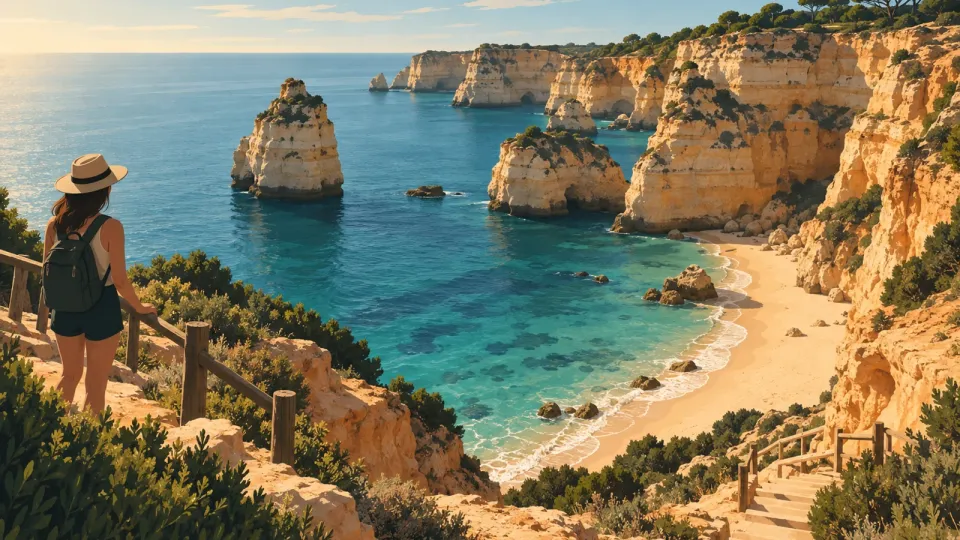
Praia da Marinha Guide: Steps, Access, Viewpoints
Praia da Marinha in Lagoa, Algarve, explained: how to reach the beach, what the cliff descent is like, and how viewpoint walks differ from sand access.

Praia da Falésia: the Algarve’s longest beach, what no one tells you
Praia da Falésia, 6 km of sand: a practical guide to entrances, real parking, best light and sunset, and whether resort stays are worth it.

Alentejo Beaches: Pick a Base and Plan Beach Days
Alentejo beaches, choose the right coastal base for your pace. Compare Odemira to Tróia and plan beach days with protected-area access rules.

Baleal Beach in Peniche, Pick a Side and Plan Your Break
Baleal beach guide for Peniche, learn which side fits surf lessons or calm bathing, plus where to base yourself and how to plan a coastal day.