
Day trips from Porto: compare trains, coast and the Douro
Day trips from Porto: compare trains, coast and the Douro. Choose Braga, Guimarães, Aveiro, Matosinhos, or a real Douro day with clear trade-offs.
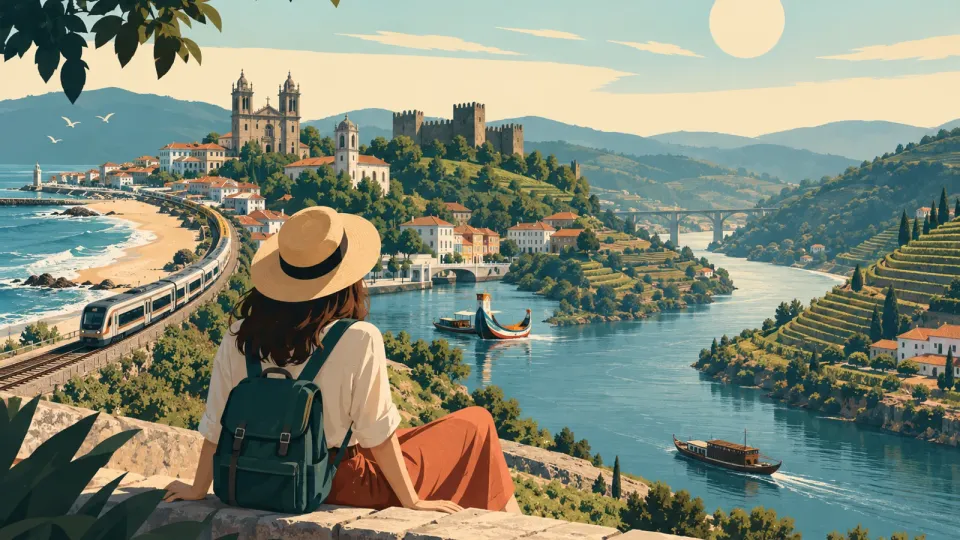
Day trips from Porto: compare trains, coast and the Douro, fast
If you want the easiest day out with the least friction, go coast and city suburbs by rail, then save the Douro wine day for a plan that accounts for last mile travel and timing.
Here is the simple logic. Braga and Guimarães are “rail-first” day trips because Porto has frequent commuter connections and you can build a full day around walking once you arrive. Aveiro is also rail-friendly, but you should expect a few extra minutes of local hopping (stations to central areas, plus any boat plans). Matosinhos is the opposite of a “once you get off the train, you are done” day trip, because beach time is the point, so you will treat it like a local transit day.
Now the Douro. The Douro line is real rail travel, but vineyard visits are not the same as station sightseeing. Even when you take the train, you usually need a last mile plan: local bus, prebooked transport, or a structured tour. That is why your best day choice depends on what you want to do most, river views, vineyard viewpoints, or tastings.
A common mistake is trying to do “a bit of everything” in one day. The payoff is bigger when you pick one theme:
- Old city energy: Braga or Guimarães
- Coastal walking and seafood: Matosinhos
- Canals and colorful streets: Aveiro
- River gorge scenery and vineyards: Douro Valley
For deeper planning on trains and day trips, use the official CP timetable access point: How to find out the train timetables and the CP pages for the line types you will actually use. And if you want a Porto baseline, start from our Porto beaches: Foz, Matosinhos and day trips by coast.
The rail-first picks: Braga and Guimarães (city days that work)
If you want a day trip that feels like a city break, Braga and Guimarães are the most dependable choices from Porto, because they are built on urban rail corridors.
On the Braga side, CP publishes an Urbanos route map for Braga to Porto São Bento, which is useful for checking which stops are closest to the kind of sightseeing you plan. (cp.pt) You can also verify the broader timetables via CP’s timetable access page, rather than relying on third-party listings. (www2.cp.pt)
Guimarães works the same way, but the key detail is that CP runs a dedicated Urbanos line between Guimarães and Porto São Bento, with intermediate stations that you can use to tailor your timing. (www2.cp.pt) This matters if you want a relaxed morning, because you can choose a departure that gets you into the center with time to spare.
Effort trade-off: low. These are “rail in, walk out” days.
Interest payoff: high. You get historic streets, viewpoints, and a proper sense of a different city.
What to pre-decide (so your day stays smooth)
- Pick your priority: morning sights or late afternoon views.
- Decide your walking radius around the arrival station.
- Plan one anchor meal so you are not searching when you are hungry.
Where to read our destination guidance
-
For Braga, start with our Things to Do in Braga: City Steps to Bom Jesus.
-
For Guimarães, you will mainly use this article for how to structure the day, then adapt walking plans once you arrive.
Common mistake: trying to add a beach segment. These days are best when you commit to the city experience, not when you try to squeeze in Matosinhos as a second half.
If you are comparing trains, use CP’s timetable lookup and check station names carefully, Porto São Bento is not the same as Porto Campanhã.
The coast choice that is easiest to enjoy: Matosinhos
Matosinhos is the “I want the sea, but I do not want complicated logistics” day trip.
You can treat it like a local transit day. The core idea is that you get off near the beach area, then you walk, eat, and reset. The Porto metro network explicitly serves the Matosinhos area, and the city mobility page describes metro connectivity between key Porto and Matosinhos areas. (mobilidade.cm-porto.pt) If you plan your day this way, you avoid the stress of chasing a single train connection for every move.
Effort trade-off: low to medium. Rail or metro gets you close, but beach time is a flexible block, so you should build in “no fixed schedule” thinking.
Interest payoff: high if you like seafood lunches, long promenade walks, and a more lived-in coastal vibe than a tiny day-tour town.
How to structure a good Matosinhos day
- Morning arrival with room to wander (do not overschedule).
- Pick one beach segment to focus on, so you are not constantly moving.
- Choose lunch first, then let the afternoon follow.
Two practical planning habits
- Pack for micro-weather. Coastal wind changes fast. Bring a layer.
- Set a return time buffer. Metro is frequent, but you still want a cushion if you get caught in a restaurant queue.
If you want our broader coast comparison, use our Porto coastline guide: Porto beaches: Foz, Matosinhos and day trips by coast.
Common mistake: expecting a “single viewpoint photo moment” trip. Matosinhos is best when you treat it like a slow, coastal day.
Quick decision: if your group is mixed on history versus scenery, Matosinhos often lands with everyone because it is enjoyable even when nobody is chasing a checklist.
Aveiro vs the coast: canals by rail, then choose your last mile
If you want something between a city day and a coastal day, Aveiro is often the sweet spot.
Aveiro is rail-connected, and CP publishes an Urbanos route map between Aveiro and Porto São Bento. (www1.cp.pt) That gives you a clear anchor for the “train part” of your plan. From there, your day splits into two choices: canals and central Aveiro or coastal-adjacent time.
Effort trade-off: medium. Rail is straightforward, but you need to plan how you get from the station to whatever canal area or walking zone you want.
Interest payoff: high if you like colorful street scenes, canals, and a more relaxed pace than Porto.
A realistic Aveiro day flow (no overstuffing)
- Morning: arrive, walk the central streets, then decide whether you want a canal add-on.
- Midday: lunch with enough time to avoid rushing.
- Afternoon: either more canal time or a coastal change of pace.
Two ways to compare your Aveiro day versus Matosinhos
- If you want boats, canals, and street views, choose Aveiro.
- If you want beach walking plus seafood, choose Matosinhos.
Where our guide fits
- For the “Portuguese Venice” angle and what to expect, mention Aveiro in your reading list without chasing gimmicks. Use our existing topic page by reading it as general background: our guide to Aveiro in Portuguese Venice reality.
Common mistake: trying to treat Aveiro as a pure beach day. Aveiro’s payoff is the canal and town feel, not only sand.
Practical tip for train planning
Use CP’s timetable lookup and check whether your departure uses Porto São Bento or Porto Campanhã names, then build your station to center walk time around that. CP explains how to check train timetables directly. (www2.cp.pt)
Douro by train: what to plan for vineyard access (separate the two)
A Douro day trip has two different layers. Rail access gets you into the Douro corridor. Vineyard access gets you into tasting and viewpoints. Those are not automatically the same.
CP describes the Douro line and notes operational changes, including a period when service was restored with the reopening of segments, and that journey times are indicative and can vary with conditions. (cp.pt) That is your cue to plan Douro days with flexibility, not with rigid minute-by-minute expectations.
Separate your plan into two boxes
- Rail box: your train ride from Porto into Douro stations.
- Vineyard box: how you reach the places you actually want to see and taste.
If you are using a prebooked wine day, treat it as a separate product decision from the train. If you are building your own day, treat “station to winery area” as the part you still need to solve.
Where the river-view payoff comes from
- Train windows can deliver dramatic gorge scenery.
- You may not need to chase every vineyard stop to get value.
Where your vineyard payoff depends on the access plan
- Viewpoints: often require short local transport or walking from specific areas.
- Tastings: often assume a structured route or prearranged pickup.
Our stance on wine planning
This guide does not assume that every station equals a vineyard you can just drop into. Use this article to compare your effort level, then decide on a vineyard approach that matches your time budget.
If you want a dedicated angle on structured wine days, use our existing Douro planning resource: Douro Valley wine tours: avoid the bus trap.
Common mistake: booking only the train and then realizing you need transport to reach tasting viewpoints.
Quick decision: If your top goal is scenery and you are okay with fewer winery stops, Douro by train can be a great day. If your top goal is tastings, build the vineyard access layer first, then choose a rail schedule that still gives you a relaxed return.
Comparison table: pick your day trip by effort, interest, and last mile
Use this table as your first filter. Then scroll to the two day frameworks for a “what do I do at 10:00?” style plan.
| Day trip from Porto | Rail access level | Best for | Main last mile challenge | Effort level | Typical day feel |
|---|---|---|---|---|---|
| Braga | High (Urbanos corridor) (cp.pt) | Old-city energy, historic sights | Walking radius once you arrive | Low | City-break day |
| Guimarães | High (Urbanos corridor) (www2.cp.pt) | Historic streets, viewpoints | Walking radius once you arrive | Low | City-break day |
| Aveiro | High (Urbanos corridor) (www1.cp.pt) | Canals and town streets | Station to canal and town area | Medium | Relaxed town day |
| Matosinhos | Medium to high (metro and local transit) (mobilidade.cm-porto.pt) | Beach time, seafood | Beach area hopping and timing meals | Low to medium | Coastal reset |
| Douro Valley | Medium (rail corridor, plans can change) (cp.pt) | Gorge scenery and vineyards | Vineyard access beyond stations | Medium to high | Scenic plus logistics |
How to read the table
- Rail access level is about getting out of Porto smoothly.
- Last mile challenge is what still needs solving after the train ride.
Important “don’t get burned” checks
- For Douro, verify current line status via CP’s Douro line page and your departure date using CP timetable tools. (cp.pt)
- For Aveiro, confirm which Porto station your train uses (São Bento versus Campanhã) so your station-to-center plan matches the reality of your schedule.
Two example day frameworks next, one for “low logistics, maximum enjoyment,” and one for “wine scenery, without chaos.”
Example day framework 1: low logistics (Braga or Guimarães)
This is the “I want a real day out without planning headaches” framework. It works best for Braga or Guimarães, because once you arrive you can walk and eat on your own tempo.
Pick your city, then follow the same rhythm.
-
Morning (arrival to your first viewpoint): Take the morning rail and aim to arrive with time to get oriented. Urbanos routes are published by CP, use the route maps for station order so you can pick the best stop for your walking plan. (cp.pt)
-
Late morning (one main sight): Choose one anchor, then stop after that. If you cram too much, you end up sprinting between neighborhoods.
-
Lunch (book nothing, pick nothing fancy): Choose a lunch spot near where you plan to walk next.
-
Afternoon (second walk loop): Now pick a second area based on energy. If you still feel strong, extend your walking loop. If you feel tired, switch to cafés and a shorter stroll.
-
Return with a buffer: Leave the city in time for a relaxed return. You do not need the last train of the day, you just need one that fits your energy.
Where to read next
- Braga specifics: our Things to Do in Braga: City Steps to Bom Jesus.
Common mistake: using the train as an excuse to rush. These days feel better when the train gets you there, and your time belongs to walking and meals.
If you want to compare two days quickly, ask yourself one question: Do we want history and streets, or do we want sea time? If it is streets, pick Braga or Guimarães. If it is sea time, skip them and go for Matosinhos or Aveiro.
Example day framework 2: Douro scenery with vineyard access handled
This framework assumes you want a Douro Valley day trip by train but you do not want to guess how you will reach viewpoints or tastings.
Step 1: Build the day around the vineyard layer first
- Decide whether you want tastings and viewpoints in a structured route or scenic stops with fewer winery commitments.
Step 2: Match the rail schedule to that plan
CP notes that the Douro line can have operational changes and that journey times are indicative, so your schedule needs flexibility. (cp.pt) Use CP’s timetable lookup to confirm the trains that match your chosen return window. (www2.cp.pt)
Step 3: Plan your “in-between” time as a real buffer
Between rail arrivals and any vineyard transport, you need time for station exit, local movement, and simple waiting.
A Douro day rhythm that usually works
-
Morning: train into the Douro corridor, use the ride for scenic time.
-
Midday: vineyard layer (this is where you decide tasting or viewpoints).
-
Afternoon: second scenic segment or a slower viewpoint stretch. If you are tired, keep it simple.
-
Evening: return to Porto with a buffer for any delays.
Where to learn our “wine tour choices” angle
Use our planning resource: Douro Valley wine tours: avoid the bus trap.
Common mistake: assuming you can do full tastings at every station stop. Stations are not automatically the same as tasting zones.
Quick choice checklist
- If your priority is scenery and fewer logistics, choose a simpler vineyard plan.
- If your priority is tastings, pre-plan vineyard access first, then pick a compatible train return.
This keeps your day relaxing instead of reactive.
FAQs: day trips from Porto, trains, coast and the Douro
1) Which day trip is best if I hate rushing?
Pick Braga, Guimarães, or Matosinhos. Braga and Guimarães are rail-first city days, and Matosinhos is a flexible coastal reset. For rail planning, verify times via CP’s timetable page. (www2.cp.pt)
2) Do I need to book anything for Aveiro?
You can often start with the rail plan, then decide your canal or town-time once you arrive. Use CP’s Urbanos route information for rail planning between Aveiro and Porto São Bento. (www1.cp.pt) If you are set on a specific add-on, check booking needs closer to your date.
3) Is the Douro train enough on its own?
Usually, no. The train gets you into the Douro corridor, but vineyard access is a separate layer. CP’s Douro line page also reminds you that operations and journey times can vary. (cp.pt)
4) Should I choose Porto beaches or a full beach town?
For this Porto day-trip set, Matosinhos is the right “beach within city logistics” option. For broader coastal context, use our Porto beaches: Foz, Matosinhos and day trips by coast.
5) How do I compare train options without getting lost in station names?
Use CP’s official timetable access page, then confirm whether the route uses Porto São Bento or Porto Campanhã before you build walking plans. CP explains how to find timetables and check train status. (www2.cp.pt)
6) Where should I start if I am planning multiple day trips?
Start with your theme:
- Streets and history: Braga or Guimarães
- Canals: Aveiro
- Sea reset: Matosinhos
- Vineyards and gorge scenery: Douro
Then, for each chosen day, set your return time and only then pick your departure that matches it.
Your next step: choose 1 rail day and 1 Douro layer, then check dates
You can plan a great Porto trip without juggling five competing ideas.
Here is a practical next step you can do today.
- Pick your rail day (choose one): Braga, Guimarães, Aveiro, or Matosinhos.
- Pick your Douro style (choose one): train-focused scenery with minimal vineyard commitments, or tastings with vineyard access handled by a structured plan.
- Check your date on CP for the rail layer: Use CP’s official timetable access page to confirm trains that match your chosen return window. (www2.cp.pt) For Douro, also read CP’s Douro line notes so you understand how service changes can affect the day. (cp.pt)
If you want to keep reading with links that match your choices
- For Braga: our guide to Braga city steps to Bom Jesus
- For Aveiro: mention Aveiro in plain text, then read our guide to Aveiro in Portuguese Venice reality
- For Matosinhos and coast: our guide to Porto beaches and day trips by coast
- For Douro wine day approach: our guide to Douro Valley wine tours and avoiding the bus trap
Finally, one misconception to drop: do not treat Douro as “just another train stop day.” If you plan it as rail plus vineyard access, your Douro day becomes simpler, calmer, and more enjoyable.
Done is choosing, then verifying your rail timing. Check CP timetables next, then lock your day trip theme.
Related guides
Porto to the Algarve: trains, buses, flights, driving
Compare Porto to the Algarve travel options. Direct vs connections, rail vs coach vs flights, and driving tips for Faro, Lagos, and nearby towns.
Porto airport to the city centre: arrival routes
Porto airport to the city centre: choose your arrival route by metro, bus, or licensed taxi, with destination tips for Trindade, Boavista, and Ribeira.
Porto Metro and Andante Zones: Tickets and Validation
Porto Metro and Andante: zones, tickets and validation explained for tourists, including Tour 1 vs Tour 3, ticket choice, and how to validate correctly.
Where to Stay in Porto: Neighbourhoods, Hills and Transport
Where to stay in Porto: neighbourhoods, hills and transport, choose the best base for Ribeira views, Baixa access, Boavista ease, Foz sea air, or Gaia crossings.